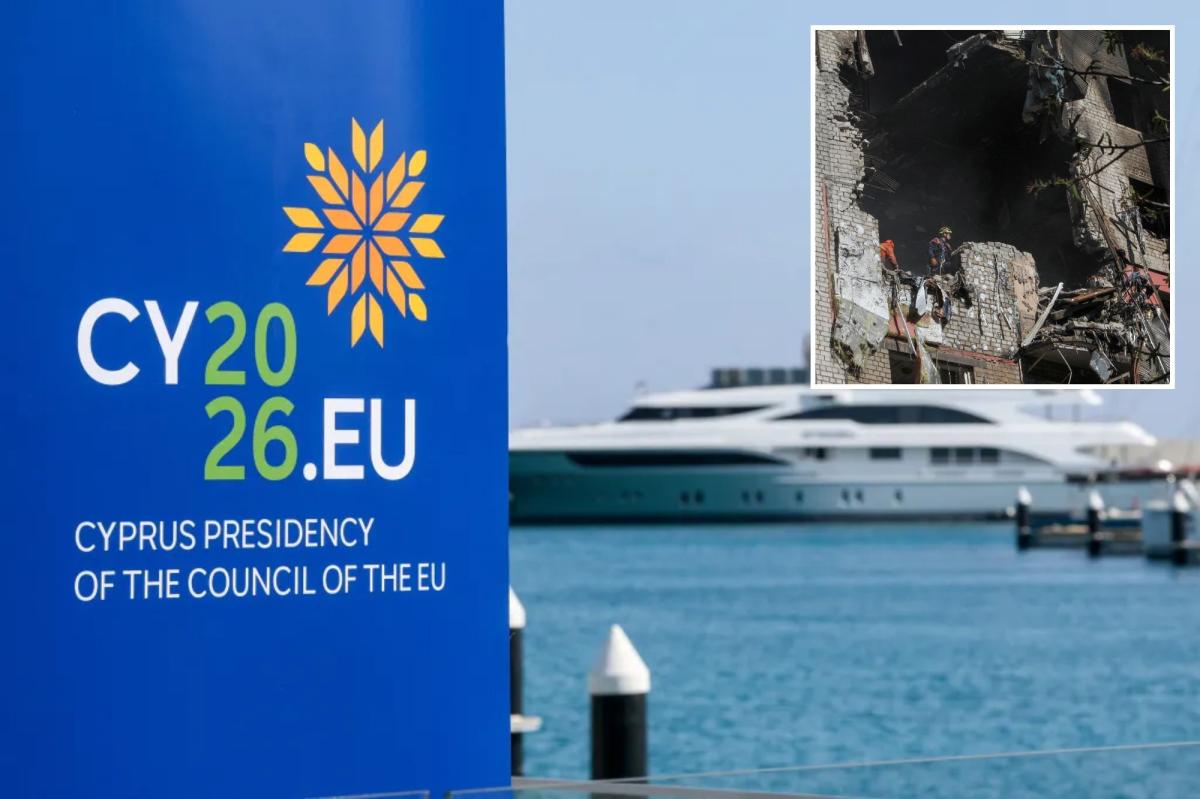
The European Union formally approved on Thursday a 90-billion-euro ($105-billion) loan to Ukraine and new sanctions against Russia, ahead of an informal summit of the bloc’s leaders in Cyprus which Ukrainian President Volodymyr Zelensky will attend.
The loan is set to cover two-thirds of Ukraine’s needs for the next two years. Economists had said Ukraine would start to run out of money by June if the EU loan was not disbursed by then, requiring deep cuts to public services.
“We are on our way to Cyprus with good news,” European Commission chief Ursula von der Leyen said.
“While Russia doubles down on its aggression, we are doubling down on our support to the brave
Ukrainian nation enabling Ukraine to defend itself and putting pressure on Russia’s war economy.”
Throwing Ukraine a lifeline
EU ambassadors had already approved the loan and the sanctions package on Wednesday after Hungary lifted its veto, paving the way for Thursday’s formal approval.
“This package will strengthen our army, make Ukraine more resilient, and enable us to fulfill our social obligations to Ukrainians, as set out in law,” Zelensky said on X as he arrived in Cyprus, where he will have dinner with the EU leaders.
“During meetings in Cyprus, we will also discuss with partners further sanctions pressure on Russia over this war. The 20th package has been unblocked, and it must be followed by other sanctions steps.”
Only half of the 90 billion euros will be disbursed to Ukraine this year, with the remainder coming in 2027.
The bulk of the loan is earmarked for military spending, with around 17 billion euros each year destined for general budget needs such as health and education.
The approval of the loan, which had been delayed by several months due to a veto by EU member Hungary, throws Kyiv a lifeline, averting deep cuts to public services, but the country may need more money to meet its military needs this year, economists and officials said.
EU to discuss Iran war, energy costs
No formal decisions will be taken at the Cyprus summit, during which EU leaders will also discuss the war in the Middle East, energy measures in response and the EU’s next long-term budget.
They will be joined by leaders from Egypt, Jordan, Lebanon, Syria and the Gulf Cooperation Council for lunch on Friday.
The European Commission set out plans on Wednesday to cut electricity taxes and coordinate the summer refill of countries’ gas storage, as it seeks to cushion the energy fallout from the Iran war.
The published plans show the EU will, for now, avoid major market interventions such as capping gas prices or taxing energy companies’ windfall profits – measures it used in 2022 when Russia cut gas supplies and prices hit record highs.
Disclaimer : This story is auto aggregated by a computer programme and has not been created or edited by DOWNTHENEWS. Publisher: nypost.com