
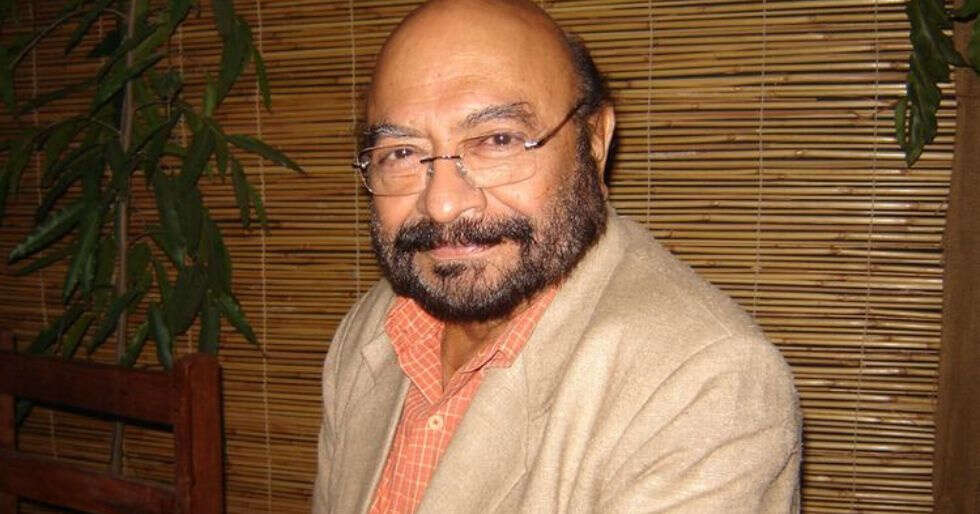
Filmfare’s Editor-In-Chief Jitesh Pillaai revisits his filmography, unpacking his craft and offering insight into a body of work that remains deeply influential.
In Jitesh Pillaai’s own words:
He could be the sledgehammer or he could be silent, like Nishant. You still hear that piercing scream when Om Puri hacks his sister to death to save her from the indignity of rape. Om Puri’s voice of the marginalized in Aakrosh, and Om’s anger of upheaval in Ardh Satya after slaying Rama Shetty the villain—it is stark, in-your-face, and disturbing.
You see the camera heighten the economy of expression in Ardh Satya. You see the camera gaze through Jaya Bachchan’s resolute stoicism as she looks for her dead son in Hazaar Chaurasi Ki Maa. Nihalani is never didactic or instructional. At his most fierce, he will put his arms around you (metaphorically) as if to emphasize his point, be it in Vijeta or Drohkaal. But I still want to know why Rekha’s brilliant character was abruptly cut off in Vijeta.
If you want to see the greatness of Jaya Bachchan, do watch her in Hazaar Chaurasi Ki Maa. Kareena Kapoor doesn’t get enough credit for her luminosity in Dev. Watch the Malayalam actor Bharat Gopy give an astounding performance in Aaghat.
The cussedness and fickleness of the box office is perhaps what took Nihalani away from us. One of the great strengths of Shyam Benegal’s take on the Mahabharata (Kalyug) is the way Nihalani’s camera pieces together the brilliant screenplay and helps you navigate the allegory of one of the greatest texts of mythology. I repeat: Govind Nihalani isn’t celebrated as much as his contemporaries. It’s a huge disservice to his genius, both as a cameraman and a director. It is a good time to look back, both with awe and affection.
Also Read: Editor’s Take: Revisiting Aparna Sen’s 36 Chowringhee Lane, a Must-watch Classic
Disclaimer : This story is auto aggregated by a computer programme and has not been created or edited by DOWNTHENEWS. Publisher: filmfare.com



