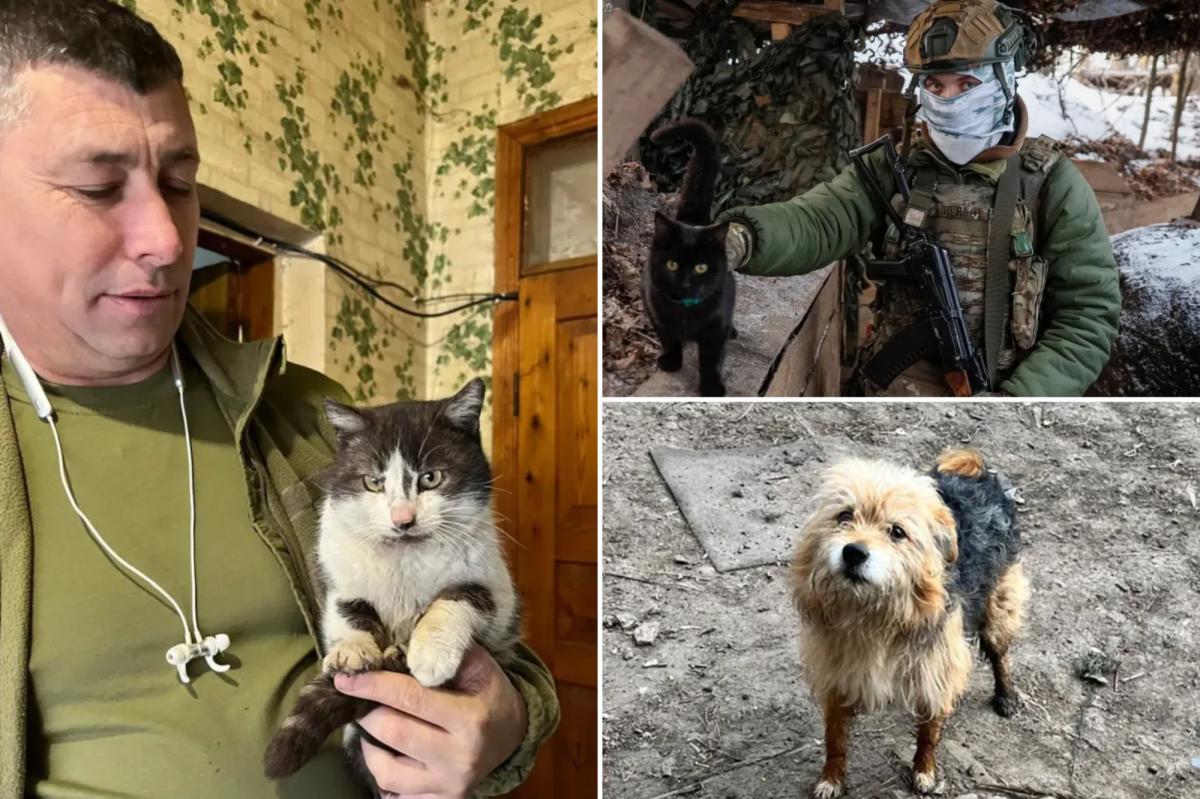
A dog and cat who found themselves stranded on the front lines in war-torn Ukraine didn’t have to claw their way to safety — instead, they got a ride to safety via a drone, according to a report.
The soldiers of Ukraine’s 14th Separate Mechanized Brigade used their expertise to airlift Barsik the cat and Zagybluk the dog away from the battlefield earlier this month, reported CNN World News.
The four-legged fighters were regulars around the troops, who had grown close to them, so when they needed to be evacuated the military swung into action.
“The guys put them in special breathable pouches, carefully tied them to a drone, and evacuated them,” Nadiya Zamryga, the brigade’s press officer, told CNN.
The operation required special skills from the drone pilot, who had to fly the animals for about 10 kilometers — about 6.2 miles — before landing in a “gentle” way, she said.
Fortunately, both Barsik and Zagybluk got happy endings after their harrowing ordeals.
Barsik was recognized by his “cat dad,” a soldier who had been wounded and is now recovering, and they’re about to reunite.
As for Zagybluk, he’s decided to take up with the troops — at a rear position — where he’s loving life with his new soldier companions.
“The stress from the drone flight passed very quickly. These animals have been with the guys for two years and they’re not willing to give up their comrade,” said Zamryga.
Barsik and Zagybluk were the lucky ones.
The number of animals left behind during the non-stop destruction of cities and towns has been staggering. Many refugees have been forced to leave their furry friends behind at the border because of they do not meet the criteria imposed by the European Union that require pets be vaccinated, microchipped and have a rabies test.
Inga Sekada, director of operations at UAnimals, one of Ukraine’s biggest animal rights groups, said they have evacuated more than 10,000 animals since the start of the full-scale invasion, including cats, dogs, tigers, camels, horses, cows, racoons, wolves, donkeys, porcupines, lemurs, sheep and even bees.
“Twice a month, our team of vets travels to the frontline zone and works non-stop, sometimes from 7 a.m. until 10 p.m., treating, vaccinating and neutering all the animals brought to us,” says Inga Sekada, director of operations at the group.
As many as 500 to 600 animals can be treated during a single veterinary mission, she added.
Disclaimer : This story is auto aggregated by a computer programme and has not been created or edited by DOWNTHENEWS. Publisher: nypost.com