
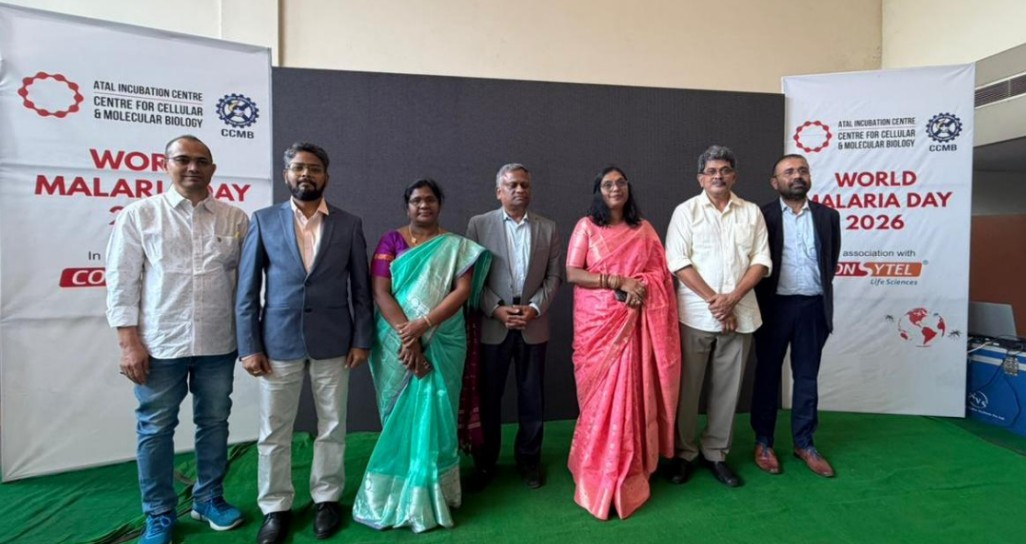
HYDERABAD: On World Malaria Day on Saturday, health experts at the Atal Incubation Centre – Centre for Cellular and Molecular Biology (AIC‑CCMB) urged the Telangana government to strengthen preventive strategies, particularly chemoprophylaxis, to further reduce malaria cases in vulnerable regions of the state. Scientists stressed that corporate hospitals must also include malaria screening.
Prof. Raghupathy Anchala, dean (academics), Institute of Public Health Sciences, said: “Primary health centres are equipped with rapid diagnostic kits, ensuring that patients presenting with fever—especially those accompanied by chills—are promptly tested for malaria. This is lacking in corporate hospitals; screening must be included for the urban population.”
Despite progress, chemoprophylaxis remains underutilised. The preventive medication is administered to individuals in high‑risk zones or those travelling to malaria‑prone regions, thereby reducing chances of infection, he added.
Telangana has made significant strides over the past decade in reducing malaria prevalence, particularly in urban centres such as Hyderabad. Government health data show a steady decline in overall cases, especially those caused by the dangerous Plasmodium falciparum, which can lead to life‑threatening cerebral malaria. Yet experts caution that pockets of higher prevalence persist in tribal and hard‑to‑reach areas such as Asifabad, Adilabad and Bhadadri Kothagudem, where healthcare access and awareness remain low.
A major concern highlighted was Plasmodium vivax, a strain known for its dormant nature. Unlike other variants, vivax parasites can remain inactive in the liver for months before reactivating, causing recurrent infections. Officials admit that relapse data for Telangana are limited.
Dr Puran Singh, senior principal scientist, CSIR‑CCMB, noted that malaria is not confined to humans. “Parasites exist in other species such as primates and rodents,” he explained, detailing the parasite’s life cycle in the liver and bloodstream, and its transmission through mosquitoes.
The programme was organised by AIC‑CCMB in collaboration with Consytel Life Sciences, drawing leading experts from academia, public health, industry and government—including the ministry of health and family welfare, Centre for Study of Complex Malaria in India, Bharat Biotech, PHFI, Gandhi Medical College and CSIR‑CCMB—to deliberate on India’s roadmap toward malaria elimination by 2030.
Opening the session, Dr Vinay K. Nandicoori, director, CSIR‑CCMB, remarked: “CCMB takes pride in advancing the mechanistic understanding of malaria, but the fight against the disease ultimately tests our collective will to ensure that no one is left behind.”
Experts flagged persistent transmission in tribal and forested regions, evolving parasite biology, climate‑driven shifts in disease ecology, and the urgent need for innovative tools and strategies.
“India has achieved a remarkable decline in malaria incidence over the past decade. With every rupee invested returning nearly nineteen to the economy, the case for action is clear. It is time to invest in closing the last mile. Innovation is no longer optional—it is a collective responsibility,” said Dr Nalam Madhusudhana Rao, CEO, AIC‑CCMB.
Disclaimer : This story is auto aggregated by a computer programme and has not been created or edited by DOWNTHENEWS. Publisher: deccanchronicle.com



