
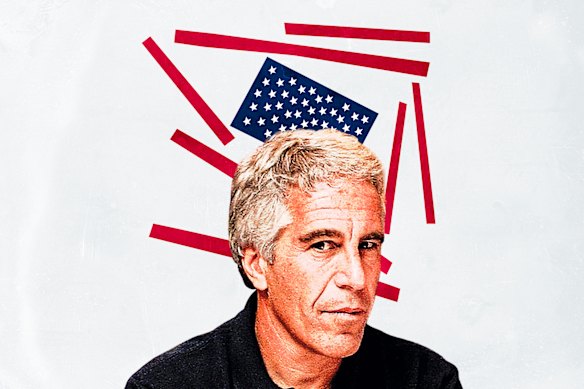
Americans believed they lived in a land of opportunity for all, but a new class consciousness is emerging.
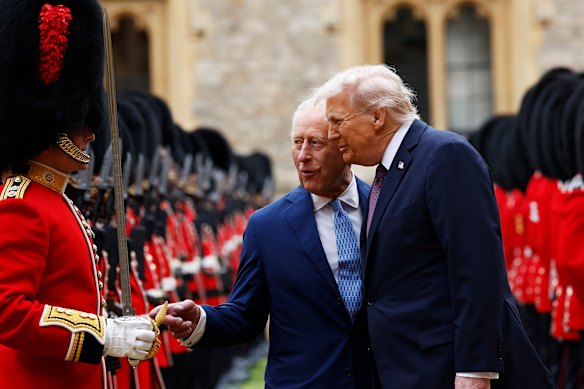
If there’s one thing Americans used to be able to count on during any visit from British royalty, it was a comforting sense of superiority towards them, and the subjects they ruled over.
Unlike the British, Americans had – after a long and bloody war – thrown off the shackles of class. Their leaders were first among equals; due, in part, to the American “restlessness of heart which is natural to men when all ranks are nearly equal, and the chances of elevation are the same to all”, as philosopher Alexis de Tocqueville marvelled in his 1835 treatise, Democracy In America.
“The idea of class as sort of static; this is anathema to the idea of social mobility which America is founded on,” says historian Don Watson, author of The Shortest History of The United States of America.
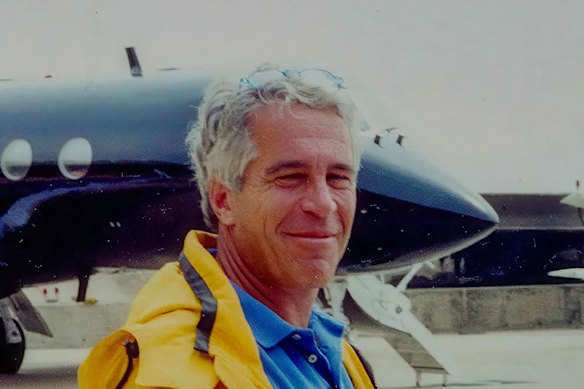
But when King Charles visits this week, he will find a very different United States: a country with a developing and, for many, alarming sense of class consciousness. Ironically, thanks to the man both the US president and Charles are trying to outrun: Jeffrey Epstein.
Because the Epstein files have exposed a painful, and profound, reality. That, contrary to its national and foundational myth, an entrenched – and often brutal – class system is well and truly alive in the US.
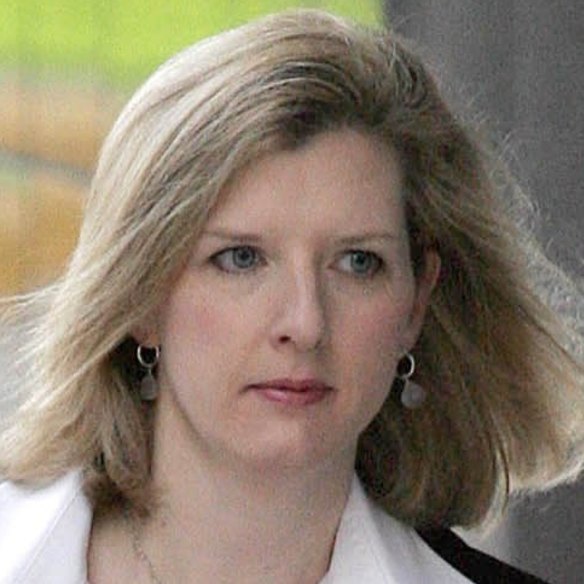
“I just want to say to everyone watching this, this is what people in that class think about you,” Anand Giridharadas, author of Winners Take All, told the viewers of the Morning Joe TV show, last month, pointing to an email that Barack Obama’s former chief White House counsel, Kathryn Ruemmler, wrote to Epstein about an upcoming trip to New York.
“I will then stop to pee and get gas at a rest stop on the New Jersey Turnpike, will observe all of the people there who are at least 100 pounds overweight, will have a mild panic attack as a result of the observation, and will then decide that I am not eating another bite of food for the rest of my life out of fear that I will end up like one of these people,” Ruemmler wrote to Epstein in 2015, seven years after he’d been convicted, and served jail time, for soliciting prostitution from a minor.
And, crucially, adds Giridharadas, a few years after Ruemmler sent her email to Epstein, Goldman Sachs, the global investment firm where Ruemmler earned $US22.5 million as one of its top lawyers last year, would go on to describe anti-obesity drugs as a “100 billion dollar opportunity”.
“Whatever happens to you and your family, these people in this Epstein class will find a way to make sure that they’re on top,” Giridharadas says, speaking of Ruemmler, but also more broadly about the billionaires, academics, Nobel Prize winners and rarefied travellers of the TED-Davos-Aspen conference circuit who, the files show, had ties to Epstein and a highly networked world of favours, connections and privilege. (No criminal misconduct is established by appearing in the files.)
“These are not just the people who hung out with Jeffrey Epstein. These are the people who shape what your kids’ education is like. These are the people who decide what kind of mortgage you have and whether it’s protected by the government or not. These people are governing your life, whether you like it or not.“
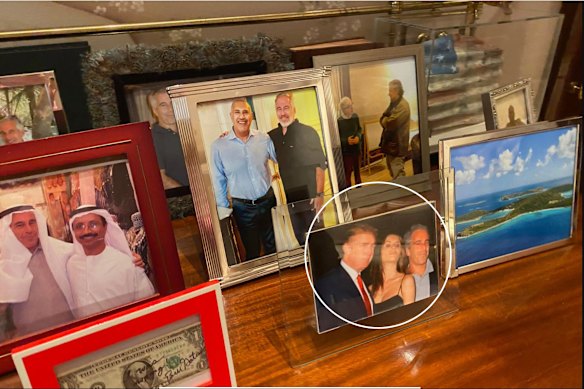
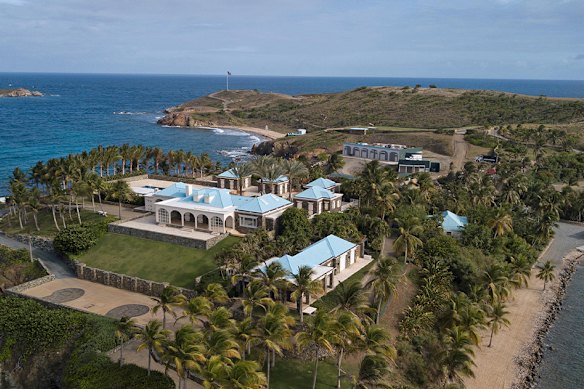
The Epstein class includes the likes of Donald Trump, who socialised with Epstein in his younger days (the president says he cut ties years ago), and current commerce secretary Howard Lutnick, who planned to swing by Epstein’s island on a yacht with his children and their multiple nannies onboard. (Their administration has slashed food assistance benefits by an estimated $186 billion over the next decade, meaning an estimated 18 million children will lose access to free school meals.)
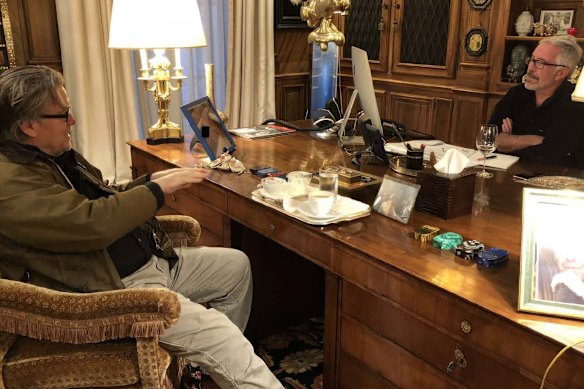
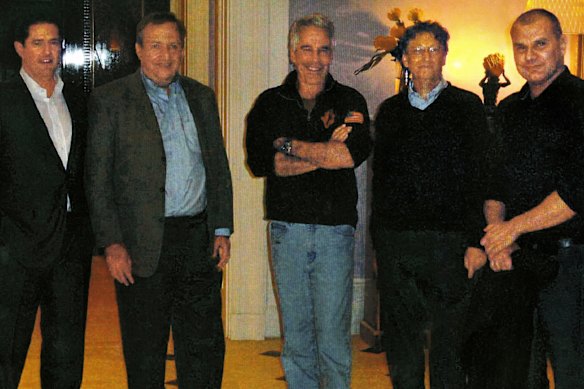
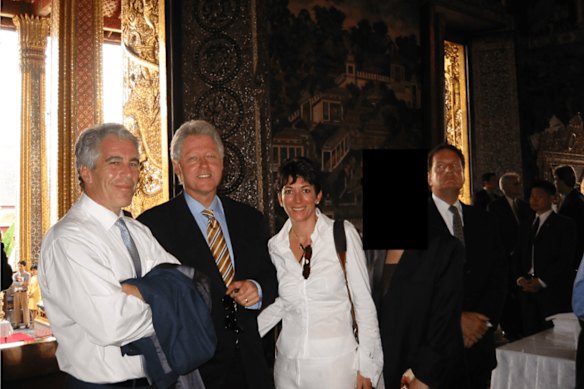
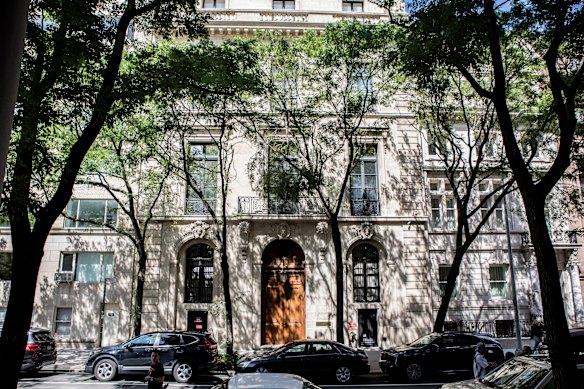
Also in the orbit of this 21st century Sun King were some of America’s most wealthy plutocrats: Sergey Brin, Google’s co-founder, SpaceX billionaire Elon Musk and Steve Tisch, the scion of one of America’s richest families and co-owner of the New York Giants football team. Among the treasures found in Epstein’s New York townhouse was a framed dollar bill signed by Bill Gates, possibly as payment of a bet. “I was wrong!” the Microsoft co-founder wrote over George Washington’s face. Trump strategist Steve Bannon gave Epstein advice. Bill Clinton flew in his private jet at least 27 times. He says he did nothing wrong.
Some in the Epstein class, who haven’t been accused of crimes associated with Epstein, but who helped whitewash Epstein’s reputation by associating with him are starting to face a comeuppance. Former treasury secretary Larry Summers (under Obama) – who asked Epstein for romantic advice and regularly dined with him – has quit his roles at Harvard. And Brad Karp, the former chairman of powerful Wall Street law firm Paul Weiss, who asked Epstein for help landing his son a job on a Woody Allen movie, and offered to review a letter Epstein’s team was drafting for The New York Times, stepped down from his role. Ruemmler resigned in February.
But for American politicians and political strategists from both major parties, this isn’t nearly enough. In Britain, police have launched criminal investigations into the former Prince Andrew (for inappropriate conduct in his role as trade envoy) – the first arrest of a senior member of the royal family in nearly 400 years – and former British ambassador to the US Peter Mandelson (who allegedly colluded with Epstein to undermine his own government’s policy on taxing bankers’ bonuses). British Prime Minister Keir Starmer is now facing calls to resign over it all.
But in the US, no American citizen has faced the same level of criminal accountability. Which is evidence of a damning lack of political will from both the Democrat and Republican parties, according to former Republican and independent political strategist Reed Galen.
“Remember that Jeffrey Epstein died several years ago,” Galen told the Times last month. “The Biden administration had these files in the Department of Justice, and the Republicans had them prior to that. And so I think there has not been a political desire among the two major parties or those parties’ elites and their donor classes, to have these files released.”
At worst, says Galen, this could be the result of a Department of Justice “cover-up”. At best, this lack of political will is reflective of a far wider, and deeply entrenched trend, in American culture. “We don’t really hold our elites to account here in the US,” said Galen, who previously worked for president George W. Bush. And when America does, it’s often a fine or a “slap on the wrist”.
Dan Pfeiffer, former senior adviser to Obama as president, wants more than indignation from the American political class, recently arguing that the Democratic Party needs to harness an “anti-Epstein” message to reclaim power at the midterm elections in November.
“Democrats need to show voters that we will take on a corrupt political system to build an economy centred on working people,” Pfeiffer wrote in his substack, The Message Box. “That’s easier said than done, but running against the ‘Epstein class’ is a start.”
Democratic senator from Georgia, Jon Ossoff, has signed up to the effort. “This is the Epstein class, ruling our country,” Ossoff said at a rally in Georgia in February, about Trump’s ultrarich cabinet members and advisers. “They are the elites they pretend to hate.” He noted, by way of explanation, Trump’s recent slash to health care, while giving extraordinary tax cuts to wealthy Americans.
But could everyday Americans mobilise around this view? Many, it seems, are only beginning to wake up to the reality of a shadowy class system that works against them. “We’ve heard so much about the Epstein scandal over the past several years. And yet people do seem shocked by the scope of elite complicity in his world,” Nicole Hemmer, a history professor at Vanderbilt University, told the Times.
It’s slightly puzzling to some historians. “Well, you think of [George] Washington, of [Thomas] Jefferson; most of the founding fathers, with the exception of [Alexander] Hamilton, were of the ruling class, the colonial elite, with slaves aplenty,” says Don Watson. “So it’s [a class system] been there from the very beginning.”
But, then, it’s also a narrative many American schoolchildren probably haven’t been taught, in the way they are schooled about those presidents who famously rose high from hardscrabble upbringings, like Abraham Lincoln and James Garfield, who both came from abject poverty, and grew up in log cabins, says Watson. “The founding fathers, the ones that are the most famous, I think are generally taught as just men above reproach,” says Watson. “Class doesn’t come into it.”
But could a dawning realisation about the misbehaviour of an active ruling class – against the working class – now lead to an uprising, or some sort of rebellion one day? Is there a historical precedent for this, in the United States?
“In American political and class history every, I don’t know, century at least, there’s a rapid growth in the gap between the rich and the poor, and it creates a backlash,” says Mike Green, a professor at Georgetown University, who served on the staff of the National Security Council at the White House under George W. Bush. For instance, he says, with the so-called Robber Barons at the end of the century.
“You had this feeling that it was profoundly unfair that the rich and the famous families had so much money. People could see it in their lives everywhere, like ‘This railroad is owned by Vanderbilt, or this oil is owned by the Rockefellers’,” says Green, who also heads up the US Studies Centre at the University of Sydney. “So people in small towns knew that they were these rich and moneyed interests in New York. And at the end of the century, the American economy was growing so fast, and the regulatory environment was not keeping up, and so you had all these horrific accidents in meat-packing plants and on railroads.”
This led to the US government, under president Benjamin Harrison, bringing in antitrust laws, in 1890, to curb the powers of the Robber Barons and prohibit monopolies.
But a class revolution goes against the fundamental nature of the American psyche, says Green. “America is not a country where a Marxist revolution could ever take root because people continue to think that they, too, could be a member of that [upper class]. Very different from Russian, Chinese or French revolutions.”
Partly, it’s because Americans, he says, don’t like to look helpless. “Like, whingeing about ‘the Man keeps me down’, that’s just not what Americans do. In the American education system, they say, ‘You can be anything’. So, it would just be really jarring, not impossible, but jarring for people to say, ’I’m oppressed, and there’s nothing I can do about it, except whinge or have a revolution. We don’t do revolutions.”
And as for that American Revolution, which threw off the shackles of a foreign king? That was equally about uniting the 13 separate colonies, as it was about throwing off a monarchy and fighting for democracy, says Watson.
But some privileged Americans seem to be reckoning with the way they blithely sucked up to the elite to gain access to millions and status without looking more closely at the world they were entering, and who they might have harmed in the process.
“You are incredible,” David Ross, former director of the prestigious Whitney Museum of American Art in New York, wrote to Epstein in 2009, a year after Epstein had pleaded guilty to sex crimes. This was in response to an idea Epstein pitched him about funding an exhibition titled “statutory”.
“Girls and boys ages 14-25 where they look nothing like their true ages,” Epstein wrote. “Juvenile mug shots, photo shop, make up. Some people go to prison because they can’t tell true age. Controversial. Fun. Maybe it should be a web page, with hits, tallied.”
Last month Ross told The New York Times: “I buttered them up and told them they were great. It took years for my lips to heal.”
“I should have been more sceptical,” he said, noting that he believed Epstein, when the sex offender told him the criminal charges against him were trumped-up by political foes because of his friendship with Clinton. “Why couldn’t I see it?”
Start the day with a summary of the day’s most important and interesting stories, analysis and insights. Sign up for our Morning Edition newsletter.
Disclaimer : This story is auto aggregated by a computer programme and has not been created or edited by DOWNTHENEWS. Publisher: www.smh.com.au





