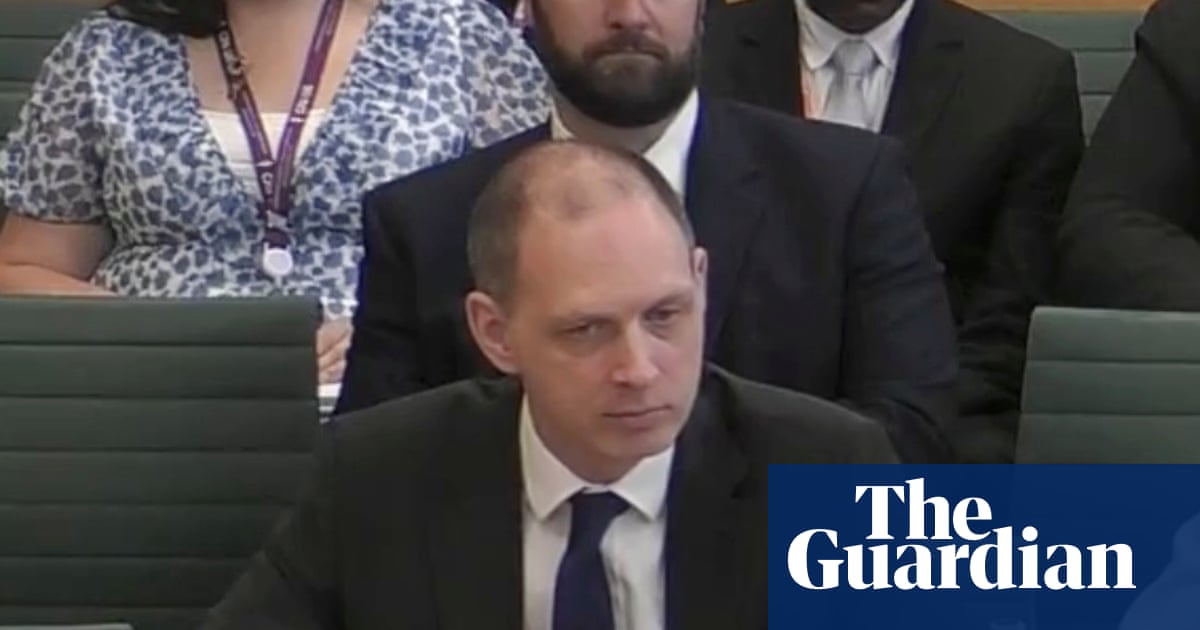
A key figure in the row over Peter Mandelson’s appointment as UK ambassador to Washington will not appear before a parliamentary committee of MPs to give evidence.
Emily Thornberry had requested that Ian Collard speak to the foreign affairs committee (FAC) on Tuesday, but confirmed on Saturday that he would submit written answers instead.
The committee has already heard from Olly Robbins, the Foreign Office’s top civil servant who was forced out of his post last week after the decision to fail Mandelson during his security vetting was overruled by his department, and the Cabinet Office permanent secretary, Cat Little. Keir Starmer’s former chief of staff, Morgan McSweeney, is due to appear on Tuesday.
Collard, who has given evidence to the select committee previously, is a former ambassador to Lebanon and Panama and was appointed the Foreign Office’s chief property and security officer in March 2023.
Robbins said Collard briefed him on the vetting findings that deemed the peer a borderline case and leaned towards recommending that clearance be denied.
Thornberry has asked Collard to detail his recollection of this meeting and whether it lines up with Robbins’s evidence in a letter to the Foreign Office with questions to be answered by 5pm on Monday.
She also asked him to set out the following:
-
Whether he felt under pressure to deliver Mandelson’s clearance, after Robbins said there was an “atmosphere of pressure” and “constant chasing” from Downing Street.
-
Whether he had seen the cover form for Mandelson’s vetting by UK Security Vetting (UKSV), the agency responsible for checks on candidates for sensitive posts, in which it had ticked two red boxes – meaning they had “high concern” and recommended “clearance denied or withdrawn”.
-
If he was asked by anyone in the Foreign Office, Downing Street or the Cabinet Office for advice about whether Mandelson required vetting for the post given that he was a member of the House of Lords.
-
If he advised on how Mandelson should be treated during the period between his appointment being announced and his clearance coming through.
Thornberry wrote on X on Saturday: “To be clear, I am satisfied by the reasons behind Ian Collard not giving oral evidence before the FAC at the moment. We have therefore asked for his evidence in writing.”
She added: “If we have further questions, we will consider at that point whether we need to ask him to give evidence orally, or whether a further written statement is sufficient.”
Robbins said when he took over in the Foreign Office in January 2025, Mandelson was already being granted access to “highly classified briefings” on a case-by-case basis – without his security clearance being confirmed.
He said he had never seen the UKSV form when making the decision on Mandelson’s clearance but was briefed on the vetting.
Little told the committee there had been an initial discussion over whether the Labour grandee needed security vetting at all because he was a member of the House of Lords.
Starmer has maintained that Robbins was wrong not to have told him the outcome of the so-called developed vetting process and insisted he would not have had the peer as his top diplomat to Washington had he known.
The prime minister has stood by his decision to sack the former Foreign Office chief and said he faced only the “everyday pressure of government” to clear the peer’s appointment as ambassador to Washington in 2024.
Speaking to the Sunday Times, he said he made a distinction between “different types of pressure”.
He said: “There’s pressure – ‘Can we get this done quickly?’ – which is not an unusual pressure. That is the everyday pressure of government.”
Starmer said a pressure “essentially, to disregard the security vetting element and give clearance” would be something different, and that Robbins “was really clear in his mind that wasn’t pressure that was put on him”.
Disclaimer : This story is auto aggregated by a computer programme and has not been created or edited by DOWNTHENEWS. Publisher: theguardian.com