
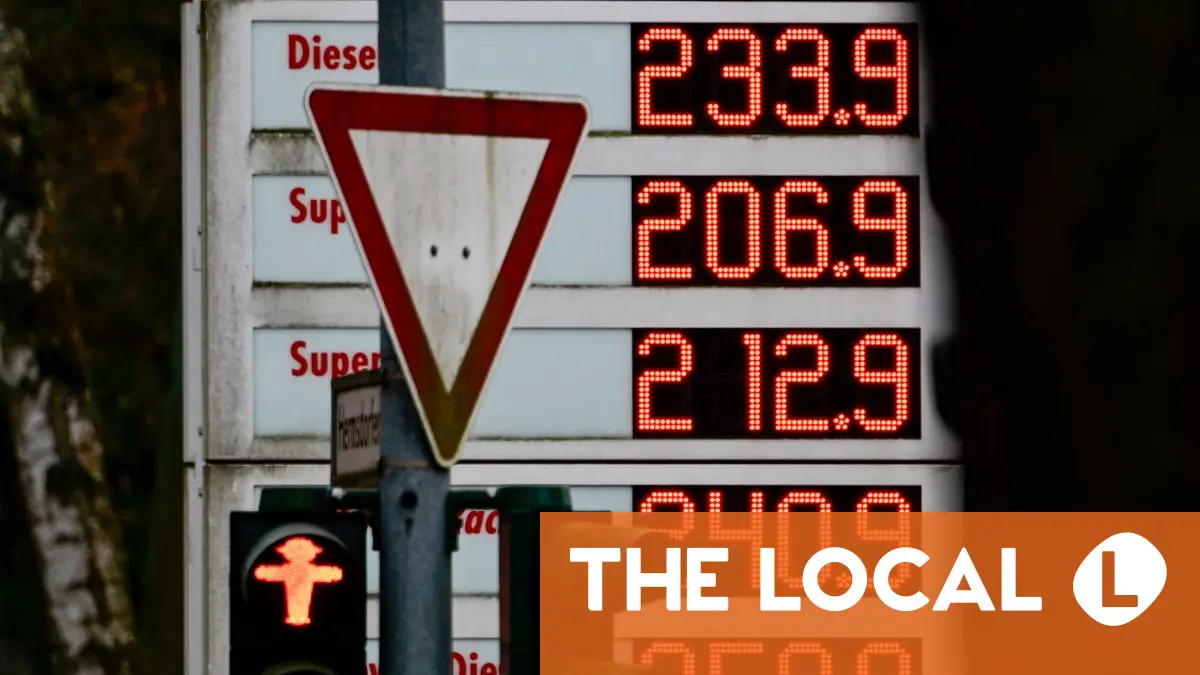
Thousands of petrol stations in Germany may be breaching a law intended to limit how often fuel prices can rise, according to new analysis.
The so‑called “12 o’clock rule”, rushed through in March in response to surging energy costs linked to the Iran conflict, allows petrol stations to raise prices only once a day at noon.
Any increase must also be reported to the Market Transparency Office within five minutes and violations can carry fines of up to €100,000.
But a data investigation by public broadcaster SWR suggests that around one in four filling stations have increased prices more often than permitted since the rule came into force at the start of April.
What did the investigation find?
Analysing more than 1.5 million data points from almost 15,000 petrol stations between April 1st and April 21st, the broadcaster identified around 60,000 suspected illegal price hikes in the first three weeks alone.
Of these, about 5,000 involved price increases that took place well outside the legally permitted midday timeframe.
While many early breaches appear to be linked to technical problems – such as faulty clocks, reporting delays or rushed implementation – the analysis suggests that about 97 percent of the suspicious price rises were directly felt by drivers at the pump.
READ ALSO: Economists slam German petrol law for pushing up prices
Some brands and individual stations reportedly stood out more than others, with repeated price hikes during commuter hours or multiple increases on a single day.
Several operators also acknowledged problems when contacted by SWR. For example, the A‑Energie Group told the broadcaster that it does not operate its own IT system for price adjustments and had therefore asked its service provider to investigate potential errors.
Two individual operators affiliated with the BFT network also confirmed breaches during telephone calls, with one citing technical problems – and the other openly saying prices had been adjusted to keep pace with competitors, regardless of the time.
What is likely to happen next?
In response to the findings, the ADAC motoring association warned that such behaviour risks undermining public confidence in the new rule. “With the 12 o’clock rule, consumers should be able to assume that prices only fall over the course of the day,” ADAC spokesperson Katharina Lucà told SWR.
“Trust is damaged if that expectation is repeatedly disappointed,” she added.
Political pressure to act is now growing, even as confusion lingers over who is actually responsible for enforcing the new rule.
Armand Zorn (SPD), deputy parliamentary group leader and head of the government task force behind the Fuel Price Adjustment Act, described the SWR findings as “alarming” in comments to the broadcaster.
The law, he stressed, includes clear penalties – but only if the authorities apply them. Zorn called on the responsible bodies to take violations seriously and pursue them consistently.
But the speed at which the rule was pushed through appears to have left not just petrol station operators scrambling, but enforcement authorities too.
READ ALSO: How to save money on fuel in Germany as prices hit all time high
Several state governments, including Baden‑Württemberg and Rhineland‑Palatinate, have reportedly said that questions of jurisdiction and responsibility are still being sorted out.
In other words, while the rule applies nationwide, it is not yet fully clear who is ultimately responsible for investigating breaches, who can issue fines and how the cases should be handled.
Disclaimer : This story is auto aggregated by a computer programme and has not been created or edited by DOWNTHENEWS. Publisher: thelocal.de







