
TOKYO, May 03 (News On Japan) –
The Japanese government has emphasized that sufficient supplies are secured, but escalating tensions in the Middle East are beginning to ripple across Japan’s Golden Week holiday period, affecting not only fuel prices but also tourism and agriculture in unexpected ways.
[embedded content]
A tanker carrying crude oil from the United States entered Tokyo Bay, marking the first arrival of U.S.-sourced crude secured following disruptions linked to the Iran conflict, as Japan moves to diversify procurement away from the Middle East after the Strait of Hormuz faced blockades, with the shipment routed through the Panama Canal, where vessel traffic has surged to three times normal levels due to the crisis.
Despite the effort, the crude carried by the tanker amounts to only about 0.4 days of Japan’s domestic consumption, highlighting the scale of the challenge, while a single tanker has managed to exit the Strait of Hormuz and deliver oil to Japan, with around 40 vessels still stranded in the region.
Calls have emerged for conservation measures, but the government has maintained that economic activity should not be restricted, stating that efforts are focused on securing necessary volumes rather than limiting usage.
Even as officials insist supplies remain stable, the impact is already being felt at tourist destinations, where families seeking affordable, nearby travel options have gathered during Golden Week. At Tokyo German Village in Chiba Prefecture, colorful flowers are in full bloom, but shortages linked to petroleum-based materials have affected everyday items, including plastic beer cups and food packaging.
Packaging materials for the park’s popular Baumkuchen cakes are also in short supply, with operators warning that production restrictions may soon become unavoidable due to limited availability of boxes and plastic materials.
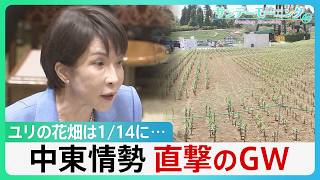
The effects extend further to agriculture, where one of the site’s main attractions—a vast lily field—has been reduced to just one-fourteenth of its usual size, as rising fuel costs and soaring fertilizer prices force operators to scale back. Fertilizer prices have already climbed about 20% from last year and are expected to rise to 1.5 times current levels by June, with some forecasts suggesting prices could double next year.
The Middle East is a key producer of fertilizer, with roughly one-third of global supply passing through the Strait of Hormuz, and disruptions there are now triggering shortages similar to those seen in crude oil markets.
Electricity costs are also expected to rise in the coming months, with the government warning that higher fuel prices will begin to feed into utility bills from June, as Japan’s pricing system reflects average fuel costs from three months prior. Further increases are anticipated in July and August, prompting consideration of reinstating subsidies between July and September.
The impact is already visible in consumer behavior, with fewer long-distance travelers and more visitors opting for local trips, while some are bringing their own food and drinks to cut spending. Rising fuel costs have also prompted concerns among drivers, with some choosing to fill up early in anticipation of further price hikes.
Although the government continues to stress that supplies are sufficient and has not called for conservation, concerns are growing among businesses and consumers about prolonged disruptions and rising costs, as the effects of Middle East instability spread deeper into daily life and the broader economy.
Source: TBS
Disclaimer : This story is auto aggregated by a computer programme and has not been created or edited by DOWNTHENEWS. Publisher: newsonjapan.com



