The assembly elections of 2021 across West Bengal, Kerala, and Tamil Nadu offered a compelling snapshot of India’s diverse political landscape, with each state delivering a verdict shaped by its own history, leadership, and voter priorities.
In West Bengal, the election unfolded as one of the most closely watched political battles in recent times. The ruling All India Trinamool Congress, led by Mamata Banerjee, secured a resounding victory, winning 213 of the 294 seats. The party also registered a strong vote share of around 47.9 percent, underlining its deep-rooted support across the state. The challenger, Bharatiya Janata Party, made significant inroads and emerged as the principal opposition with 77 seats and roughly 38.1 percent vote share, marking a sharp rise from its previous performance. Despite the intense campaign and high-decibel contest, the electorate delivered a clear mandate in favour of continuity, allowing Banerjee to return for a third consecutive term.
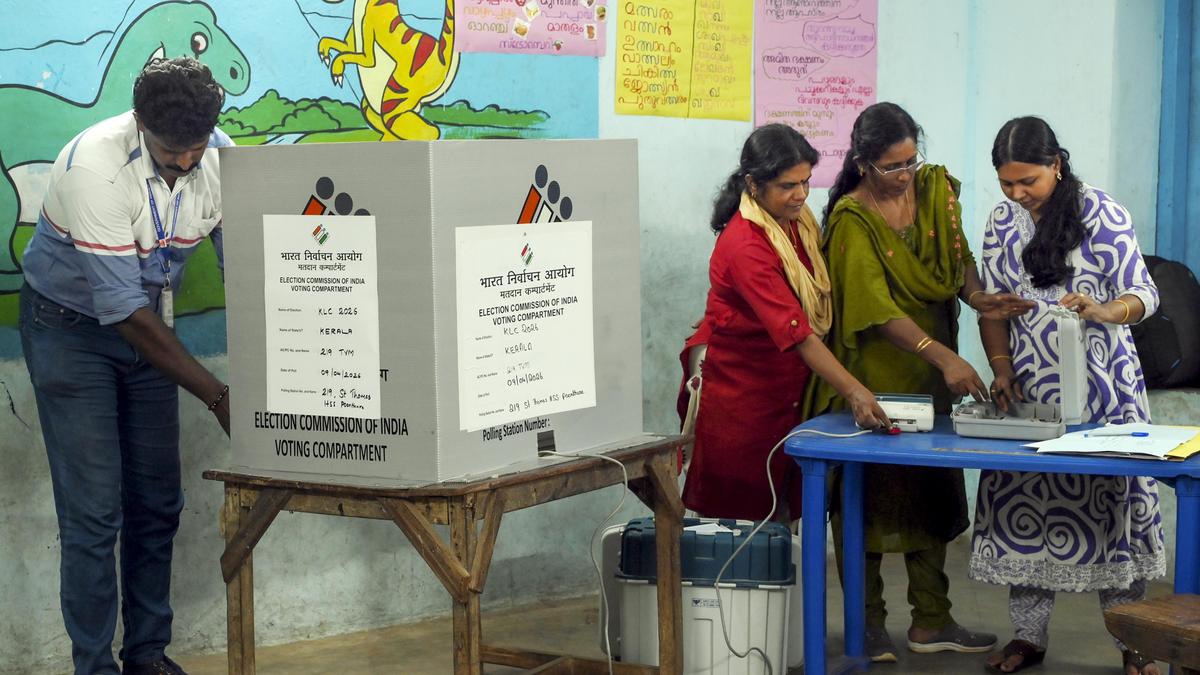
Further south, Kerala delivered a verdict that defied decades of political convention. The Left Democratic Front, headed by Pinarayi Vijayan, not only retained power but did so decisively, winning 99 out of 140 seats. The alliance secured a vote share of approximately 45.4 percent, while the opposition United Democratic Front trailed with 41 seats and around 39.5 percent vote share. This outcome was historic, as for the first time in four decades, Kerala voters chose to re-elect an incumbent government, signaling approval of governance and crisis management, particularly in the face of floods and the pandemic.
In Tamil Nadu, the 2021 elections marked the return of the Dravidian major Dravida Munnetra Kazhagam to power after a ten-year gap. Under the leadership of M. K. Stalin, the DMK secured 133 seats on its own in the 234-member assembly, with its alliance commanding a comfortable majority. The party’s vote share stood at about 37.7 percent, while its principal rival, the All India Anna Dravida Munnetra Kazhagam, won 66 seats with close to 33.3 percent vote share. The verdict reflected a shift in voter sentiment following the end of the AIADMK’s decade-long rule, ushering in a new phase of leadership under Stalin.
Taken together, these three states illustrated the nuanced nature of India’s electoral politics. While West Bengal reinforced a strong regional leadership against a rising national challenger, Kerala broke its cyclical pattern to reward incumbency, and Tamil Nadu signaled a generational and political transition. The results were not just about numbers, but a reflection of voter confidence, evolving political narratives, and the enduring importance of state-specific issues in shaping electoral outcomes.
Disclaimer : This story is auto aggregated by a computer programme and has not been created or edited by DOWNTHENEWS. Publisher: deccanchronicle.com