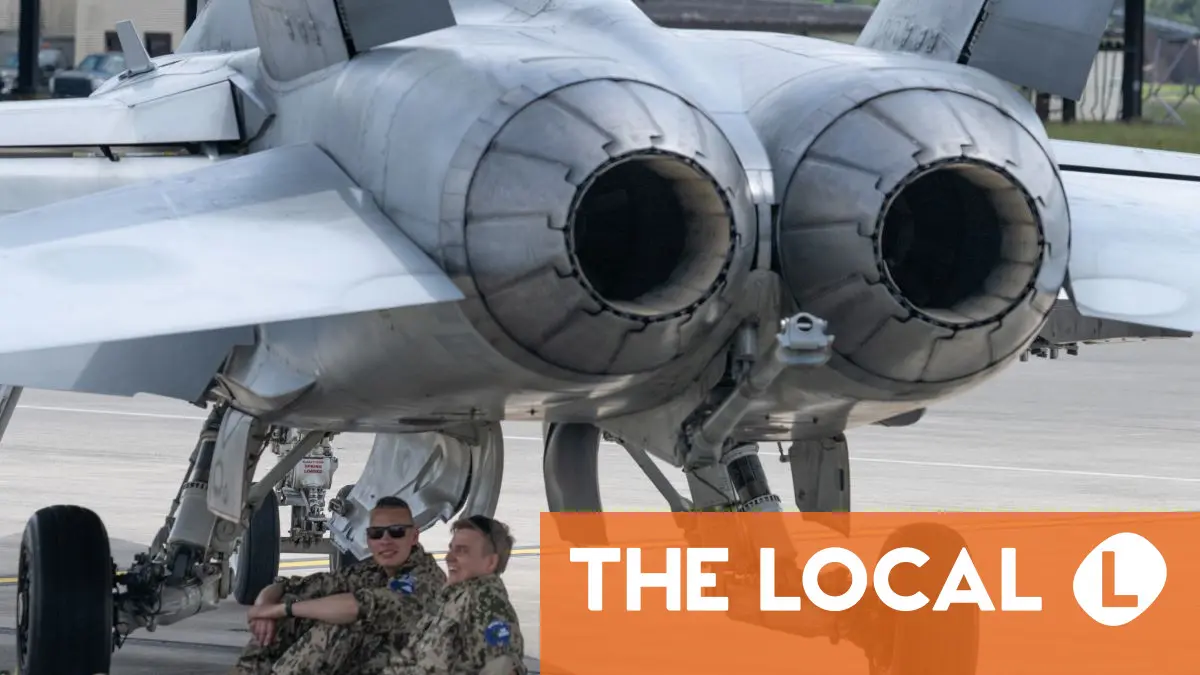
The US is set to cut thousands of troops from Germany, with Donald Trump warning that more reductions may follow. We look at who the American forces here are, what they do and what could happen next.
The United States is preparing to scale back its military presence in Germany.
On May 1st, the Pentagon ordered the withdrawal of around 5,000 American service members over the next six to 12 months, and US President Donald Trump has since suggested that the reductions will go “a lot further”.
The announcement followed a public spat earlier in the week, after German Chancellor Friedrich Merz questioned Washington’s strategy in the Middle East and said Iran was “humiliating” the US at the negotiating table, which provoked an angry response from Trump.
But Trump has long been critical of the US military presence in Germany. During his first term in office, he announced plans to withdraw around 12,000 US troops – roughly a third of the American force in the country at the time – arguing that Germany was not spending enough on its own defence.
That decision faced pushback in both Germany and the US Congress, and the planned withdrawals were later halted under the Biden administration before they could be fully implemented.
According to the most recent reports, this latest decision will affect the Stryker Brigade of the 2nd Cavalry Regiment, currently stationed at the Rose Barracks near the Grafenwöhr training area.
This would significantly reduce the American presence in and around the town of Vilseck, although at least 8,000 US soldiers are expected to remain stationed at Grafenwöhr. The US Army has invested heavily in the site in recent years, not least in the construction of dozens of new family homes.
With Trump indicating that further reductions may follow, we look at what this could mean for Germany.
How many US troops are currently stationed in Germany?
Germany hosts by far the largest concentration of US forces in Europe. According to Pentagon figures cited by multiple outlets, there are about 36,000 American troops based in Germany, more than in any other European country.
Across the continent as a whole, the US maintains between 80,000 and 100,000 troops, meaning Germany alone accounts for well over a third of the US’s European deployment.
Outside the US itself, only Japan hosts more American troops.
These troops are spread across dozens of installations. Some of the most significant include:
- Ramstein Air Base in Rhineland‑Palatinate, a major hub for US air operations and global logistics
- Stuttgart, which is home to US European Command and US Africa Command headquarters, coordinating operations across some 50 countries
READ ALSO: In Ramstein, Germans struggle to imagine town without US base
- Landstuhl, which hosts the largest American military hospital outside the US and sits at the centre of the Kaiserslautern military community
- Grafenwöhr in Bavaria, the largest US training base outside the United States by area
The personnel stationed in Germany are not just combat troops. They include air crews, logisticians, planners, medical staff and support units, alongside thousands of civilian employees and family members who live in surrounding towns.
Why are there so many US troops in Germany?
The American military presence in Germany dates back to the end of the Second World War.
US forces remained as part of the Allied occupation and later became a central element of NATO’s defence strategy during the Cold War, when West Germany lay on the front line with the Soviet‑controlled east.
At the time of German reunification in 1990, foreign troops in Germany numbered around 400,000 in total, nearly half of them American.
By the early 2010s, US forces in Germany had fallen to around 40,000–45,000, and they more than halved again between 2006 and 2018.
But despite these cuts, Germany retained its importance because of its location, infrastructure and political stability.
From Germany, the US can support missions not only in Europe, but also in Africa and the Middle East. During recent conflicts, including the current war involving Iran, German bases are known to have played a key role in logistics, medical care and command functions.
Who benefits from the current arrangement?
German and American officials argue that the long‑standing arrangement brings clear benefits to each side.
Sudha David‑Wilp of the German Marshall Fund told Deutsche Welle that the US bases in Germany enable US force projection, making it “much easier and less expensive” to support operations beyond Europe.
Meanwhile, Republican senators Roger Wicker and Mike Rogers warned that reducing troops in Germany could “undermine deterrence and send the wrong signal” to Russia at a time of ongoing war in Ukraine.
For Germany, US troops are seen as a cornerstone of national and European security, demonstrating that the US is not only committed to defending Europe on paper, but is already on the ground with infrastructure, equipment and personnel.
READ ALSO: Everything you need to know about Germany’s new military service letters
The US military presence in Germany also makes a significant economic contribution. In towns where American soldiers have been part of daily life since 1945, the bases underpin numerous jobs and businesses.
When American facilities were closed or scaled back after the Cold War, the economic impact was immediate.
In Bamberg, for example, where a US base closed in 2014, the withdrawal led to the loss of hundreds of military and civilian jobs and forced local authorities to repurpose large areas of housing, infrastructure and commercial property previously used by the US military.
What will happen next?
In practical terms, the Pentagon has confirmed that around 5,000 troops currently stationed in Germany will be withdrawn over the next six to 12 months.
At the same time, it has cancelled a Biden‑era plan to deploy an additional long‑range missile battalion to the country.
Beyond that, much remains unclear. Donald Trump has said cuts will go “a lot further”, but US officials have not specified which units or bases might be affected, or whether troops would be redeployed elsewhere in Europe.
READ ALSO: Merz says no ‘immediate’ Ukraine EU membership, floats Kyiv joining meetings
From Berlin’s perspective, the partial withdrawal was not entirely unexpected. Germany’s defence minister, Boris Pistorius, said the announcement reflected a broader shift in US policy, arguing that Europe had to “take on more responsibility for its own security”.
He added that Germany was “on the right track” in this regard as it moves to expand its armed forces, accelerate procurement and invest in military infrastructure.
Disclaimer : This story is auto aggregated by a computer programme and has not been created or edited by DOWNTHENEWS. Publisher: thelocal.de