Pritha Sen (66) does not think of herself as a great cook.
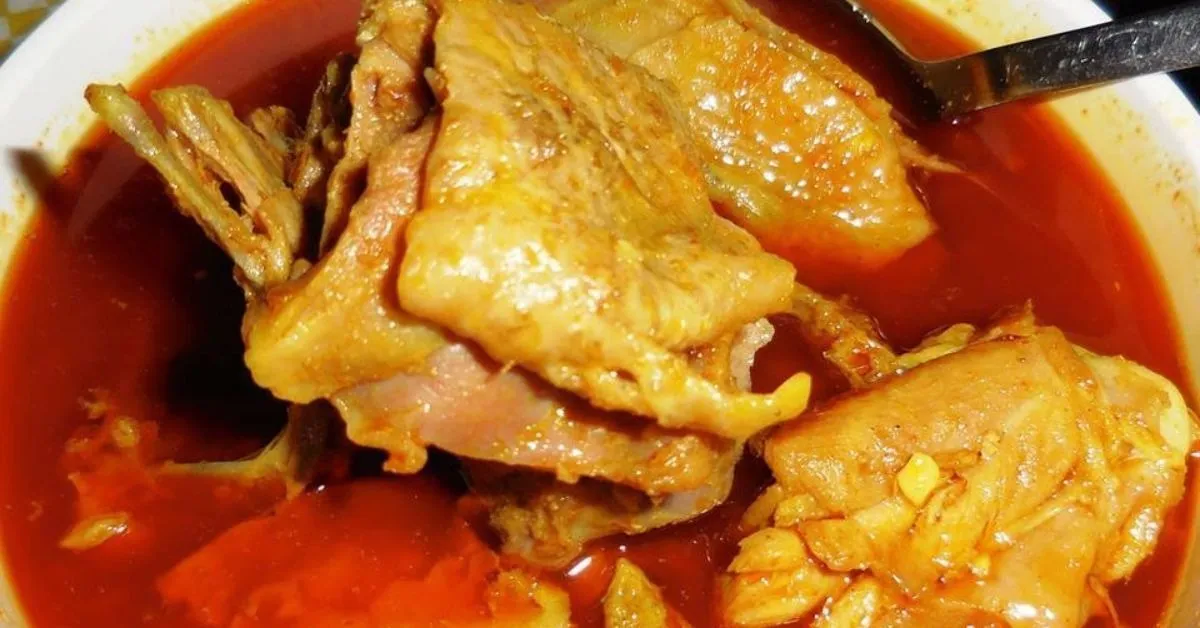
Instead, she describes herself as “a deconstructor of food”. Her career as a journalist might be the reason she finds herself needing to know the who, what, why, when, where, and how (the 5W1H technique in journalism) behind every dish that she comes across. Take, for instance, the Goalondo fowl curry.
A six-year-old Pritha would intently watch her uncle prepare the curry while her maternal grandfather would reminisce — from his spot in the reclining chair — about the Padma River in erstwhile East Bengal (now Bangladesh) and the game birds and waterfowl that inhabited its mudbanks.
Tracing a dish through memory and time
As Pritha writes in her book, The Great Padma: The Epic River That Made the Bengal Delta,“My mother, more taken by the steamer, the river, and the ‘duli’ rides from Narayanganj to her paternal village further in the interiors, could only give me a very vague description. However, an aunt from Tripura, who travelled frequently on the steamer to Goalundo Ghat, had some interesting stories that gave me valuable insights into the niche that the curry held in the gastronomic hierarchy of the times.”
As she delved deeper into the gastronomic routes of the curry, Pritha learnt more. For instance, from the late 19th century, those travelling to the erstwhile East Bengal, Assam, or Burma from India took steamers from Goalundo, a small station where the Eastern Bengal Express from Sealdah station in Calcutta terminated.
/filters:format(webp)/english-betterindia/media/media_files/2026/04/20/pritha-sen-2-2026-04-20-16-09-48.jpg)
She also met the late Mr Tulsi Prasad Lahiri, a railway man, who recalled to her how the ghat(landing station on the banks of the river Padma) was dotted with small shacks or bhater(rice) hotels.
He described the fowl curry as “a thin, red curry with oil glistening on top and a heavenly aroma of garlic, which we had with mounds of plump, parboiled rice, our mouths on fire from the chillies.”
And while listening to these tales, two things became evident to Pritha: every dish has a story of how it came to be, and second, she wanted to spend her life documenting food in a way that would enable people to wonder why we eat the way we do.
Dissecting food histories
Pritha’s colourful career — across journalism, teaching, and the social development sector, where she was involved in creating sustainable livelihoods — has involved venturing into fringe villages and conversing with communities.
She clarifies, “I did not quit my job to revive forgotten dishes. I quit my job to work at the grassroots to empower the people to build sustainable livelihoods. Working in real India inspired me to create awareness of the indigenous wisdom of our age-old ways of eating and therefore, revive ignored traditional styles of cooking with local, seasonal, and healthy ingredients.”
/filters:format(webp)/english-betterindia/media/media_files/2026/04/20/pritha-sen-2026-04-20-16-03-55.jpg)
She adds, “While staying in the villages, the only way to build credibility and trust with the people is to sit with the women in their kitchens. This is their domain; it’s a space where they can speak freely; it’s a space where the men don’t enter.”
During these tête-à-têtes, Pritha would encourage the women to elaborate on their dishes, and she would do the same, drawing parallels. “I began to realise that these communities would have perished a long time ago, despite a lot of failed and successful government attempts at nutrition, if the basic indigenous wisdom of how to extract maximum nutrition out of scant resources did not exist,” she shares.
/filters:format(webp)/english-betterindia/media/media_files/2026/04/20/pritha-sen-3-2026-04-20-16-12-10.jpg)
She adds, “The conversations took me back to my own childhood when we used to eat seasonal produce. Food was not an explosion of stuff in your mouth, but today we have moved further and further away from actual nutrition.”
Borrowing wisdom from her own roots that trace to East Bengal, Pritha says that growing up, they ate foods like colocasia leaves and stalks, gourd leaves and stalks, aside from the main vegetable, which are rich in a lot of micronutrients.
“The maximum nutrition lies in the peels and stalks,” she explains, going on to add that what makes Bengali cuisine so unique is its zero-waste legacy and nose-to-tail ways of eating that have continued uninterrupted to the 21st century.
These learnings from her home cuisine prompted Pritha to talk about it, write about it, and then post stories around it. This, in turn, led to demonstrative pop-ups where she could document and share Bengali cuisine’s vast culinary heritage with the younger generation to preserve and propagate it.
The kitchen as her field notebook
Even while today her culinary repertoire is coloured with feasts of every kind, Pritha fondly remembers the fiery ghugni(spiced yellow pea curry) her mali’s (gardener’s) wife made.And now, she thoroughly enjoys conducting experiments of her own.
“During the course of my work in Diezephe village in Nagaland, I found local rohu and decided to cook it with the ingredients readily available in a Naga kitchen, with some additional ingredients I was carrying with me. So I marinated the pieces of rohu with juice from the wild Naga lime, a hint of mustard paste, finely chopped skin of raja mircha (a superhot chilli pepper cultivated in Northeast India), crushed mejenga leaves (aromatic, citrusy leaves from the Sichuan pepper family), chopped wild putuko(sawtooth coriander), and mustard oil. I wrapped the fish in colocasia leaves and steamed them on a wood fire,” Pritha shares.
/filters:format(webp)/english-betterindia/media/media_files/2026/04/20/pritha-sen-5-2026-04-20-16-55-46.jpg)
She explains that mustard paste or mustard oil was in deference to her roots, but she added very little of each so as not to overpower tastes. “I served the fish with bamboo rice (seeds of the bamboo plant) cooked with dried bamboo shoots, Naga Sichuan pepper, and a sprinkling of dried local sumac berry powder.”
Another culinary favourite whose story she loves telling is that of the Coorg kadumbuttu or steamed broken rice balls that are had with the famous pandi(pork) curry, stuffed with Bengali-style Bombay duck or loittya jhuri (cooked down fish crumble).
Elsewhere, her curiosity shows up in how she reimagines classics. “I have made the Sindhi aloo tuk (twice-fried potato) by reimagining it as elegant crispy potato paves and serving it with a thick, tasty dal. Then there’s pulled duck in Mangalorean spices, rolled in the fine Bengal rice flour pancakes known as shoru chakli to make it seem familiar to local Singaporeans used to Peking duck in crepes, or Andhra-style prawns nestled in mini appam(thin pancake made with fermented rice batter and coconut milk) baskets.”
But the one creation that remains close to her heart is Banglar ghorowa thala (Bengal heritage mezze platter). “This has been styled on the lines of the Middle Eastern or Mediterranean small plate tapas platters: assorted dips and a dry condiment served with the Bengal baqarkhani(biscuit-like bread).”
The vegetarian dips comprise spinach steamed with garlic (palong shaak bhatey), begun pora(charcoal roasted brinjal), sweet, kumror aumbole (ripe pumpkin in tamarind), and chhana makha(smoked fresh cottage cheese pate). The fish platter comprises sweet pumpkin cooked with fish head (kumror chhyanchra), chingri mach bata(steamed and ground shrimps in mustard oil), loittya macher jhuri (fiery Bombay Duck crumble), and macher deemer aumbole(tangy fish roe).
“The whole ensemble showcases the healthy and fuel-efficient techniques used by Bengal even today with minimal spices and oils but rarely known outside the home: boiling, steaming, sauteing, roasting, smoking, to cook a plethora of fish and vegetables with little oil and retaining the nutritional value of each,” Pritha explains.
/filters:format(webp)/english-betterindia/media/media_files/2026/04/20/pritha-sen-4-2026-04-20-16-16-27.jpg)
The baqarkhani rotis served with these are unique to Bengal. “They are small and like layered flaky biscuits. Inspired by the growing movement to create awareness of healthy indigenous grains, I made them with ragi(finger millet) and bajra(pearl millet) flours instead of refined flour,” she shares.
Through her pop-ups, consultancies — Pritha has set up restaurants in Goa, Mumbai, and Chennai; consulted with leading hospitality groups like the Oberoi and ITC Hotels, and relaunched fine dining restaurant Yantra in Singapore — and documentation, Pritha is ensuring Bengali cuisine gets a legacy that goes on for generations.
All pictures courtesy Pritha Sen
Disclaimer : This story is auto aggregated by a computer programme and has not been created or edited by DOWNTHENEWS. Publisher: thebetterindia.com