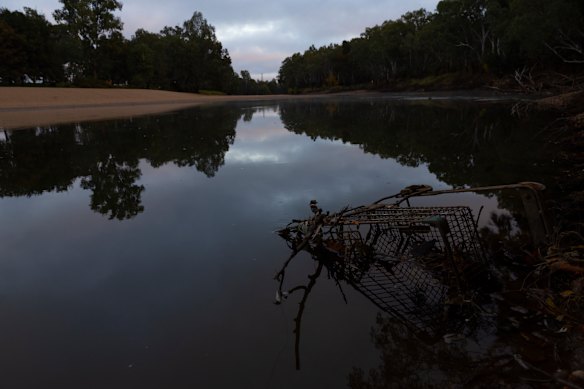
The death of a baby in a makeshift homeless camp on the banks of the Murrumbidgee River at Wagga Wagga is even the more heartbreaking because it was so avoidable.
A 37-year-old Indigenous woman gave birth to twins in a tent in the cold on Saturday. One did not survive. She and her second infant were taken to the Wagga Wagga Base Hospital, both in critical condition. The baby has been transferred to Sydney.
The woman and her partner had been living in the camp for about five months. There are no indications of what, if any, prenatal care was available, but Homes NSW had been in contact with her for several years, and she had previously used its housing services.
The riverfront camp is one of three tent cities in Wagga Wagga. The city council recorded more than 250 people sleeping rough in January 2025. And, according to the NSW Department of Communities and Justice, in a city of fewer than 70,000, there are nearly 700 people on a seven-year social housing waitlist.
Against such a bleak backdrop of a local housing system unable to provide shelter or support for an underprivileged mother with a newborn baby, Wagga Wagga has improbably emerged as one of the country’s hottest property markets.
The median home price in the city is rising sharply, as buyers move into regions in search of cheaper properties and find jobs at Wagga’s hospital, university and defence sites.
Across NSW, the gap between the haves and have-nots is deepening the housing crisis. Homelessness has surged by 60 per cent since 2020, with soaring rents and low social housing supply hitting the underprivileged especially hard. More than 68,000 households are on social housing waiting lists. In Wagga, higher priority cases – such as this mother – wait four years, and those with a lower priority wait seven.
Homelessness Australia chief executive Kate Colvin said the crisis had been building for years and the uncomfortable truth is that the Wagga Wagga death did not come out of nowhere. “It is completely unacceptable a family that has welcomed a new baby cannot immediately access a home, but rentals are unaffordable and social housing is unavailable. Even where families are in touch with homelessness services, people in desperate need miss out every day because there is not enough social housing or homelessness support,” she said.
Surging NSW homelessness, with people living in cars, tents and caravan parks, has echoes of the Depression era. Authorities must protect families from abandonment and ensure they get what they need and get it early, not after all is lost.
The death of a baby on the banks of the Murrumbidgee is a tragedy that follows decades of failure by successive governments to prioritise social housing. It is a tragedy that may be repeated unless meaningful action is taken.
Get a weekly wrap of views that will challenge, champion and inform your own. Sign up for our Opinion newsletter.
 The Herald’s View – Since the Herald was first published in 1831, the editorial team has believed it important to express a considered view on the issues of the day for readers, always putting the public interest first.
From our partners
Disclaimer : This story is auto aggregated by a computer programme and has not been created or edited by DOWNTHENEWS. Publisher: www.smh.com.au