Other Leak Detectors We Like
Photograph: Simon Hill
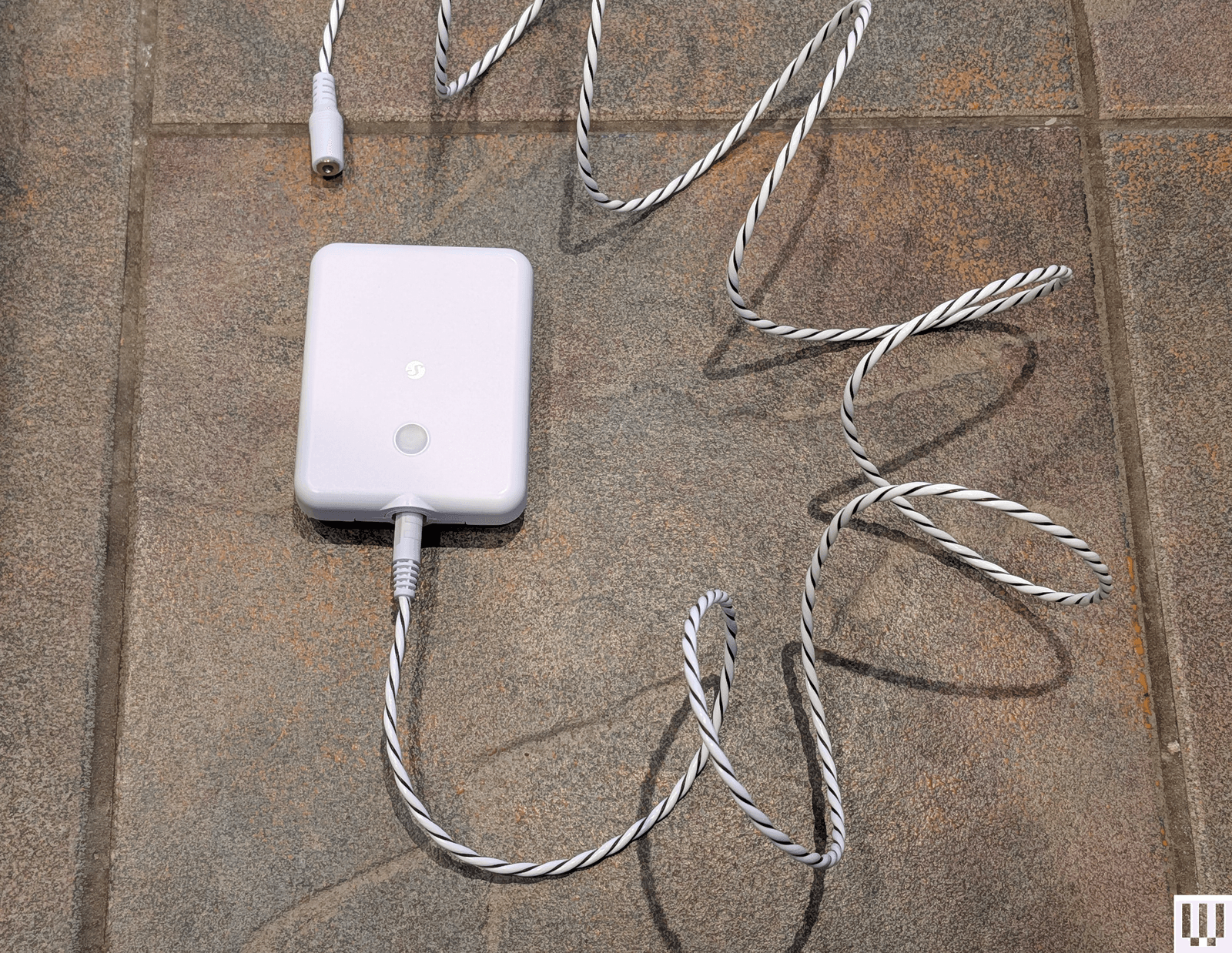
Shelly Flood Gen 4: Shelly’s fourth-generation leak detector boasts support for the Matter smart home system and impressive connectivity via Zigbee, Bluetooth, and dual-band Wi-Fi. I had no issues setting it up in my Google Home app by scanning the Matter QR code, but you can also use the Shelly app or your smart home ecosystem of choice (Amazon Alexa, Apple HomeKit, Samsung SmartThings). Each IP44-rated unit requires four AA batteries (included), and you stick or screw it to the wall (so there’s no risk of the unit being submerged), and plug the extendable 6.5-foot leak detection cable into the bottom to trail around the area you want to monitor. While I had some issues when I first tested, with it failing to alert in the Google Home app, these seem to have been resolved, and the detector correctly sounded an alarm when I dripped water on top, and alerted me through the Home app.
Phyn Smart Water Sensor for $37: With features very similar to our top pick, the Phyn Smart Water Sensor proved reliable, alerting me to water quickly with piercing beeps, a text message, and a push notification. Unfortunately, the setup was annoying; I had to reload and re-enter all my information because the app was flaky. The chunky disc design has three metal feet, and there’s an LED that flashes red when it detects a leak. You can add an Extension Node ($10) (a wired disc that plugs in) or a Water Sensor Cable ($27) (a 4-foot cable that can detect water along its length—you can daisy-chain up to three)—but neither comes in the box. This sensor also tracks temperature and humidity, with charts displayed in the app, and you can set alert triggers at certain thresholds. It wasn’t as swift as our top pick, but it was consistent in my testing. It takes two AA batteries (provided). Sadly, you have to press the button on the device to stop the alarm—there’s no in-app option. It’s also relatively large (the size of a hockey puck) compared to other detectors I tested, limiting your placement options. And once again, there’s no real smart home integration. Phyn also offers a water monitor and automatic shutoff device ($540), but I haven’t tried it.
TP-Link Tapo T300 Water Leak Detector for $20: What I like most about these water leak detectors is that they have four metal probes underneath and two above, so they swiftly detect water dripping on top or pooling beneath. Alerts came through reliably to my phone as push notifications within one to two seconds. The alarm is fairly loud (90 decibels), though you can reduce the volume in the app or even mute it. The TP-Link Tapo T300 requires a Tapo Smart Hub to function. Each hub can link up to 64 Tapo motion sensors, door or window sensors, switches, and other devices. The hub is a simple rectangular device that plugs directly into an outlet and connects to your Wi-Fi network. It doesn’t sound an alarm by default, but you can mirror the sensor’s alerts in the Tapo app. Another feature I like is the option to push the button on top of the sensor to have the hub confirm that it is within range. Each T300 sensor requires two AAA batteries (included) that TP-Link says can last for up to three years. There is a battery icon in the app to show the remaining power and warn when it is running low. As well as having the water leak alarm trigger your hub to sound, you can have it turn off devices in the vicinity if they are connected to Tapo smart plugs (I tested this, and it worked as expected). The T300 is a bit bulky, so it might not fit everywhere you’d like to place a sensor, and it continued to display as functioning normally in the app for several hours after I removed its batteries.
Eve Water Guard for $110: With HomeKit support, this is a good choice for iPhone owners with a home hub (an Apple TV or HomePod). HomeKit is also ideal if you have privacy concerns because you can be certain no data will be shared with third parties. There is an Eve app, but you can also view the Water Guard and set notifications directly through the Apple Home app. It plugs into an outlet and has a 6.5-foot cable that senses any water and immediately alerts you on your iPhone, iPad, and Apple Watch, wherever you are, provided you have a working home hub. It also flashes red and has a 100-decibel siren. You can review alarm history, test or mute alarms, and update device firmware in the Eve app. The Eve Water Guard only detects water, but the sensing cable works well, triggering quick alerts and covering a large area. It needs a power outlet, which also limits your placement options, but you never need to worry about battery life. The obvious drawbacks are the complete lack of support for Android, the fact that you need a home hub for remote alerts and management, and the relatively high price. You can also add 6.5-foot sensing cable extensions ($20 each) up to a total length of 500 feet.
Govee Wi-Fi Water Sensor (3-Pack) for $46: Quick and easy to install, Govee’s sensors send alerts as push notifications and emails. They also boast one of the loudest sirens I tested (100 decibels). Mercifully, you can shut off the ear-splitting sound from the app. The sensors are quite small with metal feet, offering drip detection on top and leak detection underneath, but there’s no option to add a disc or cable. The Govee Wi-Fi Water Sensors only detect water, but they are effective. I found alerts triggered within a few seconds. The app is basic but works well and displays alert history. Unfortunately, these sensors require a Govee Wi-Fi hub (included in the box), which takes up a power outlet (and may block an adjacent outlet), and each sensor takes two AA batteries (also provided). One concern with these sensors is that I failed to receive alerts when my phone was connected to mobile data rather than Wi-Fi, though the email did come through. There’s also no smart home integration.
First Alert L1 Wi-Fi Water Leak and Freeze Detector for $65: This large flood sensor, branded First Alert, works with First Alert or Resideo apps and accessories. It sends push notifications and emails to alert you to any leak and sports a 100-decibel alarm that you can stop with the side button. The sensor was relatively slow to alert in all my tests, and the push notifications only came through when my phone was connected to Wi-Fi. The 5-foot water-sensing cable allows you to cover a much larger area, and I found it alerted faster. The detector connects directly to Wi-Fi, so you need a decent signal. This sensor can also track temperature and humidity, but not very accurately (it consistently overestimates temperature and underestimates humidity). The two AA batteries provided are supposed to last up to two years.
Eufy Security Water and Freeze Sensor for $35: If you have Eufy’s security system, this could be the best water leak detector for you, but it requires connection to a HomeBase 2 or HomeBase 3 ($150). It proved quick and reliable to alert, offers long-range connectivity (up to 200 meters), and can warn you if the temperature drops below freezing. You receive alerts on your phone via the Eufy Security app, and you can configure the connected HomeBase to sound an alarm, but the detector doesn’t make any sound. A full battery lasts up to two years and the app tracks battery life. Sadly, it doesn’t show the temperature; it simply alerts below freezing.
Ikea Badring for $13: Super affordable, with a simple design, this Zigbee detector alerted reliably during testing. The Ikea Badring is a good choice if you already have an Ikea Dirigea hub ($109) to connect to for notifications on your phone. But it works out quite pricey if you don’t, and it’s not compatible with other hubs, such as the Ikea Tradfri. It does have an alert sound that goes as high as 90 decibels, but doesn’t carry far, and I wouldn’t rely on it alone. You must supply your own AAA battery, and this leak detector is only IP44 rated, so there’s a risk of malfunction if it gets immersed. This line is about to be discontinued, so you may prefer to opt for the new Matter-supporting Ikea Klippbok, which I plan to test next.
SwitchBot Water Leak Detector for $16: This rectangular detector triggered swift alerts in all my tests with a 100-decibel alarm. With prongs on top and underneath, it’s also quick to detect water. It connects directly to Wi-Fi, so you don’t need a hub, and can send push notifications and emails, though you must set them up in the app. Unfortunately, the push notifications did not come through when I was out of the house, connected to a cellular network instead of Wi-Fi. Smart home connectivity is good (Amazon Alexa, Google Assistant, and IFTTT), and you can set up automation in the SwitchBot app, which makes this a versatile option, particularly if you have other SwitchBot devices. SwitchBot says the two AAA batteries provided are good for up to two years.
AiDot Winees Water Leak Detector S1 Plus (3 Pack) for $50: Connect the plug-in hub to your 2.4-GHz Wi-Fi, place the three circular detectors in likely leak spots, and you are set. You can pair up to 10 with the hub and configure it to send emails and SMS messages on top of app notifications when there’s a leak. The probes on the underside of each detector are quite far apart, though, and it takes 2 millimeters of water before the alarm is triggered. It failed to go off with a steady drip on top, but the alarm sounded as soon as water pooled underneath. The alarm goes up to 100 decibels, and you can tweak its volume and duration. You can cancel alarms through the app or by pressing the buttons on the hub. These detectors take CR2 batteries that are good for up to a year, and there’s an indication in the app when they die. When I removed a battery from one of them, it took the app a few hours to update and show it as offline. One last downside is that the hub is circular, so it may block adjacent outlets. Support for IFTTT is a potentially handy extra that could trigger a water shut-off or a light to flash red when a leak is detected.
Aqara Water Leak Sensor for $19: This Zigbee sensor is best used with Apple’s HomeKit, and you need an Aqara hub (sold separately). The company makes a good security camera that doubles as a hub and offers a full range of smart home sensors. These small circular water leak sensors are very low to the ground, so just 0.5 mm of water underneath is enough to trigger an alarm. Dripping on top won’t set them off, but an iPhone notification is triggered as soon as water pools beneath the probes. You can also have your connected hub play an alarm and trigger automations through HomeKit. The sensors take CR2 batteries and can last up to two years.
Leak Detectors to Avoid
We did not have a great experience with every water leak detector we tested. These are not recommended.
Stitch by Monoprice Water Leak Sensor: This affordable water leak detector has a design that’s similar to our top pick. The main body is round, with metal feet to detect water pooling, and it slots into a bracket for wall mounting. It comes with a coin-sized plug-in extension that stretches up to 3.8 feet. Both the main detector and extension were quick to sound the alarm and send notifications to my phone when wet, but the on-device alarm is not very loud. It takes a single CR2 battery, displays the remaining power in the app, and alerts you when it’s time to change batteries. Unfortunately, the app is basic and poorly translated. You have to dry the detector to stop the alarm, and it took too long to warn me when it went offline (weirdly, the offline detector is toggled off by default in the app settings, so I had to switch it on).
Swann Leak Alert Sensor: While this battery-powered water detector (two AAAs) is affordable, I had a terrible time setting it up. Your phone must be on 2.4-GHz Wi-Fi, but even then, it took me multiple attempts to connect. Frustratingly, you must remove the screw panel to reset it, because there’s no option in the app. Alerts came through to my phone around a minute after I soaked the sensor, and the Swann app is slow and clunky.
Power up with unlimited access to WIRED. Get best-in-class reporting and exclusive subscriber content that’s too important to ignore. Subscribe Today.
Disclaimer : This story is auto aggregated by a computer programme and has not been created or edited by DOWNTHENEWS. Publisher: wired.com