From an opening ceremony at the beloved airport-turned-park, Tempelhof Feld, to erecting a ‘golden ramp’ at Brandenburg Gate, Berlin’s bid to host the Olympic and Paralympic Games in future is taking shape.
Berlin is putting forward a bid to be the German city that hosts the Olympic and Paralympic Games in future.
On Tuesday, the Senate approved the plans that, if approved, are expected to cost the city around €4.8 billion.
Berlin is one of four candidates in the national shortlist vying to be selected for Germany’s summer Olympic bid. The capital is going up against Munich, Hamburg and the Cologne/Rhine-Ruhr region.
The aim is for a German city to host the event in either 2036, 2040 or 2044.
Voters in Munich approved the southern city’s Olympic proposal in October of last year, and voters in North Rhine-Westphalia approved their region’s proposal in April.
READ ALSO: Munich voters approve plan to bid for Summer Olympics
The German Olympic Sports Confederation will decide on September 26th which region’s bid will go forward to the International Olympic Committee.
A golden pyramid, yellow ramp and giant Olympic rings
The capital’s concept, known as BERLIN+, would see sports centres in the city and surrounding areas turned into Olympic venues.
During the unveiling of the bid, Iris Spranger, Berlin’s Sport and Interior Senator, said 97 percent of the venues needed for the competition are already in place.
According to the concept, a ‘yellow route’ is planned to link the Olympic Stadium, which would serve as the central competition area, with the city’s iconic Brandenburg Gate and Tempelhofer Feld.
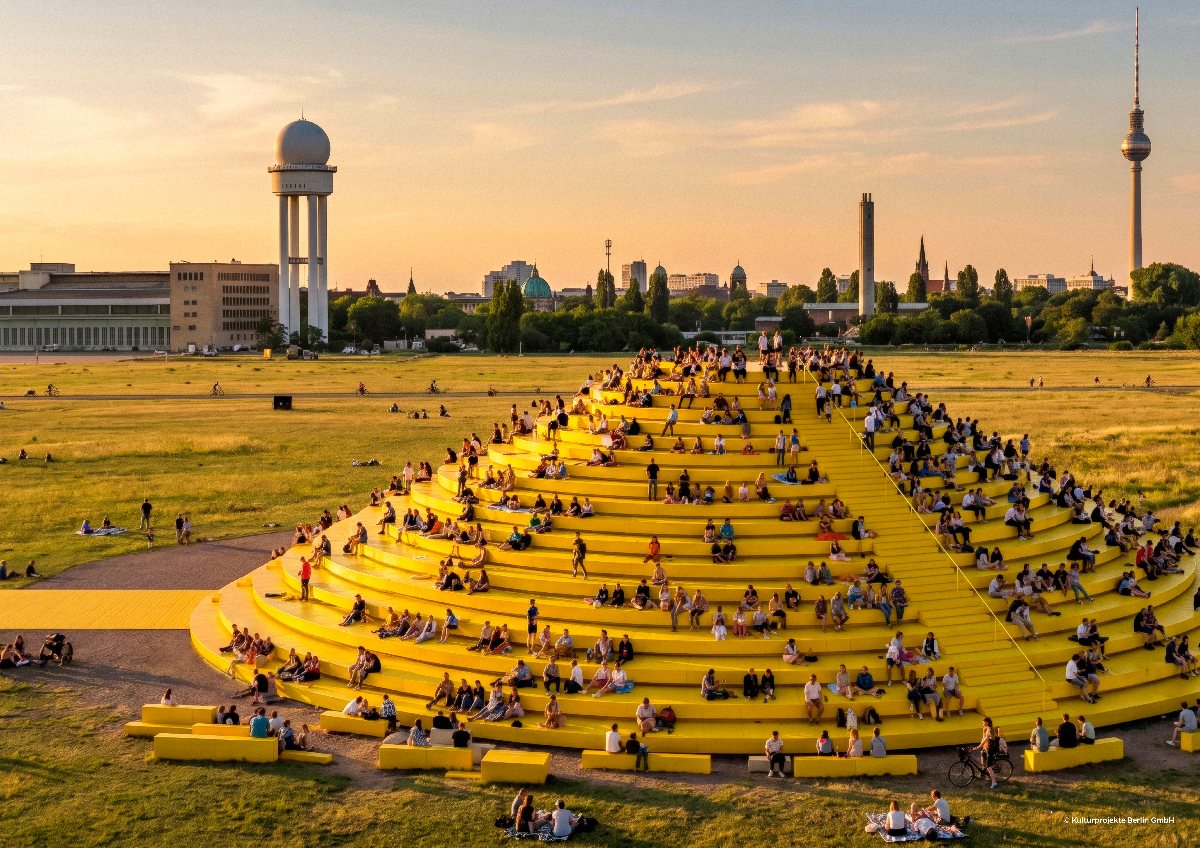
The city foresees a golden pyramid constructed in Tempelhofer Feld where athletes and spectators from around the world would gather for the Opening Ceremony.
The proposed spectator pyramid in Tempelhof. Photo: Kulturprojekte Berlin
The Brandenburg Gate would serve as the venue for the medal ceremonies.
A ramp bridge leading up to the Brandenburg Gate is also set to be a major attraction, while prominent landmarks, such as the TV Tower, are to be decorated with giant Olympic rings.
An Olympic Village comprising 2,400 apartments would be built near the Berlin Exhibition Grounds. Around 85 percent of athletes would stay there during the competition.
Berlin Mayor Kai Wegner (CDU) said this development will go ahead even if Berlin does not win the bid.
Berlin to see ‘significant boost’
In total Berlin, in partnership with Brandenburg, Saxony and Mecklenburg-Western Pomerania, would host competitions in 30 sports with 46 disciplines at the Olympics, while the Paralympic Games would feature 23 sports.
Equestrian events are planned for Leipzig, and sailing would take place in Warnemünde.
The Olympic football tournament would be held in Cottbus, Dresden, Hanover, Wolfsburg, Leipzig and Rostock.
Wegner said, “The Olympic and Paralympic Games can be a driving force for investment, for cohesion and for international prestige. Berlin is cosmopolitan, diverse and capable. That is exactly what we want to show.
“We are convinced that hosting the Games in Berlin would be a win – far beyond the realm of sport. The Olympic and Paralympic Games can give our city a significant boost and present Germany as a modern and reliable host.”
READ ALSO: Ice hockey to basketball – How to find tickets for sports games in Germany
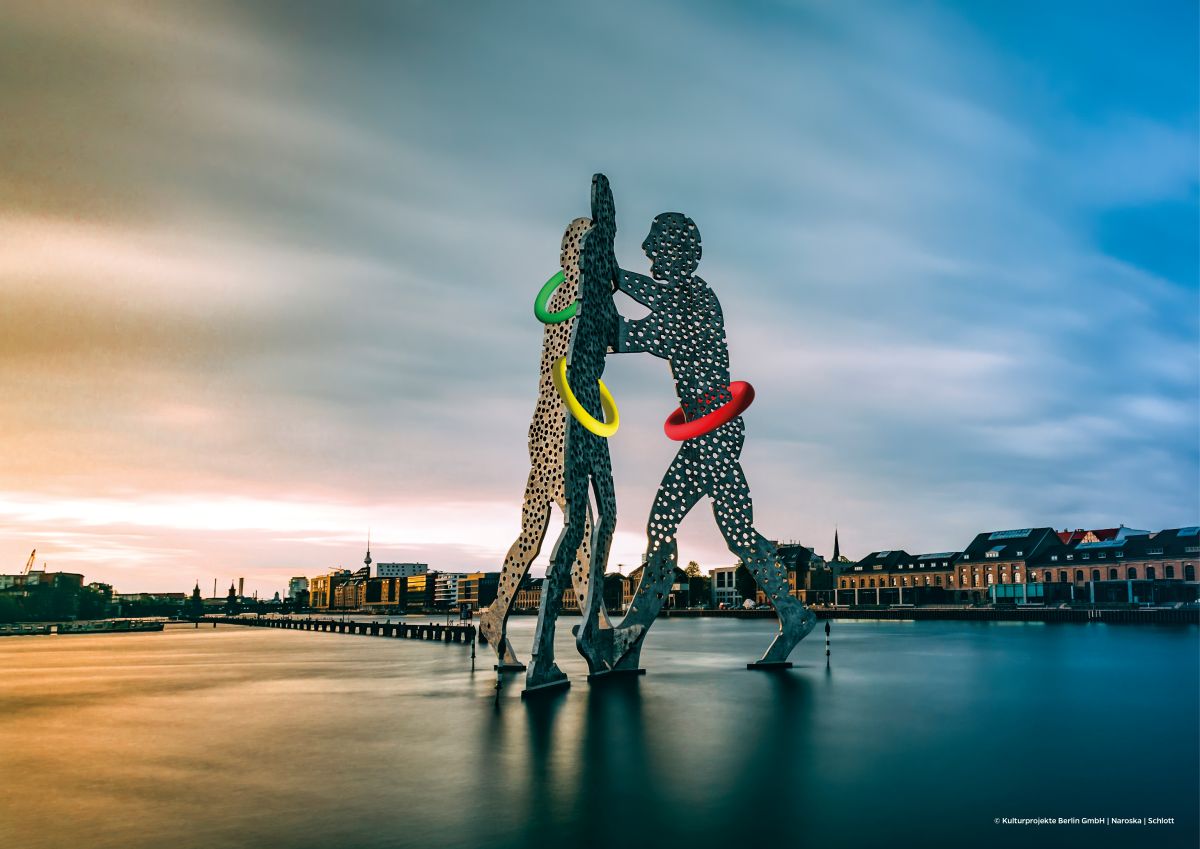
Rendering of Berlin’s Molecule Man with Olympic Rings added. Image by Kulturprojekte Berlin.
What’s the budget?
The Berlin Senate this week presented the estimated costs to be a host city.
Around €4.8 billion has been earmarked for the organisation and staging of competitions. These costs would be fully recouped through ticket sales, broadcasting rights and sponsorship, according to the Senate – in fact, a profit of around €420 million is anticipated.
Around 25 percent of the profit, however, would go to the International Olympic Committee.
As for investment in sports infrastructure, it is mainly the public sector that foots the bill.
Just under €1.6 billion has been set aside. According to the Senate, this sum would be invested over a period of 14 years in the modernisation or expansion of competition venues, the upgrading of grassroots sports facilities or targeted transport projects.
Disclaimer : This story is auto aggregated by a computer programme and has not been created or edited by DOWNTHENEWS. Publisher: thelocal.de