
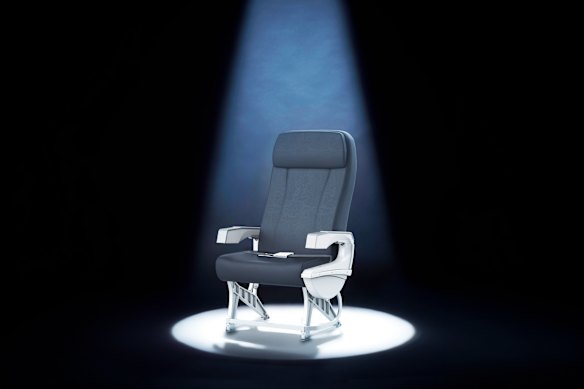
Been seduced by images of an economy-class aircraft cabin with spacious seats filled with smiling people? Who hasn’t, but the reality of back-of-the-bus travel doesn’t quite gel with those images.
If it’s an international flight, you’re going to become well acquainted with your seat, and that throws up all kinds of dilemmas.
Where are the best seats, and should you pay a premium for a better seat? Are there seats to avoid, and how do you find out where they are? How do you deal with seat kickers, and is it OK to initiate a conversation with the passenger in the next seat?
Is premium economy worth the cost for a few centimetres of extra legroom? Why do economy seats feel so tight? Weren’t they bigger and more spacious a couple of decades ago? Which airlines have the best seats in economy?
Sign up for the Traveller newsletter
The latest travel news, tips and inspiration delivered to your inbox. Sign up now.
Several years ago, on an overnight Singapore Airlines flight that looked almost empty, I chose a middle seat towards the rear of the aircraft in a row of three, hoping the others would remain vacant. When I boarded I was squashed in between two generously sized bodies. Qantas had cancelled a service to the UK and passengers were reallocated to seats on Singapore Airlines.
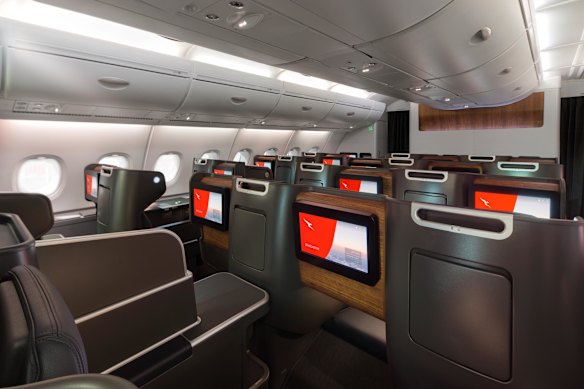
If you’re flying business class, you’re in clover. A business-class seat aboard a legacy carrier such as Qantas, Singapore Airlines, Japan Airlines or any of the big three Middle Eastern carriers is probably at least as good as a first-class seat of a decade ago.

On the bright side, even in economy, in-flight entertainment screens are bigger these days. USB ports and AC power are now common in economy, so power up, turn on and tune into your favourite in-flight distraction.
What are the best economy-class seats on long-haul flights?

Seat pitch is the distance from any point on a seat to the same point on the seat in the row behind. It’s a handy indicator of legroom and seat comfort, and any seat with a pitch of at least 80cm qualifies as “best”. All Singapore Airlines and Cathay Pacific wide-body jets have a seat pitch of at least 81cm. Qatar Airways’ older Airbus A380s, A330s and A340s have a seat pitch of 81-84cm. No economy-class seat aboard an Emirates wide-body aircraft has a pitch of less than 81cm, while some seats aboard the airline’s A380s and Boeing 777s have a roomy 86cm. JAL’s Boeing 787-8s have one of the most spacious economy seats of any airline operating into Australia, with a pitch of 84cm.
Is it worth paying extra for a better economy-class seat?
Airlines charge extra for their best seats, and if you want maximum comfort on your long-haul flight, it’s worth paying for the privilege. For extra legroom, the choice is between emergency exit-row seats and bulkhead seats. Exit-row seats give you plenty of stretch space and, provided you’re able and willing to assist other passengers in an emergency, they’re a premium choice. However, bassinets occupy the middle row behind the bulkhead and an unhappy infant will make for a flight you’d rather forget. They’re also close to the toilets, and passengers are prone to loitering in the vacant space behind the bulkhead. Also, passengers in bulkhead seats must stow books, tablets and other carry-on items in the overhead locker for take-off and landing, while the entertainment screen in your armrest is tucked away. Unless you have a book or magazine to read, you’ll be twiddling your thumbs until the “fasten seatbelt” sign is off.
How do I find the best seats for my upcoming flight?
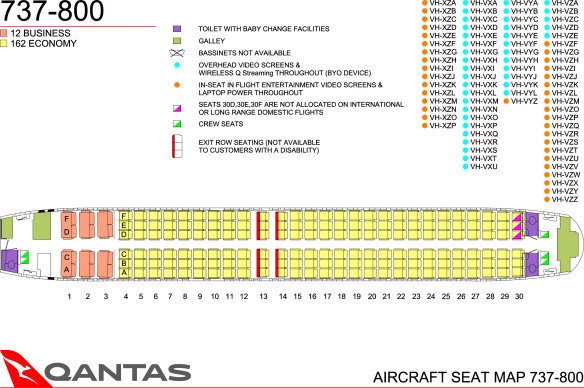
Seat selection for your flight is vital if you want to travel in comfort, and SeatMaps helps you find the perfect possie. Even if you have to pay, grit your teeth and do it. You’ll probably forget the price, but you won’t forget a crushed flight. Expert Flyer takes the game up a notch, showing which seats are still available on your next flight. You can also check for frequent-flyer award and upgrade availability, track flight status and delays and view seat maps. A paid subscription unlocks the full toolkit, but the free version is good enough for most needs.
Is seat width just as important as pitch?

A narrow seat gives you less shoulder room, and a shoulder that lolls out into the aisle gets plenty of attention from passing passengers as well as the meal trolley. Boeing and Airbus conceived their twin-aisle, twin-engine aircraft with eight seats across in their economy cabins, but airlines had other ideas. By squeezing in another seat per row, they could add 25–35 seats per aircraft, and that’s money in the bank. That meant tighter seating for passengers, but cash trumps comfort when it comes to economy air travel. One of the few airlines that flies most of its Boeing 787s with eight economy seats per row in a 2-4-2 configuration is Japan Airlines, where the seats are 48cm wide.
What are the seats to avoid?

Anywhere close to a toilet or a galley gets plenty of traffic, and that’s disruptive. If you’re sitting in the middle seat in a row of three or four, you’ve drawn the short straw. You’re hemmed in, and although it’s an unspoken convention that middle-seat passengers get the armrests on either side, that depends on having sympathetic neighbours.
What are the most family-friendly seats?
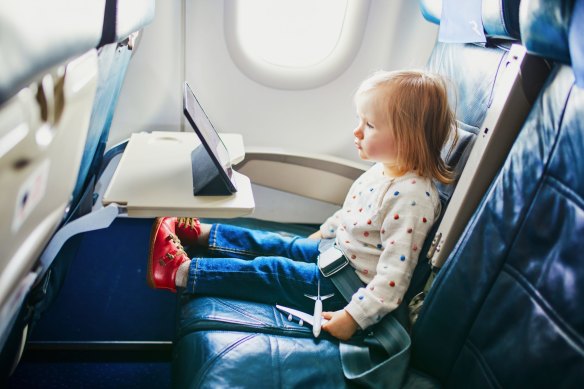
If you’re travelling with young children, you need to book seats when you book your ticket. Some airlines will allow families to choose adjacent seats without paying a fee, others can charge anything from $5 to $100 per seat. If you didn’t book seats when you made your flight booking, do it as soon as online check-in opens, usually 24 or 48 hours before departure. At the check-in desk, if your seats have been changed so that you’re no longer seated together, you need to address the problem straight away, and most airlines are sympathetic to families travelling with young children.
Should I feel obliged to swap seats if another passenger requests it?
It’s uncommon in Australia for couples or parents to ask other passengers to change seats to allow them to sit together, but social media reports suggest it’s happening in the US. If the passenger refuses to move, there might be a boilover, especially if the request comes from a parent. It’s a personal decision, and up to the passenger whether to give up their allocated seat, especially if they’re being asked to move from a premium seat they’ve paid for to a lesser seat.
Is there such a thing as a better economy seat?

A couple of airlines offer enhanced economy seats that give you about as much comfort as a premium economy seat without the high price tag. What you get for a modest fee is extra legroom and that’s about it. The same meal, the same seat width, the same baggage allowance as standard economy, the same cabin, but it’s well worth flyers considering this option to avoid displaced kneecaps. Only United Airlines (Economy Plus) and Etihad Airways (Economy Space) offer these upgraded seats, and given the popularity and revenue-earning capacity of premium-economy seating, more airlines are unlikely to jump on the bandwagon.
Which is better? Neck pillows or seats with butterfly-wing supports?

Butterfly wings on aircraft seatbacks are a sleep aid on long flights since they prevent your head from lolling about, but neck pillows are superior in every way. They offer better spinal alignment and head support, helping prevent neck pain and making it easier to fall asleep in an uncomfortable semi-upright position. There are many different versions, wraparound snakes, twisty types and memory foam styles, some with a price tag of more than $100. Rather than a foam-packed travel pillow, I use a space-saver inflatable version.
Is premium economy really worth it?
A premium-economy seat gives you about 15cm more legroom than economy-class passengers are enduring on the same flight. That’s only about the length of a large phone, but even when the passenger in front reclines, your knees won’t groan. It’s also fractionally wider, and the recline angle is steeper than in economy. You’re in a separate cabin, but you’re probably using the economy-class toilet. The configuration is typically 2-4-2 or 2-3-2. Position is crucial. If you’re stuck in a middle seat, you might wonder why you’re paying 50 per cent to 100 per cent more than an economy seat for marginally more legroom.
So which airlines have the best premium-economy seats?

At the 2025 Skytrax World Airline Awards, Virgin Atlantic took the gong for the world’s best premium-economy class, followed by Japan Airlines, Emirates and Singapore Airlines. Legroom, width and recline angle are the best indicators of excellence, and that puts all those airlines plus Qantas, Cathay Pacific and Air New Zealand in the winner’s circle.
What’s the deal with window seats without windows?

In some aircraft there’s a misalignment between windows and seats, and as a result some “window” seats have no window. This is due to components routed within the sidewalls, such as ducts and wiring, and passengers in those seats have every right to feel short-changed. Several US airlines are facing lawsuits for not clearly disclosing windowless seats. If you book a window seat, consult a seat chart on aeroLOPA or SeatMaps before locking in.
What are the best business-class seats?

Qatar Airways won gold for the best business-class airline seats at the 2025 Skytrax World Airline Awards. Runners-up were ANA All Nippon Airways, followed by Japan Airlines and Singapore Airlines. Qatar Airlines does business class better than just about every other airline, and the reason is its Qsuite cabin, launched in 2017 and described by then-CEO Akbar Al Baker as a “first-class experience in business class”. Qsuite cabins feature a business-class seat that turns into a double bed for couples, with privacy panels that close to create a “room”. This comes on top of Qatar’s “dine on demand” service, allowing business flyers to choose mealtimes, and a wake-up express breakfast for those looking to max out their sleep time.
What can I stow under my economy seat?

That space under the seat in front of you is ideal for storing small items, and airlines let you make use of it. As well as a carry-on case, most airlines allow a personal item, a small bag or satchel. The maximum size for under-seat cabin storage varies by airline, but generally a personal item such as a small backpack or handbag should fit. That gives you a respectable pack size of about 20 litres, which can swallow everything you need for a comfortable in-flight experience right up to a laptop. Several luggage makers sell under-seat bags.
What are backward-facing seats all about?

Seats that face backwards are safer, and some older wide-body British Airways aircraft still have a 2-4-2 arrangement in their Club World business-class cabins with alternate backward-facing seats, the so-called yin-yang formation. One problem: passengers in the window seat or in mid-cabin seats have to step over their neighbour’s feet to reach the aisle. They also get to watch their neighbour eating, which might not be a pretty sight. Apart from some couples, they’re unpopular with flyers, and design constraints mean the concept has never caught on in economy cabins.
What’s the secret behind the secret armrest button?
Exiting an economy seat is easier if you raise the armrest. Even the armrest closest to the aisle can be raised, via a button on the rear underside of the armrest.
Should I decline to recline or be inclined to recline?

With few exceptions, seats in economy class recline. On long flights, most passengers find it more comfortable to recline their seat at least some of the time, yet the issue of seat recline is a major cause of air-travel disquiet. Apart from take-offs and landings, when upright seatbacks are required until the “fasten seat belt” sign is turned off, passengers can recline their seat at any time. It’s accepted that seat backs will be upright during meal service, and cabin crew will enforce this if requested. On a short flight, it’s generally acknowledged that reclining your seat is bad form.
How should I deal with seat kickers, screen stabbers and seat haulers?

The passenger seated behind can make your life slightly less pleasant. In the case of the seat-kicking child, often the parent is unaware. A polite, calm word like “Excuse me, I think your child’s feet are pushing against my seat. Could you help with that?” will usually do the job. The same applies to the screen stabber hammering their in-flight entertainment screen like a caffeinated woodpecker. Most people have no idea they’re causing discomfort, and a polite request should work. If not, have a word to the cabin crew. Another seat irritant is the person behind who grabs the back of your seat to haul themselves upright. If it’s impossible for you to vacate your seat without grabbing the back of mine and heaving it backwards you need to do something about your core strength.
To chat or not to chat?

You’re strangers, thrown together by chance, and human-to-human connection is all very well, but turn on your social radar. If you’re inclined to chat, start small. A polite “good morning”, to the passengers in adjacent seats is a handy icebreaker; you might have to ask them to move later on during the flight. If they’re up for more, go ahead, but respect a short response. If they turn away, grunt or go back to their phone or tablet, it’s your cue to leave them in peace.
Have economy seats shrunk?
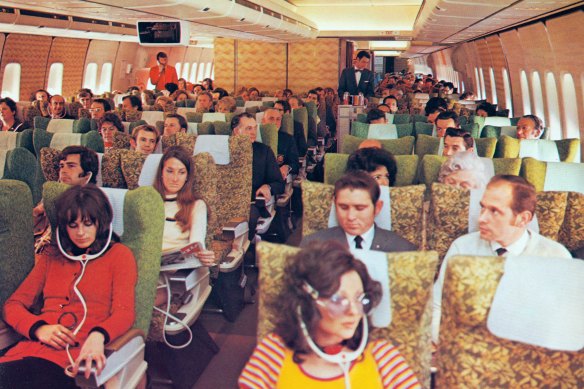
Ask just about anyone who remembers flying in the 1980s, and they’ll swear economy seats were roomier then, but here’s a surprise. On wide-body jets, seat pitch has not changed much since the early days of twin-aisle aircraft. In the 1980s, seat pitch in economy aboard a Boeing 747 was typically 81cm. That’s about what you can expect on an economy-class seat flying aboard a wide-body aircraft with a legacy carrier on an international flight today. However, there’s an impression that we’re more cramped. Seatbacks are thinner than they once were, and that means more seats in the same size cabin. Also, international flights into and out of Australia are currently experiencing high loadings. The chance of scoring an empty seat beside you is small. Three seats across so you can lie down in comfort? You must be dreaming. Furthermore – uncomfortable fact – most of us are bigger than we once were.
Dream on: Five ways to create an ideal economy seat
1. Seat width is a generous 50cm, which means no shoulder wars, and no elbow jousting with strangers. Seat pitch is 85cm and cabin configuration is 2-3-2. It’s a shell-type seat, so there’s no blowback from the passenger behind when I recline.
2. There’s a big storage compartment and a green light tells me when it’s empty, so I don’t forget anything.
3. The seat base is contoured with proper cushioning that doesn’t sag after an hour. It’s also a massage chair with lumbar and neck support which is adjustable via electrical switches. Also, a footrest which swings out to variable angles.
4. Multiple power outlets and USB ports for every device are close at hand. The oxygen pumped from the air vents is at sea-level concentration and the humidity is 40 per cent.
5. The seat responds in sync with the feed from the in-flight entertainment system. A motorbike ride gives a different sensation from a skier racing an avalanche.
Disclaimer : This story is auto aggregated by a computer programme and has not been created or edited by DOWNTHENEWS. Publisher: www.smh.com.au


