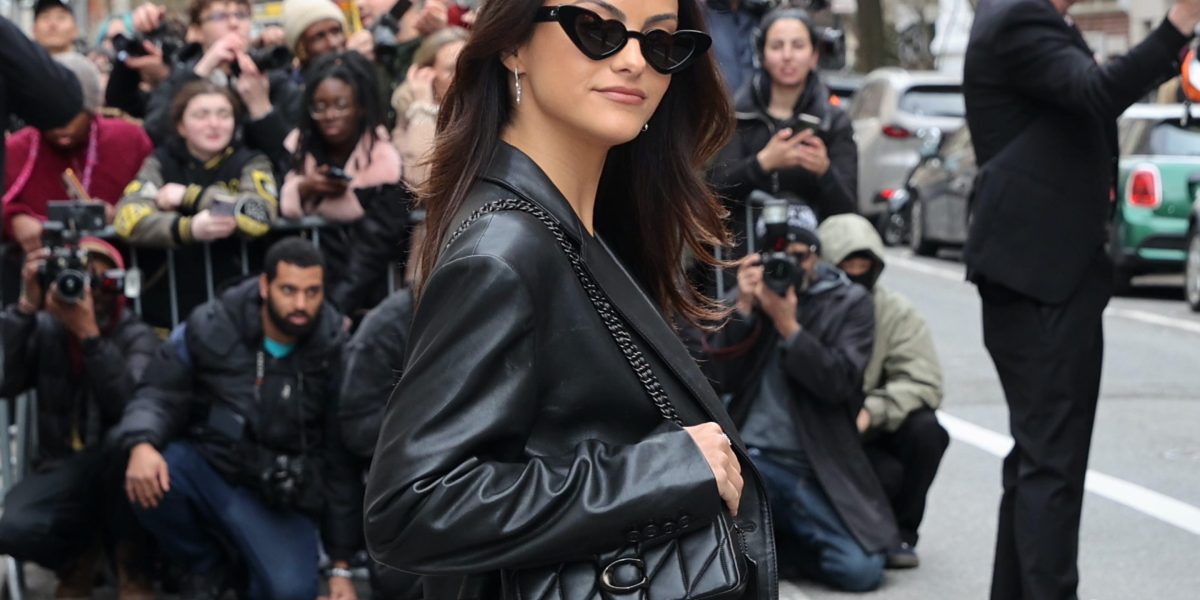
Tapestry has a theory about why Gen Z keeps buying Coach bags: The brand is just fancy enough to feel like an achievement, and just affordable enough to actually be one.
“Our price and brand positioning of expressive luxury is truly the Goldilocks of brand positioning in our industry,” Todd Kahn, CEO and brand president of Coach, told analysts on Wednesday. “On the one hand, we’re aspirational in design, fashion, and quality, yet extremely approachable in price positioning.”
The results suggest the formula is working. Tapestry, the luxury accessories conglomerate that also owns Kate Spade, reported a record third fiscal quarter on Wednesday, with pro forma revenue up 23% year-over-year, operating margin expanding 490 basis points, and earnings per share surging 62% to $1.66—all beating guidance. The company raised its full-year outlook, now targeting $7.95 billion in revenue and EPS of $6.95, representing 35% earnings growth.
Coach, the engine of it all, posted constant currency revenue growth of 29%. North America rose 27%. Greater China surged 58%. Europe climbed 27%. The brand welcomed 2 million new customers in the quarter alone, with Gen Z acquisition accelerating “meaningfully,” according to CEO Joanne Crevoiserat.
“We can literally add millions of new customers every quarter for the next 10 years, and we’ll just scratch the surface,” Kahn said.
The first-bag moment
At the heart of Tapestry’s growth thesis is a bet on what executives call the “first luxury bag” milestone—the idea that Coach can own the emotional and commercial moment when a young consumer makes their inaugural foray into luxury goods.
“When we talk to consumers, we hear stories over and over and over again about remembering their purchase of the first bag and how important that milestone is in their life,” Crevoiserat said. “We want to earn the right to be our consumer’s first luxury bag purchase.”
That bet is grounded in hard math. Gen Z customers, executives noted, show higher retention rates than other cohorts, meaning the earlier Coach acquires them, the longer the lifetime value runway. And the influence flows upward: Crevoiserat pointed to a “reverse influence” dynamic in which Gen Z buyers are pulling older generations back to the brand as well. She didn’t say it quite in this way, but essentially millennials are no longer cool and Gen Z decides which brands—and which bags—make the cut.
“Not only are we fueling this customer acquisition flywheel, but this customer is influencing all generations,” she said.
The flywheel logic is central to how Tapestry pitches its long-term story to Wall Street. New customers drive brand heat. Brand heat justifies higher marketing investment: Coach is now approaching $1 billion in annual marketing spend. More marketing drives broader awareness and more new customers. Repeat purchases from maturing Gen Z consumers thicken the existing customer base. Rinse, repeat.
Fewer SKUs, more heat
The product strategy backing all of it is disciplined to the point of being almost counterintuitive: less variety, more impact.
“We’re doing it with fewer SKUs,” Kahn said. “We’re doing it in a much more controlled manner than ever before, and we’re doing it by amplifying major families.”
That means doubling down on marquee franchises—the Tabby, the New York family (Brooklyn, Empire, and the newly launched Chelsea), plus Teri, Laurel, and Rowan—while engineering scarcity through limited drops that sell out in days.
“We had a pink drop that I thought was going to last between the third and fourth quarter,” Kahn said. “I think it lasted days, not weeks. Those are good problems to have.”
The creative stability behind the assortment—Kahn credits longtime creative director Stuart Vevers and a team that has been together for years—is itself a competitive moat, he argued.
“The most important thing is for our creatives to have an informed gut,” Kahn said. “We’re not outsourcing design, nor are we outsourcing our commercial excellence to AI just yet.”
Core leather goods unit volumes grew over 20% in the quarter, while average unit retail (AUR) rose at a low double-digit rate—rare simultaneous expansion of both price and volume that analysts flagged as a sign of genuine brand strength.
‘Where do we go from here? We’re just getting started’
The bullishness extended to the long-term outlook. Analyst Bob Drbul of BTIG noted on the call that Tapestry’s FY26 guidance would deliver on its Investor Day financial targets two full years ahead of schedule. Crevoiserat’s response set the tone for the rest of the Q&A.
“We’re just getting started,” she said.
Kahn went further, reiterating a long-term aspiration that might have sounded far-fetched a few years ago: “I have more conviction now that the Coach goal of $10 billion at best-in-class margins is more attainable than ever.”
Not everything in the Tapestry portfolio is humming. Kate Spade revenue declined 11% in the quarter, slightly missing expectations, weighed down by a strategic pullback in promotions and ongoing brand investment. The brand is profitable on a gross margin basis, and individual products like the Duo Mini, which sold out after being spotted on Kendall Jenner, show the formula can work. But management acknowledged the road back is neither fast nor straight.
“We also know that turnarounds take time, and the path to long-term growth is not always linear,” Crevoiserat said.
For now, Tapestry’s narrative—and its stock story—belongs to Coach. And executives are betting that as Generation Alpha ages into the luxury market behind Gen Z, the addressable opportunity only grows.
“Soon there’ll be Generation Alpha, and they’ll be part of this new customer acquisition strategy,” Crevoiserat said. “That’s the formula for us.”
For this story, Fortune journalists used generative AI as a research tool. An editor verified the accuracy of the information before publishing.
Disclaimer : This story is auto aggregated by a computer programme and has not been created or edited by DOWNTHENEWS. Publisher: fortune.com