
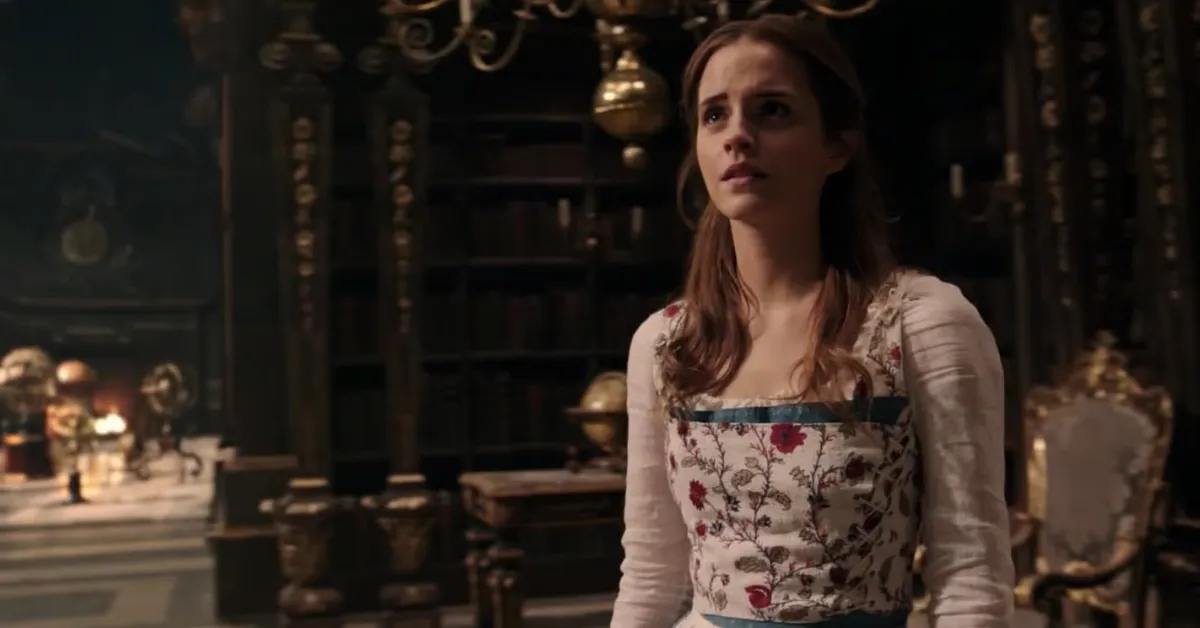
The next time a Hollywood costume makes you pause, look a little closer.
Maybe it is Belle’s yellow gown catching the light in Beauty and the Beast. Maybe it is the gold-threaded spectacle of Aladdin, or a richly textured cloak in a fantasy world. On screen, these costumes feel like pure cinematic magic.
But long before they reach a film set, many such details begin on fabric stretched across wooden frames, under the hands of artisans in places like Bhuj, Kutch, Jaipur and Rajasthan.
Every shimmer, raised pattern and embroidered panel carries hours of skill. Behind the glamour are craftspeople who have inherited techniques passed down over generations, now finding their way into some of the world’s most recognisable films.
The ballroom and the bodice: Beauty and the Beast
Take Beauty and the Beast (2017). In the ballroom sequence, as Emma Watson’s Belle turns in that luminous yellow gown, the scene feels effortlessly European with soft candlelight, gilded interiors, a sweeping silhouette.
But look closer at the bodice. Parts of that intricate surface embroidery were crafted in Bhuj, in Gujarat’s Kutch region, using aariembroidery (a fine chain-stitch technique practised for generations, particularly by Muslim artisan communities in the area).
Working through export ateliers, these artisans translated Jacqueline Durran’s designs into hand-embroidered panels. What appears as an 18th-century French fantasy carries, within it, the rhythm and precision of Kutch craftsmanship.
Gold thread and spectacle: Aladdin
That exchange of skill appears again in Aladdin (2019). In the exuberant “Prince Ali” sequence, where colour, movement, and spectacle take over the screen, the costumes worn by Naomi Scott and the ensemble shimmer with dense gold threadwork, bead embroidery, and layered detailing.
Designed by Michael Wilkinson, these garments draw on techniques like zardozi and aari — crafts deeply rooted in Rajasthan and Gujarat, particularly in clusters around Jaipur and Kutch.
/filters:format(webp)/english-betterindia/media/media_files/2026/05/07/4-2026-05-07-21-05-23.png)
These are the same regions where artisans routinely produce intricate embellishments for global fashion houses, now scaled up for cinema’s most elaborate sequences.
Texture in the dark: Maleficent
In darker, more textured worlds like Maleficent (2014), the connection is less visible, but no less present. Costume designer Anna B Sheppard built Angelina Jolie’s look through layers — embroidered surfaces, distressed metallic threads, richly worked fabrics that feel almost alive in close-up shots.
These tactile details echo techniques long practised in Rajasthan’s zardozi clusters and Gujarat’s embroidery networks, where artisans specialise in creating depth through thread and texture.
Worn and weathered: Game of Thrones
The scale of this craftsmanship becomes even clearer in Game of Thrones (2011-2019). Known for its vast costume department, the series relied on global sourcing to achieve garments that felt worn, weathered, and real.
In court scenes featuring Daenerys Targaryen, the costumes reveal subtle raised textures and irregular stitching in close-up details that mirror the kind of hand-finishing produced in western India’s embroidery belts, stretching across Rajasthan and Gujarat.
/filters:format(webp)/english-betterindia/media/media_files/2026/05/07/6-2026-05-07-21-06-43.png)
These are regions where artisans are accustomed to working at scale, while retaining the individuality that handwork brings to fabric.
Lightness built stitch by stitch: Cinderella
Even in the airy, dreamlike transformation scene of Cinderella (2015), designed by Sandy Powell, that softness, the way the gown seems to float, is achieved through layers of hand-finished detailing.
The film does not specify artisan origins. However, the techniques visible on screen align with skills sustained in Rajasthan’s traditional embroidery centres and Kutch’s fine needlework traditions, where lightness and intricacy are built stitch by stitch.
The craft behind the magic
What ties all these moments together is not just craftsmanship, but continuity.
Across films and genres, embroidery traditions from India’s western textile regions, including Kutch in Gujarat, Jaipur and surrounding clusters in Rajasthan, have helped shape the visual language of costume design. Artisans here specialise in aari, zardozi, mirror work and bead embroidery, skills that have moved from heirloom textiles and festive wear into red-carpet fashion, couture and film.
And perhaps that’s what makes it feel so close to home.
/filters:format(webp)/english-betterindia/media/media_files/2026/05/07/5-2026-05-07-21-08-42.png)
If you’ve ever watched embroidery being done up close — fabric stretched across a wooden frame, the quiet rhythm of the needle, the concentration it demands — you already understand the pace behind these costumes.
The difference is scale. That same process might now be repeated dozens of times over, to create identical gowns for a single film — each one still made by hand, each one carrying the same care.
So when Belle turns in that ballroom, or when a royal procession unfolds in Aladdin, what you’re seeing isn’t just design. It’s a journey of fabric, skill and tradition, moving from Kutch or Rajasthan into a global frame.
Their names may not always appear on screen. But their craft lives in the shimmer, texture and detail that audiences remember long after the credits roll.
Sources:
‘Did you know the Beauty and the Beast costumes were crafted in India?: by Elle India, Published on 27 March 2017
‘Indian embroidery and the narrow lens of global fashion’: by The Established, Published on 25 March 2026
‘India’s Artisans Are Powering Global Fashion — But Getting None of the Credit’: by Hollywood Reporter, Published on 1 January 2026
Disclaimer : This story is auto aggregated by a computer programme and has not been created or edited by DOWNTHENEWS. Publisher: thebetterindia.com



