
Michaela Coel’s I May Destroy You may have only come out six years ago, but it feels like a lifetime. I rewatched it recently because I missed well-written TV shows, and I finished it struck by what a time capsule it already is. The pink hair. The incredibly 2010s book title, Chronicles Of A Fed-Up Millennial. Even the idea of being “big on Twitter”. Was this the Last Great Millennial text? I wondered. And if so, where is today’s equivalent? Why is there no defining TV show for a younger cohort?
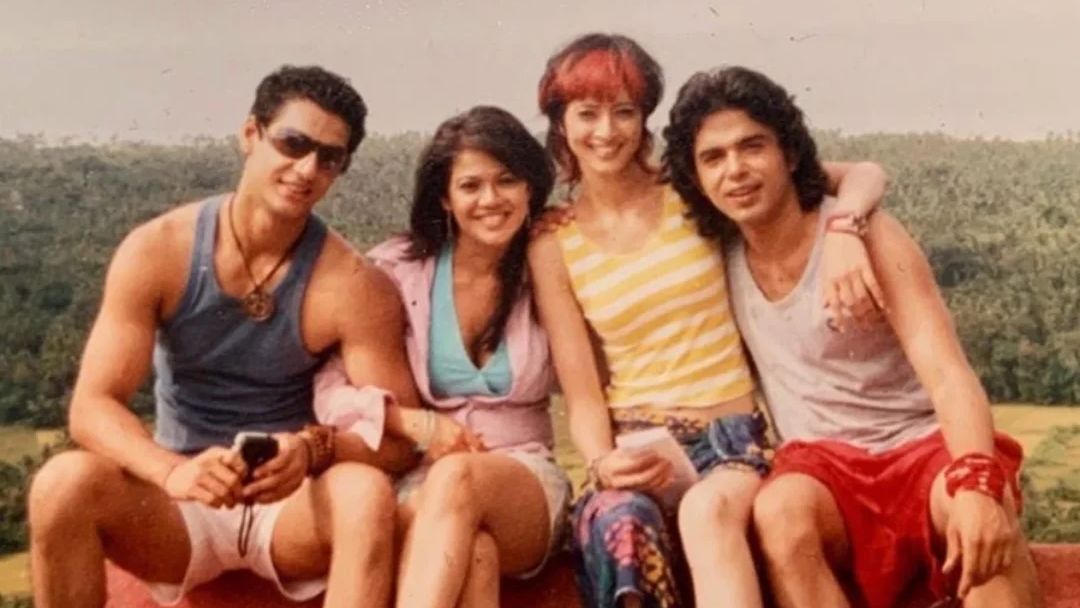
Millennials have had more than one—Phoebe Waller-Bridge’s Fleabag, Lena Dunham’s Girls, Remix and Dill Mill Gayye on Star One. Gen Xers before us famously had Hip Hip Hurray on Zee TV, Sex And The City—a show which distilled the era’s changing attitudes towards women’s work and dating lives—Friends. For a while, it looked like Euphoria might be a definitive Gen Z text—like Skins but with Xanax and cam-girling. And yet. Can we confidently say that anything else has come close since?
There have been attempts. HBO’s I Love LA was heavily billed as a sort of Girls-like vision of 20-something life today. But its hit-and-miss writing and meandering plot lines meant that it fizzled as quickly as it was hyped. Amazon Prime’s Overcompensating—its lead poster resembles that of Skins—was well-liked, but hardly era-defining. And though BBC’s Industry has been a success story since its release in 2020, it feels like less of a generational text than a TV show with broad appeal. It’s set in the 2020s, but it could have been set a decade or two prior.
Shows like Fleabag and I May Destroy You felt fresh, daring, even experimental in parts. But in a TV landscape that’s increasingly risk-averse and inclined to hedge their bets for reasons that we don’t have time to get into but basically amount to “less money”, it’s hardly surprising we’re not seeing more creations of this ilk (can you imagine HBO handing over a TV show to a relatively unknown 23-year-old, as it did with Lena Dunham, today?). “People try to plan on having hits, but hits happen by throwing the net wide and taking some chances,” one executive producer, Debbie Liebling, told The Ankler. “So often, people are afraid of diverting from what they think people want.”
Some have argued that it’s impossible to create an era-defining TV show about an era that is being better defined via other mediums. “There is no way that television, even with accelerated production, could ever hope to keep up with the warp-speed trends and nimbleness of social media,” wrote Adrian Horton for the Guardian, “or model the speed, hyper-referentiality and distinctly un-prestige aesthetic of internet comedy.” This makes sense as a line of reasoning, but it also feels like a cop-out. I, too, often choose Instagram over trawling through yet another £16.99 per month streaming platform that pumps out watery reboots and cancels TV shows after one season. If what was on offer was of a higher calibre and more easily accessible, maybe it wouldn’t be this way.
Disclaimer : This story is auto aggregated by a computer programme and has not been created or edited by DOWNTHENEWS. Publisher: vogue.in



