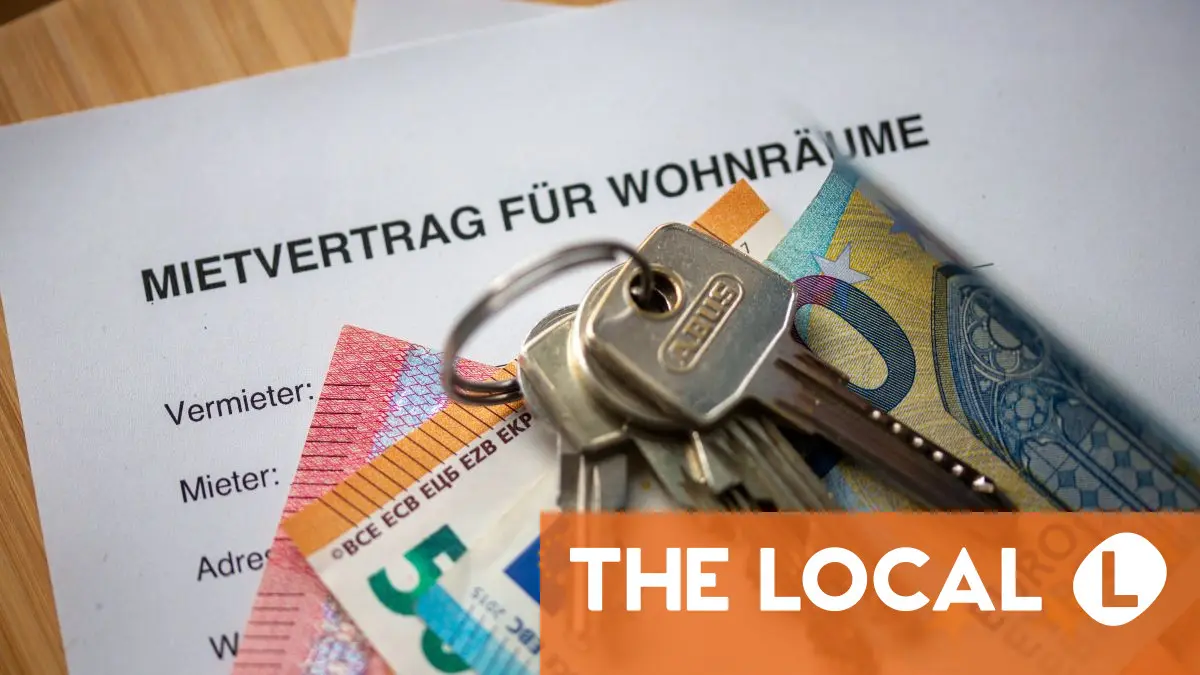
Entry-level employees and young professionals see benefits in living in Germany’s big cities. But affording to live there is increasingly difficult.
Walk to work, a new café, or a nightclub: The density of both jobs and leisure activities on offer make life in the big city attractive, especially for young adults and career starters. But increasingly, to afford the rent in a big city can be difficult on an entry-level salary.
High housing costs in major German cities are a serious challenge for many working people, and they add to the challenge of attracting skilled workers for companies, according to a recent study by consulting firm PwC. The survey revealed that many people see expensive housing as a central disadvantage for metropolitan life.
The survey included 4,000 professionals between the ages of 18 and 65 from 12 major German cities with at least 500,000 inhabitants, including Berlin, Hamburg, Frankfurt, Munich, Essen, Leipzig and Hanover. Responses were recorded in January.
The top-line results: The vast majority of people find big city life pleasant, but are also dissatisfied with rent prices and accommodation costs.
Around nine out of 10 respondents (89 percent) said they are comfortable in their place of residence. City residents cited shopping facilities, cultural and educational opportunities, job opportunities and the short commutes among the benefits of urban life they enjoyed.
But at the same time, two-thirds of respondents shared that they are dissatisfied with rents, the cost of home ownership and the shortage of housing. Eighty-seven percent said they believed that it is “pure luck” to find affordable housing in large cities.
The survey, which has been conducted for the past three years, suggests that this problem has become entrenched.
“The level of rents and the difficulty of finding affordable housing in metropolitan areas remains a huge frustration factor for working people,” Bernd Roese, PwC office manager in Frankfurt, told DPA.
READ ALSO:
Affects on the labour market
Hyper-competitive housing markets also have an impact on the labour market in German cities.
According to the survey, 37 percent or respondents have thought about changing jobs specifically because of high rents.
As many as 10 percent said they had already moved for this reason, and among 18 to 34-year-olds, the figure is almost 20 percent.
Among job seekers, 50 percent suggest that rents are a decisive factor when considering potential opportunities in other cities, even more than the length of the commute, which was cited by 42 percent or respondents.
However, job security (54 percent) was the number one factor that most respondents would consider before making a move, which seems to indicate mounting concerns around employment.
READ ALSO: The major German companies cutting jobs this year
High demands on politicians and employers
Survey respondents see both employers and politicians as having a duty to try and mitigate housing affordability issues.
A vast majority were in favour of increasing public housing construction with a focus on low and middle incomes (88 percent), and converting office space into housing (85 percent).
READ ALSO: Boardrooms to bedrooms – Can converting offices create housing in Germany?
Demands on employers are also high: 83 percent of respondents said they were in favour of companies offering a rent subsidy from companies and around 80 percent would like to see employers cover travel costs to the place of work or provide company housing.
While real and large-scale change in Germany’s tight housing markets would likely take years, there are signs that lawmakers are increasingly making an effort to bring forward solutions.
In Berlin, for example, lawmakers are pushing for a rent registry which could help reign in landlords charging excessive rents.
READ ALSO: How foreign residents in Germany are winning rent reductions
With reporting by DPA.
Disclaimer : This story is auto aggregated by a computer programme and has not been created or edited by DOWNTHENEWS. Publisher: thelocal.de