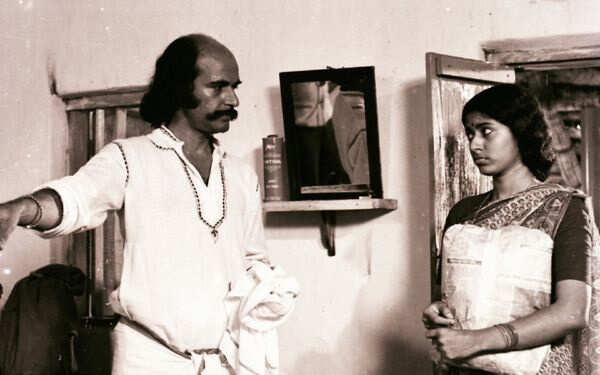
The same ache returns in Mattoral (1988). Seema’s staid hausfrau isn’t looking for sexual excitement. She was looking for an escape from the dreary existence of being Karmanaa Janardhan’s wife. An escape from the humdrum of her existence. So, she decides to elope with a lowly electrician, bringing into sharp focus the unspoken class wars that exist within our minds. The ache in the heart returns.
The human psyche affected and informed all of KG George’s work, first seen in Swapnadanam. On repeated watching, you discern that the film is amateurish in parts, with a godawful hero portraying the unhinged hero. But the movie made a few pertinent points, especially about mental imbalance in a society where uncomfortable questions tend to be brushed under the carpet.
You sense the same dysfunctionality of an Adaminte Variyellu in his Irakal (1985). Irakal probed psychological violence through the psychotic son of a very rich man. The fault lines of a seemingly happy family are laid bare also through the amoral Annie, again superbly played by Srividya. Rather than settle down to a placid existence with her husband, she would rather have a torrid fling with the caretaker and set off a chain of events. You see so many shades of Irakal in the recently released Joji.
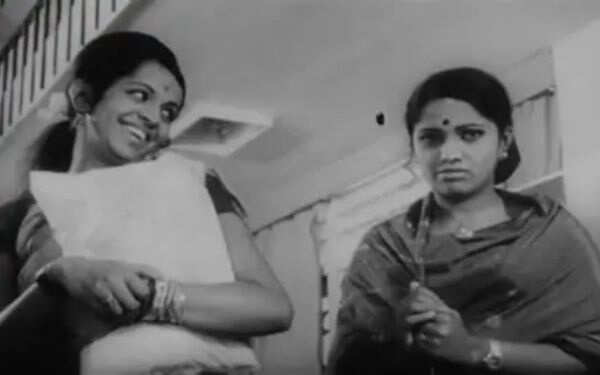
The actress Nalini is a metaphor for both a crumbling mind and the compromises made to attain stardom. It’s interesting that George, despite the biting nature of his subject, is never judgmental and allows us, the viewers, to draw our own conclusions.
It’s cutting-edge cinema. George’s world is filled with angst and violence. It offers no easy solutions. We are meant to stew in our own juice. Yet the marvellous insights and greys he adds to his version of the spectre called life are unique, as is his artistry. George is never peachy or didactic. You are allowed to make what you will of it. But he seems to suggest, without sermonising, that personal choices come with a price to pay. You see that amply in Kolangal (1981) and Ee Kanni Koodi (1990).
Here I would like to draw attention to Yavanika again, which, while being a murder mystery of sorts, also gives us a glimpse into the crisscross of emotions running within a crumbling drama repertory company. The skeletons lay exposed one by one. Yavanika, like Lekhayude… was one of Malayalam cinema’s greatest milestones.
Amid all his many discussed films, two films of KG George never got the recognition they deserved — Kolangal (1981) and Ee Kanni Koodi (1990). Kolangal was perhaps one of the few bucolic settings with the rural life not just adding to the ambience but almost as an integral character. Kolangal couldn’t have been placed in a city with its ensemble cast of Rajam Nair, Thilakan, Nedumudi Venu, Menaka, and Venu Nagavalli. Life is bleak, there is no perfect solution and like all George films, the ending is almost like a cul-de-sac. An extraordinary performance by Rajam Nair, with all its rawness and abusive language, Kolangal stays with you long after the credits have rolled. A young Menaka is a delight to watch, as is Nedumudi Venu’s meanness. And Thilakan is as always, masterly.
Ee Kanni Koodi is a whodunit, though not in the vein of Yavanika; you are still guessing who killed the prostitute. George’s writing is so skilled that his empathy makes you root for the prime suspects, that they are more sinned against than sinning. Again, an ensemble cast comprising Thilakan, Sai Kumar, Sukumari and a host of new faces. Like in Yavanika, George explores the human predicament. He tells us remorselessly that there is no salvation. There are no happy endings.
Also Read: Editor’s Take: The Mother of All Melodies, A Month Without Asha Bhosle
Disclaimer : This story is auto aggregated by a computer programme and has not been created or edited by DOWNTHENEWS. Publisher: filmfare.com