Private equity? Advertising?
Also see:
NCAAF Roster Management – Part 1. Quick Takes
NCAAF Roster Management – Part 2. NIL and Shared Revenue Structure
NCAAF Roster Management – Part 3. Program Revenue
Private Equity Partnership
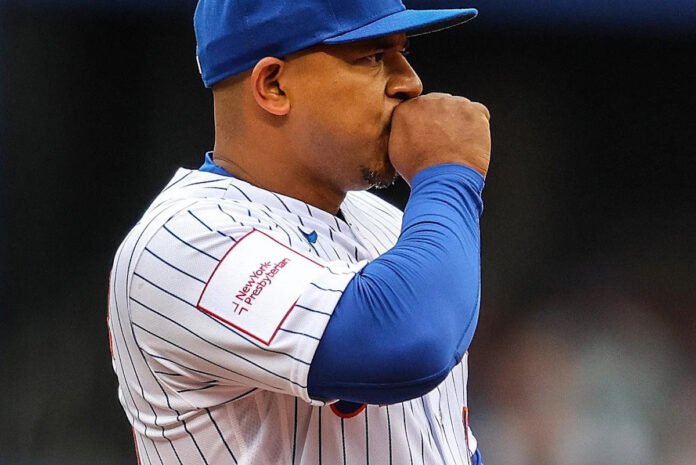
At the time of writing this [ed. note: my bad], the B1G private equity partnership with 3 firms appears dead. It would have created Big Ten Enterprises which would be jointly owned by the equity firm and the conference to oversee all media, sponsorship, and advertising rights. The partner would buy in paying $2 billion to $2.4 billion in exchange for 5% to 10% of the Big Tern Enterprises revenue over 20 years. In addition to marketing broadcast rights, also on the table is uniform patches and on field logos.
Advertisement
This would be a bad deal. The amount is undervalued given the expected ballooning increase in the broadcast contract. The equity firm would be cashing in on program short term budget issues for an oversized payoff over 2 decades. The B1G can undertake these actions to increase shared revenue on their own without paying another entity 10%.
It wouldn’t be $100 million or so for each program. The revenue wouldn’t be distributed evenly, larger programs get more because they’re giving up more in sponsorship rights, going against the B1G traditional model of equal revenue sharing.
Washington US senator Cantwell, and numerous university regents both in and outside the B1G, have cautioned about potential legal issues, with Cantwell noting that few B1G university presidents she spoke with knew the details of the proposal.
At the time of writing this, the deal appears thankfully dead because all programs would have to agree individually to approve and extend their grant of rights to 20 years, the deal appears to have died after USC and tTUN rightfully said nope. This is good – over the next few years (until the next broadcast contract which is expected to balloon), programs would be better served cutting costs, then taking a loan from their universities or a financial institution to cover the deficit, for less than an equity partner would demand.
Advertisement
Conference Level Advertising/Sponsorship
There is nothing to prevent the B1G from pursuing these revenue streams without an equity firm, and I have no problem with it. I have no issue with a major company anteing up a massive sum of money to have their name appear off to the side of the B1G logo, sew a patch on B1G uniforms, or have their name on fields of play.
The bigger issue for conference sponsorship is if there is interest from the few companies who can afford that level of advertising – how much would you charge to have a company’s name appear under the B1G logo everyplace it appears, and the countless hours it would appear on every playing surface and field of play? The closest exposure comparison I can think of is a primary NASCAR sponsor running $5 million to $40 million per car per season. There might not be any companies who can afford to buy into this, leaving advertising to the individual programs, or splitting by sportseason.
In the end, pushing the B1G to explore these revenue sources as a conference and as individual programs will likely be the biggest impact of the equity proposal.
Advertisement
Broadcast contract revenue will remain king in conference financing. The current deal was substantially negotiated before the addition of USC and UCLA, their contribution was likely undervalued. Oregon and Washington were added after the contract was signed, their value wasn’t added. College football regular season viewership has been experiencing double digit yearly growth since the B1G contract. Projections are the next contract, starting in the 2029-2030 season, will double in value.
Playing in the B1G’s favor is splitting their contract among multiple major broadcasters, the ability to offer highly watched brands deep into the weekly broadcast tier selection with the recent expansion, and improved performance of the B1G (not just Indinia, but also programs such as Illinois). The B1G didn’t have to stop at broadcasters bidding for rights and season tier selection; broadcasters also have to bid for time slots, weekly tier selection, and shared CCG rights.
The biggest scheduling boost the B1G could make would be to spread out inventory, but there’s no indication this is being pushed. With expansion, the B1G now has a whopping inventory of approx. 136 games a year (7 home games x 18 teams), an average of approx. 9 games a week over the 14 week season (with some games moved to week 0).
…but at times the B1G offers as few as 7 games during conference season bye weeks – they would max out with NBC – FS1 – BTN each carrying 1 game a week, and CBS – Fox carrying 2 each. Moving 2 body bag home games to conference season bye weeks could boost the minimum offering to 8. An additional 8 body bag games could be moved to week 0 – you can’t notably increase the quality of OOC opponents without paying a higher appearance fee, but you can elevate the context (and interest) of these game by making them the season opener. This would open most of the Thursday and Friday night game time slots for the few remaining B1G games and possible added inventory from poaching the ACC.
Advertisement
Other gains could be marketing a handful of games to NBC to broadcast during ND away games, and opening up a late night time slot for west coast teams’ body bag games.
PAC2.0 found another path to marketing games that conferences should consider. Using the remnants of the PAC network, the PAC2.0 will be producing the games for their primary carriers: USA Sports (USA TV) and the CW. Rather than buying the rights to games, the networks are purchasing the finished product, closer to the arrangements for other programming they provide. This is attractive to smaller networks who don’t have a sizable sports department, they can broadcast sports without the additional overhead. I don’t expect this to be the path for the B1G, they already collect 39% of the net revenue from lower tier games on the BTN. I do expect it to become common for the non-power conferences, the B12, and maybe the ACC.
Final part:
NCAAF Roster Management – Part 5. Athlete Options, Moneyball
Disclaimer : This story is auto aggregated by a computer programme and has not been created or edited by DOWNTHENEWS. Publisher: Sports.yahoo.com