NEWYou can now listen to Fox News articles!
President Donald Trump said Tuesday he expects to have a “long talk” with Chinese President Xi Jinping about Iran this week, an issue now looming over a summit that was originally expected to focus heavily on trade, technology and Taiwan.
“It was a fantastic day,” Trump said Thursday during a state banquet of his welcome to China and his initial round of meetings. “And in particular, I want to thank President Xi, my friend, for this magnificent welcome … and for so graciously hosting us on this very historic state visit. We had positive and productive conversations and meetings today with the Chinese delegation earlier. And this evening is another cherished opportunity to discuss among friends some of the things that we discussed today.”
Instead of arriving in Beijing with the Middle East conflict behind him, Trump faces the added challenge of confronting Xi over China’s ties to Tehran while trying to preserve leverage in one of the world’s most consequential relationships.
China’s role as a top buyer of Iranian oil has long frustrated U.S. officials. But with Trump now trying to choke off Tehran’s economic lifeline, Beijing’s support for Iran is no longer a side issue.
TRUMP DELAYS XI MEETING AS IRAN CONFLICT LETS US STRONG-ARM CHINA’S OIL SUPPLY
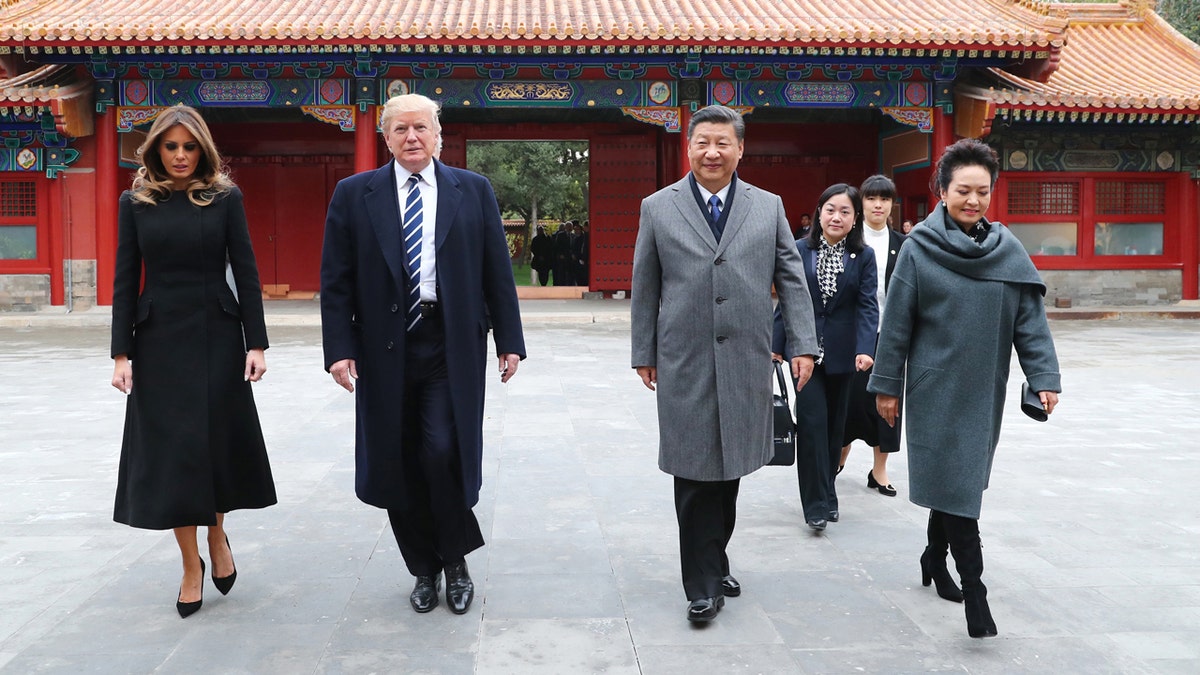
Chinese President Xi Jinping and his wife Peng Liyuan welcome U.S. President Donald Trump and his wife Melania Trump at the Palace Museum, also known as the Forbidden City, in Beijing on Nov. 8, 2017. (Xie Huanchi/Xinhua)
Ahead of the summit, Trump also appeared to downplay the extent to which Iran would dominate the talks, telling reporters before departing for Beijing that “we have a lot of things to discuss” and adding, “I wouldn’t say Iran is one of them, to be honest with you, because we have Iran very much under control.”
China purchases roughly 90% of Iran’s exported oil, making Beijing Tehran’s primary economic lifeline — though Iranian crude accounts for only about 13% to 15% of China’s total oil imports.
The Trump administration has ramped up pressure by imposing secondary sanctions on Chinese refiners processing Iranian oil — a move that threatens to cut those firms off from the U.S. financial system and underscores how the Iran conflict is increasingly colliding with the broader U.S.-China relationship.
During the first bilateral meeting between Trump and Xi Thursday morning, the Chinese president expressed interest in buying more American energy.
“The two sides agreed that the Strait of Hormuz must remain open to support the free flow of energy,” a White House official said in a readout of the meeting.
“President Xi also made clear China’s opposition to the militarization of the Strait and any effort to charge a toll for its use, and he expressed interest in purchasing more American oil to reduce China’s dependence on the Strait in the future,” the official continued. “Both countries agreed that Iran can never have a nuclear weapon.”
Beijing, in turn, ordered Chinese companies not to comply with those sanctions, a far more direct confrontation with Washington than China has typically embraced in past disputes, where it has often quietly worked around U.S. pressure.
Even as Beijing publicly urged firms to ignore the U.S. sanctions, Chinese regulators quietly instructed major banks to suspend new lending to several sanctioned refineries, according to a Bloomberg report, a sign Beijing was trying to shield its financial system from exposure to U.S. secondary sanctions rather than openly escalate the standoff.
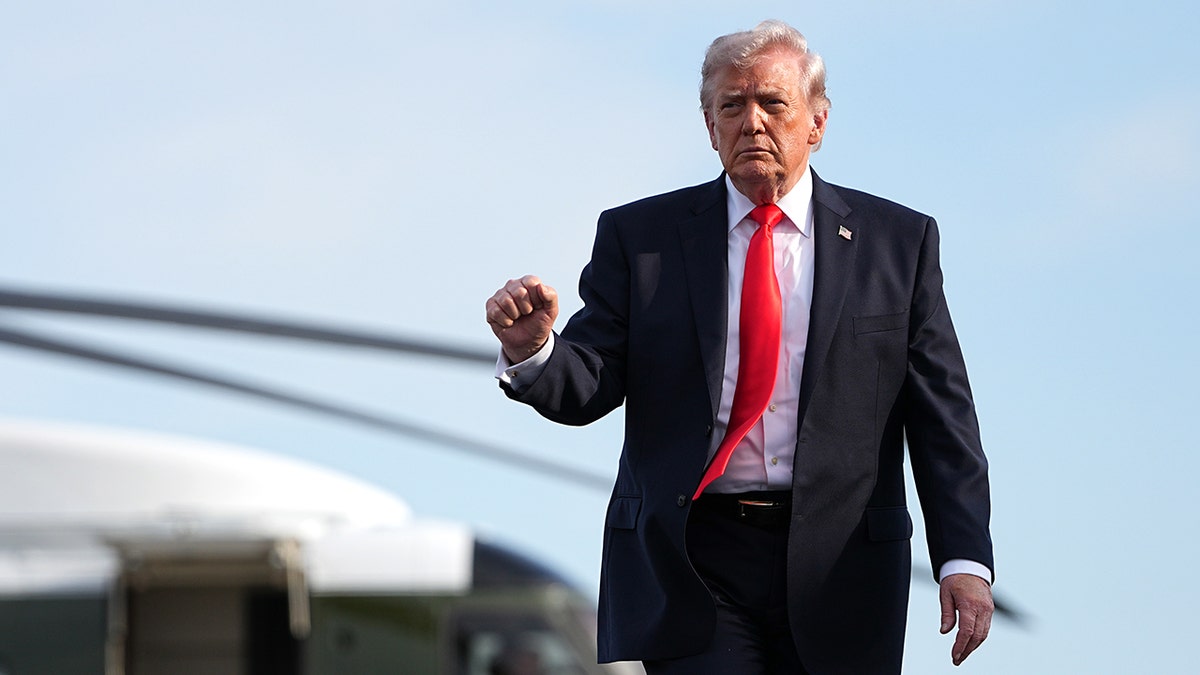
Trump said he expects to have a “long talk” with Chinese President Xi Jinping about Iran this week, an issue now looming over a summit that was originally expected to focus heavily on trade, technology and Taiwan. (Matt Rourke/AP)
Elaine Dezenski, who heads the Center on Economic and Financial Power at the Foundation for Defense of Democracies, said the Iran conflict is “quietly changing China’s strategic calculus.”
“Thus far, China has weathered the economic disruption of the Iran conflict reasonably well,” Dezenski said during an FDD media briefing previewing the summit. But she noted Beijing has been forced to draw on strategic oil and gas reserves originally intended for a potential Taiwan contingency.
The dynamic has fueled debate in Washington over whether the Iran conflict ultimately weakens Trump’s hand with Beijing by pulling U.S. resources back toward the Middle East — or whether it instead highlights China’s own vulnerabilities.
Craig Singleton, senior director of FDD’s China Program, argued Beijing has little interest in allowing the conflict to spiral further.
“China does not want a wider Middle East war,” Singleton said. “It does not want sustained energy disruption.”
Even if China is better positioned than many countries to absorb short-term shocks, Singleton argued Beijing ultimately wants the Strait of Hormuz reopened because “China’s export economy depends on predictable energy, transport and insurance conditions.”
But the Trump administration’s campaign against Iran is increasingly running through Chinese interests — transforming what had been a regional conflict into a direct point of friction between the world’s two largest powers.
“President Trump, when you go to China, realize that the person you’re talking to is propping up Russia and Iran,” Republican Sen. Lindsey Graham said during a Senate hearing on Tuesday, adding that “of all the countries on the planet, China could have the most influence of ending this war if they chose to.”
U.S. officials have also accused Chinese and Hong Kong-based entities of helping Iran procure materials tied to its missile and drone programs, further deepening tensions between Washington and Beijing over Tehran.
“China always acts prudently and responsibly on the export of military products, and exercises strict control in accordance with China’s laws and regulations on export control and due international obligations,” Chinese embassy spokesperson Liu Pengyu told Fox News Digital. “China opposes groundless smear and ill-intentioned association. Regarding the situation in Iran, China has repeatedly articulated its solemn position. The pressing priority is to make every effort to prevent by all means a relapse in fighting, rather than exploiting the conflict to maliciously smear other nations.”
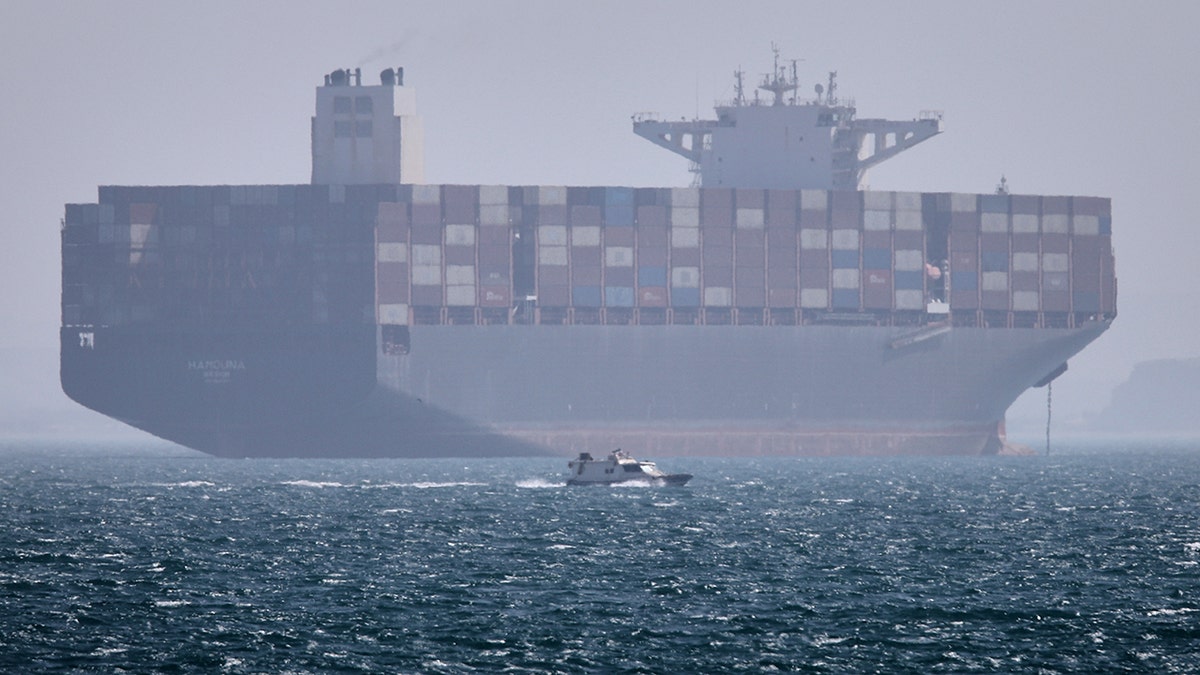
A container ship sits at anchor in the Strait of Hormuz off Bandar Abbas, Iran, as a motorboat passes in the foreground on May 2, 2026. (Amirhosein Khorgooi/ISNA via AP)
Analysts say Trump is unlikely to secure a dramatic breakthrough from Beijing on Iran, but could push Xi to quietly pressure Tehran to avoid further disruptions to global energy markets.
Chinese cooperation could come with expectations of concessions elsewhere in the U.S.-China relationship, even if Beijing’s actual influence over Tehran is limited.
Other experts cautioned against overestimating Beijing’s ability — or willingness — to deliver Iran.
CLICK HERE TO DOWNLOAD THE FOX NEWS APP
“I would be very careful about making concessions … for some kind of promise that they’re going to whisper in the ears of their friends in Iran,” said Sarah Cook, a senior fellow at CEPA.
Despite China’s economic importance to Iran, experts note Tehran’s decision-making is driven heavily by ideology and regime survival — factors Beijing cannot fully control.
Disclaimer : This story is auto aggregated by a computer programme and has not been created or edited by DOWNTHENEWS. Publisher: moxie.foxnews.com