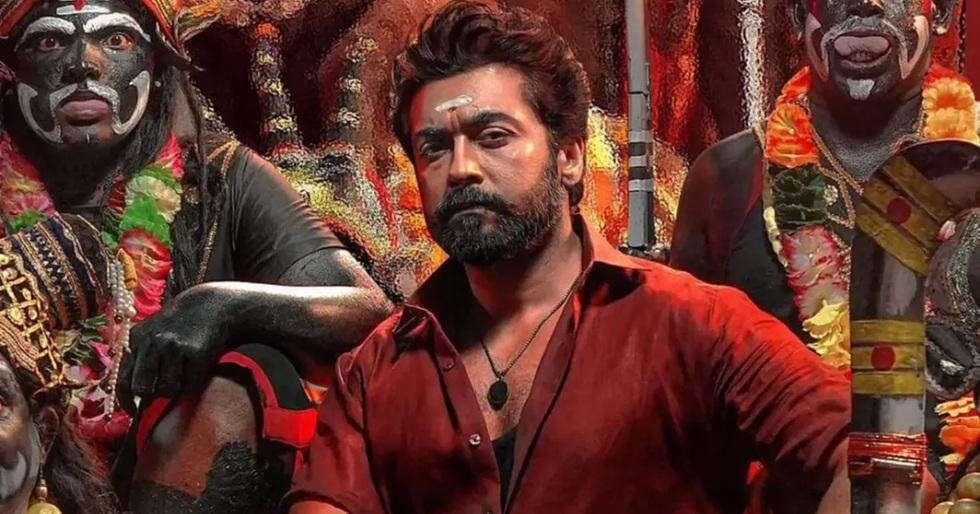
Karuppu attempts to combine several distinct impulses within the framework of a mainstream entertainer. Directed by RJ Balaji, the film draws on the imagery of Karuppasamy, the Tamil guardian deity associated with justice, and uses that cultural foundation to tell a story about institutional failure and moral reckoning. It is an ambitious and often compelling film that remains involving largely because of the conviction with which it approaches its material.
Suriya plays Saravanan, a lawyer whose battle against a powerful nexus gradually takes on mythic dimensions. What begins as a legal struggle rooted in social injustice expands into a larger confrontation in which faith, personal conviction, and retribution become closely intertwined. The screenplay deliberately leaves some ambiguity around whether the supernatural elements are literal or symbolic, and this uncertainty gives the narrative much of its intrigue.
At the centre of the film is Suriya, who delivers one of his more restrained performances in recent years. Rather than relying on overt star mannerisms, he grounds the role in quiet intensity and emotional control. Saravanan’s moral certainty never feels imposed, and Suriya lends the character enough vulnerability to make his journey persuasive even when the narrative moves into heightened territory. In the film’s strongest moments, his performance gives the story both emotional weight and dramatic credibility.
Trisha Krishnan brings warmth and composure to a role that, while important, is not always fully developed. RJ Balaji is an effective antagonist, resisting the temptation to overplay the part. He approaches the character with a measured calm that makes the menace more persuasive, allowing the threat to emerge through restraint rather than overt theatrics. Indrans brings a quiet emotional gravity to a smaller but significant role, leaving a lasting impression despite limited screen time.
The first half is where the film is most assured. RJ Balaji establishes the world with confidence, integrating legal drama, folklore, and social commentary without overexplaining the connections between them. The mystery surrounding the protagonist and the spiritual undercurrents sustains interest, and the screenplay maintains a clear sense of momentum.
What gives Karuppu a distinct identity is the seriousness with which it engages with its cultural and thematic material. The invocation of Karuppasamy functions as more than visual symbolism. It becomes a metaphor for communities seeking justice when formal institutions fail them. This thematic foundation lends the film a resonance that extends beyond its commercial trappings.
The film becomes less consistent in the second half. The screenplay introduces multiple thematic concerns and attempts to satisfy the expectations of a star-led entertainer, but not all of these elements are integrated with equal effectiveness. Certain stretches feel prolonged, and some emotional developments arrive with less preparation than they require.
The tonal shifts are the film’s most persistent challenge. Karuppu moves between solemn social commentary, devotional imagery, humour and mass-hero spectacle. At times these transitions feel organic. At others, the film appears uncertain whether to prioritise its introspective ideas or its commercial obligations.
Technically, the film is accomplished. The cinematography by GK Vishnu creates a striking visual atmosphere that supports both the grounded and mythic aspects of the narrative. Sai Abhyankkar’s score reinforces the emotional and dramatic beats effectively, while the sound design and visual effects contribute meaningfully to the film’s larger-than-life moments.
The climax delivers the catharsis expected of a mainstream entertainer and brings the film’s central themes into sharper focus. While some of the narrative strands are resolved more symbolically than dramatically, the ending retains emotional force and remains broadly satisfying.
What remains is a film that succeeds more through conviction than complete structural precision. Karuppu does not fully reconcile all of its ideas, but its combination of cultural specificity, social anger and star power gives it a distinct presence within contemporary Tamil cinema.
Suriya anchors the film with assurance, and RJ Balaji demonstrates an admirable willingness to stretch the boundaries of the commercial format. Karuppu may not achieve perfect balance between mythology, message and mass entertainment, but it remains an ambitious and often compelling film whose strengths outweigh its shortcomings.
Also Read: Photos: Thalapathy Vijay’s Quiet Celebrations With Family Goes Viral
Disclaimer : This story is auto aggregated by a computer programme and has not been created or edited by DOWNTHENEWS. Publisher: filmfare.com