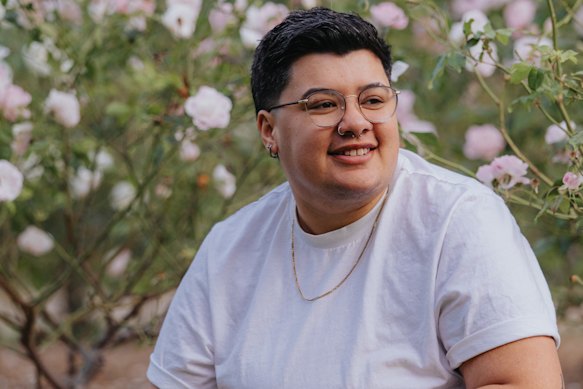

When Ley Laupama was a teenager, no one went to the school counsellor.
“There was a lot of stigma against it. If you were seeking help, people just thought you were crazy or had problems,” they said.
The 26-year-old from western Sydney, who uses they/them pronouns, has dealt with severe depression and anxiety their whole life.
For LGBTQ young people, “just being who we are is very hard, and not all our families are accepting”, Laupama said.
Then COVID arrived, and Laupama noticed a shift: “Everyone started caring about mental health [issues because] everyone went through it.”
In the first study of its kind, Sydney researchers have tracked a “rebound” in youth mental health, from the lowest depths ever recorded during the COVID pandemic, and one demographic is leading the way when it comes to seeking help: LGBTQ young people.
A University of NSW study published in the Australian & New Zealand Journal of Psychiatry on Sunday using data from the HILDA survey – the only nationally representative longitudinal survey in Australia – found that while youth mental health has not returned to pre-pandemic levels, there are clear signs of recovery.
Study author Dr Sergey Alexeev says that while the youth mental health crisis is far from resolved, the long-term analysis demonstrates that “something is working”.
Professor Adam Bourne, director of the Australian Research Centre in Sex, Health and Society at La Trobe University, says these green shoots of improvement are “incredibly heartening”.
Escaping lockdown is a factor, but Bourne also credits increased awareness, services and funding for mental health support.
“There is more public discussion and acknowledgment of mental health now than at any point in history,” he said. “That means more people are accessing help, whether that’s informally from friends, or stepping forward for professional support services.”
A separate analysis found LGBTQ young people had higher rates of loneliness and psychological distress than their peers and were also significantly more likely to access professional support.
The headspace National Youth Mental Health survey of more than 3000 young people found 46 per cent of LGBTQ 12- to 25-year-olds sought help from a psychologist, school counsellor, mental health worker or helpline in the past year, compared with 26 per cent of young people overall.
Natasha Smith, headspace’s LGBTQ national clinical adviser, said more than three-quarters (77 per cent) of LGBTQ young people reported high or very high levels of psychological distress, which was alarming though “not necessarily surprising”, pointing to an increase in stigma and more frequent instances of discrimination.
Even with positive representation in popular culture, a young LGBTQ person may not feel connected to their immediate family, friends or school environment, which can be isolating, she said.
Smith said this created a “necessity” to reach out and be “very proactive” about finding supportive networks.
Laupama, who is also headspace’s First Nations youth adviser, said LGBTQ youth are “good at seeking help because we have to” – because “we don’t always have those spaces within our homes or communities to talk transparently and openly”.
Laupama said youth mental health has improved across the board because young people are now more open to speaking up when they’re struggling, with free online resources increasing access and removing cost barriers.
“It’s getting better,” they say. “I’m not saying it’s fully better, but it’s a step forward. And at the end of the day, a step forward is better than no step at all.”
May 17 is the International Day Against Homophobia, Biphobia, Intersexism, and Transphobia (IDAHOBIT), celebrated globally to commemorate the World Health Organisation (WHO)’s removal of homosexuality from the Classification of Diseases in 1990.
Start the day with a summary of the day’s most important and interesting stories, analysis and insights. Sign up for our Morning Edition newsletter.
From our partners
Disclaimer : This story is auto aggregated by a computer programme and has not been created or edited by DOWNTHENEWS. Publisher: www.smh.com.au