
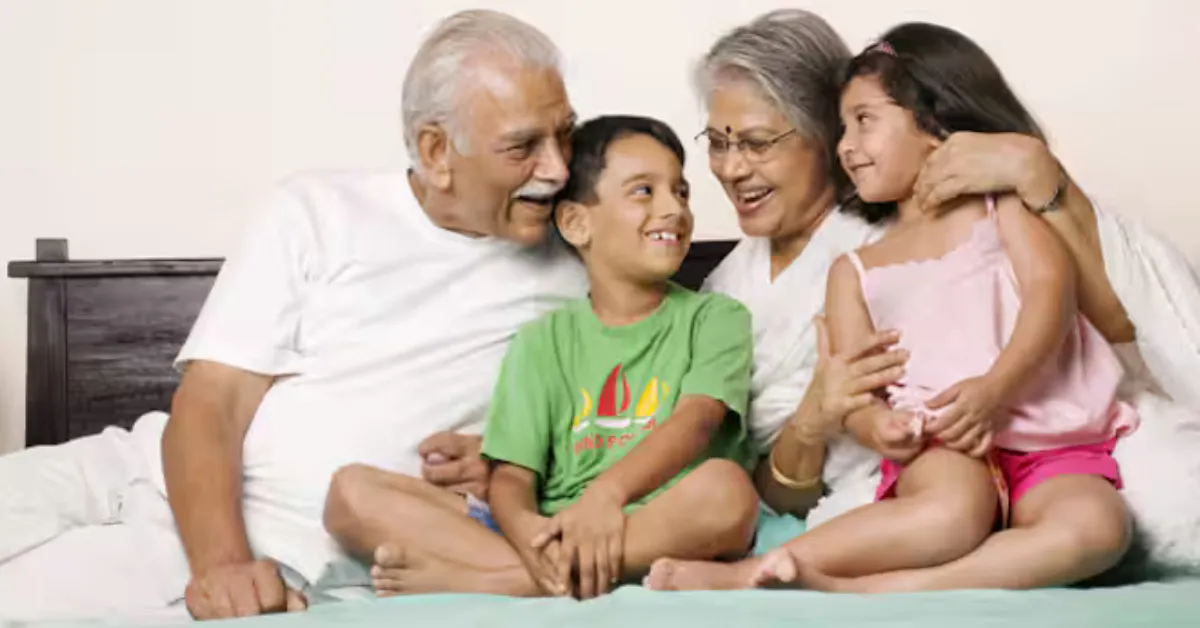
In many homes where generations live under one roof, childhood does not unfold in isolation. It grows between crowded dining tables, evening prayers echoing through hallways, cousins running barefoot from one room to another, and grandparents who somehow know exactly when a child needs comfort.
Long before ‘community living’ became a modern idea, many families were already practising it in the most ordinary way possible, by living together.
For children, this kind of upbringing moulds something more than routine. It impacts how they learn affection, responsibility, patience, and belonging.
Where no one ever really eats alone
In a shared household, meals are seldom silent. Somebody wants more rice, somebody is recounting a story from work, and somebody else is reminding the youngest child to sit properly at the table.
For a child growing up in this environment, togetherness becomes instinctive.
There is comfort in knowing that home will always have people waiting inside it. A bad day at school rarely goes unnoticed. Someone asks questions. Someone offers fruit cut into small pieces. Someone listens attentively.
Often, children raised this way grow up feeling emotionally anchored because care does not come from one person alone. It comes from many directions at once.
The grandparents who become a child’s first teachers
One of the gentlest parts of growing up in such homes is the bond between grandparents and grandchildren.
Grandparents become storytellers, caretakers, protectors, and comforting companions all at once. Their presence fills childhood with small rituals that stay long after the years pass, like oiling hair on Sunday mornings, waiting at the gate after school, slipping sweets into tiny hands before dinner.
Without turning it into a lesson, they pass down memories, language, traditions, and family history through everyday conversation.
Children raised around older generations also learn an early sense of empathy and patience. They grow up understanding that care is not rushed.
Cousins who feel more like siblings
Perhaps the loudest memories from such childhoods come from cousins.
Shared bedrooms during holidays, endless games that stretched into late evenings, whispered conversations after lights were switched off, these moments become the emotional centre of growing up.
There is a certain confidence children develop when they are constantly surrounded by others their age. They learn friendship inside the home itself.
/filters:format(webp)/english-betterindia/media/media_files/2026/05/15/joint-families-shaping-childhood-2026-05-15-18-17-40.png)
Disagreements happen just as often as laughter. But so does forgiveness. By the next morning, everyone is back together again.
Learning responsibility without realising it
In homes filled with people, responsibilities naturally spread out. Older children help younger ones with homework. Someone is asked to buy groceries. Someone helps set plates before dinner.
Children are mostly not treated separately from family life. They participate in it from an early age. Over time, this creates a strong awareness of collective responsibility. There is an understanding that a home functions because everybody contributes in small ways.
When togetherness feels heavy
Of course, life in a shared household is not always comforting.
Privacy can feel limited. Opinions arrive from every direction. Choices that might remain personal in smaller homes often become family discussions.
Children notice tensions as much as warmth. They learn that relationships are not always simple, especially when many personalities share the same space.
However, even these challenges teach something valuable, including how to coexist, how to adjust, and how to remain connected despite differences.
The memories that stay long after childhood ends
Years later, when many move into nuclear homes and busier lives, what they mostly miss are not grand celebrations, but ordinary moments.
/filters:format(webp)/english-betterindia/media/media_files/2026/05/15/joint-families-shaping-childhood-2026-05-15-18-28-04.png)
The sound of pressure cookers in the morning. Grandparents are watching television too loudly. Cousins sleeping in rows on the floor during summer holidays. The comfort of returning home to a house that always felt full.
Childhood in a shared household may not have offered much silence or solitude, but it offered something else that feels rare today, which is the feeling of always having people around who belonged to you, and to whom you belonged too. And that is what stays longest of all.
Disclaimer : This story is auto aggregated by a computer programme and has not been created or edited by DOWNTHENEWS. Publisher: thebetterindia.com



