
Sydney will receive its first electric ferry two years later than originally planned as ambitions to electrify or use hydrogen to power the entire state government-owned fleet of 40 vessels by 2035 are set to be dashed.
The government has signed a deal with Hobart shipbuilder Richardson Devine Marine to start constructing the first electric ferry later this year.
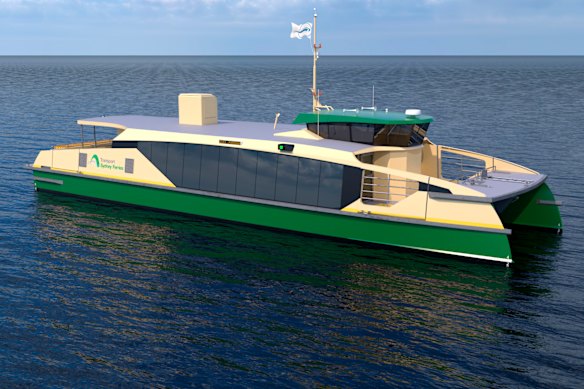
Once built, the 24-metre battery-electric ferry will be trialled for 12 months from early 2028 and is expected to sail on a route to the new $836 million Fish Market at Blackwattle Bay when it enters passenger service a year later.
Charging infrastructure will be installed at Barangaroo wharf to enable the trial of the new electric vessel, which is modelled on the seven new Parramatta River-class vessels designed by Sydney naval architects Incat Crowther. The cost of the new electric ferry and charging equipment is about $20 million.
Almost two years ago, the government released medium-term plans to replace all diesel-powered vessels in the state’s fleet with locally built electric or hydrogen ferries by 2035. It had aimed to have the first electric-powered Parramatta River-class ferry ready for trials by early this year.
The government confirmed that any decision to invest in more electric ferries will not be made until Transport for NSW and private operator Transdev assess the performance and service range of the first electric vessel in trials.
Transport Minister John Graham said the first trial of an electric ferry on Sydney Harbour would be an important moment for the fleet, which would transition from diesel propulsion “over coming years informed by this first vessel”.
“This northern beaches-designed, Australian-built ferry will provide a quieter ride and cleaner air on the harbour,” he said.
Independent ferry consultant Robin Sandell said installing charging infrastructure at wharves would be one of the challenges in electrifying the fleet, while the need for vessels to be tied up longer to charge would pressure berthing capacity at Circular Quay.
“Some of the ferry routes such as Watsons Bay also require fast ferries, and there are very few fast electric ferries in operation around the world,” he said.
“The Parramatta River route will be challenging because it’s so long, which usually means you need a longer dwell time at both ends for charging.”
Transport for NSW co-ordinator general Howard Collins said the 12-month trial of the new electric ferry from early 2028 would allow officials to test its performance, reliability and charging systems in real-world conditions.
“Once in regular service, the ferry could also operate on new routes, including services to the new Sydney Fish Market,” he said.
Sydneysiders and tourists are having to wait until next year before ferry services to the new fish market begin because a $30 million wharf has yet to be built. Transport for NSW said it was aiming for the commuter wharf to be opened in the second quarter of 2027.
As part of changes to the government-owned fleet, the last of seven RiverCat ferries was permanently retired from passenger service in March after plying the Parramatta River for more than three decades. The Rivercats have been scrapped and one of Sydney’s four large Manly ferries, the Collaroy, is set to meet a similar fate.
Start the day with a summary of the day’s most important and interesting stories, analysis and insights. Sign up for our Morning Edition newsletter.
 Matt O’Sullivan is transport and infrastructure editor at The Sydney Morning Herald.Connect via X or email.
From our partners
Disclaimer : This story is auto aggregated by a computer programme and has not been created or edited by DOWNTHENEWS. Publisher: www.smh.com.au