
A multibillion-dollar investment in roads and utilities will supercharge new suburbs on the fringes of Greater Brisbane and in Queensland’s far north where governments promised 51,000 new homes would be built.
Under a deal between the Queensland and federal governments, announced on Monday, at least 20,000 homes would be constructed specifically for first home buyers in three earmarked development zones in the south-east and far north.
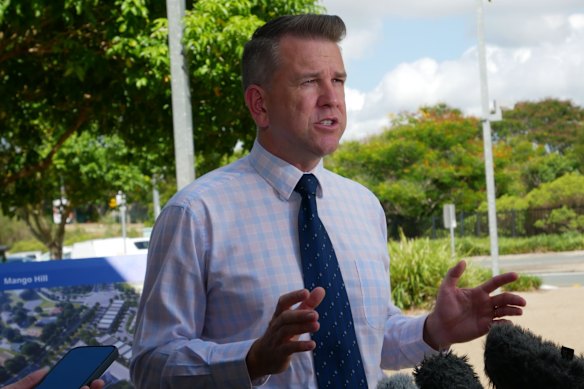
Infrastructure Minister Jarrod Bleijie said the new funding would put existing government investment into new greenfield and high-growth corridors “on steroids”.
“This is going to unlock so many houses and opportunities for young Queenslanders as first home buyers, and that’s what this is all about: supply, supply, supply, fast, fast, fast,” Bleijie said.
The $2.4 billion deal will fund base infrastructure such as roads, water, power, and sewerage. It is made up of $800 million in grants funded 50-50 between Queensland and the commonwealth, and $1.6 billion in commonwealth interest-free loans for councils and developers.
The Albanese government said their contribution delivered on federal Labor’s election promise to build 100,000 homes for first-time buyers.
Bleijie said the deal focused on priority development areas (PDAs) in Waraba, near Caboolture, and Southern Thornlands, in the Redland region, as well as Mount Peter, near Cairns, although he expected there would be flexibility to reroute the money into other high-growth areas.
Property Council Australia’s Queensland executive director Jess Caire welcomed the announcement, and said in a statement that the choice of PDAs reflected the scale and pace of growth in the state.
“This announcement is a timely reminder that when state and federal governments work together on the biggest challenge facing our country, that is getting more homes built, faster, real progress is possible,” she said.
Travis Jordan from grassroots housing network Greater Brisbane said it was disappointing the investment targeted outer suburbs rather than boosting density where infrastructure already existed.
“Greenfield development is important for a growing city, but it can’t be the only lever we pull to get the housing crisis under control,” Jordan said.
“With construction costs in Queensland at record highs, the biggest bang-for-buck reforms are ones that unlock more townhouses in more places.”
He said bans on townhouses and low-rise apartments had driven new homes further away from jobs, schools, and public transport.
Bleijie said the state development agency was considering how to connect public transport to and from priority development areas.
“Our 2032 delivery plan looked at other opportunities for this part of Queensland to connect to Brisbane, so it does come into the mix when we’re looking at development approvals, particularly these big ones,” he said.
He pointed to joint efforts with the Moreton Bay council to boost road infrastructure north of Brisbane.
Bleijie said the state government was reviewing the SEQ Regional Plan, which governs land use across the regions, including master-planning for new housing and community facilities.
“We need all forms of housing, we need greenfield development, [and] we need density,” he said.
Start the day with a summary of the day’s most important and interesting stories, analysis and insights. Sign up for our Morning Edition newsletter.
From our partners
Disclaimer : This story is auto aggregated by a computer programme and has not been created or edited by DOWNTHENEWS. Publisher: www.smh.com.au