I used to show up to things I didn’t want to attend, in clothes I didn’t need to buy, in Ubers I couldn’t really afford, to rooms full of people I’d spend the whole night mentally escaping. Not because I wanted to be there. Because I was terrified of not being there. FOMO – that gnawing, slightly embarrassing anxiety – drove me out the door for years. And let’s be honest, the work-related ’gram: she still needs some feeding.
Well. That story is evolving. Fast. There’s a quiet, very confident counter-movement happening in living rooms and on sofas everywhere. JOMO – the Joy of Missing Out.
It’s not laziness, and it’s not antisocial behaviour. It’s a deliberate, considered choice to opt out of the relentless performance of being seen to be “out there”, and opt into something that actually feels good. Prioritising quiet over noise. Genuine friendships over obligation. And realising that being a little unreachable is more of a status symbol than always being available.
The numbers back it up. According to a recent report, people who embrace JOMO report 32 per cent lower stress levels on average, and sleep 45 minutes longer each night than those still caught in FOMO loops. Expedia’s 2025 Travel Trends research found that 62 per cent of travellers say slow, JOMO-style holidays reduce stress and anxiety and nearly half say it deepens their relationships with loved ones.
The Global Wellness Summit 2026 confirmed what many of us already feel: JOMO is now viewed as lifestyle medicine, a clinical response to chronic nervous system exhaustion. And guess who’s leading the charge? Gen Z! Long labelled the “always online” generation, exhausted, paradoxically, by the digital overstimulation of their own youth.
Australia’s Right to Disconnect laws, now fully enforced, reflect a broader global recognition that hyper-connectivity has become a public health issue, not just a personal one.
But honestly? Stats aside, the economics of FOMO make the most compelling case of all. Walking out my door these days is a financial event. A good dinner for two can hit a couple of hundred bucks. A round of drinks – and I’m a minimal drinker – can set you back $80 before you’ve loosened up enough to enjoy yourself. Add an Uber each way; something fresh to wear so you look more now than ’90s; maybe a blow dry or a nail appointment because that just makes it feel special – and suddenly a Tuesday night out carries the financial weight of a mini-break. For most people, the equation no longer adds up. Emotionally or economically.
So we’re staying in. And here’s the thing: not just staying home and making do. I’m investing in my space. I’m pushing a trolley at Bunnings or adding things to my online cart, so I can make my home less a retreat and more a destination in itself. People are spending on the things that make staying in feel like a choice, not a consolation prize and that’s the crucial distinction.
But it goes deeper than home happiness. What I’m really investing in – perhaps for the first time in a long time – is myself.
Not just the performative self-care of a face mask posted to Insta – OK, I am guilty of posting the odd eye mask pic – but the quieter, more nourishing kind. The bath or shower I have without rushing. The books, podcasts, news websites and series I swallow whole over an entire weekend.
Yup, of course I still love a doomscroll, but an early night isn’t about being boring – it’s about finally listening to what my body and soul require to feel good about facing the next working day.
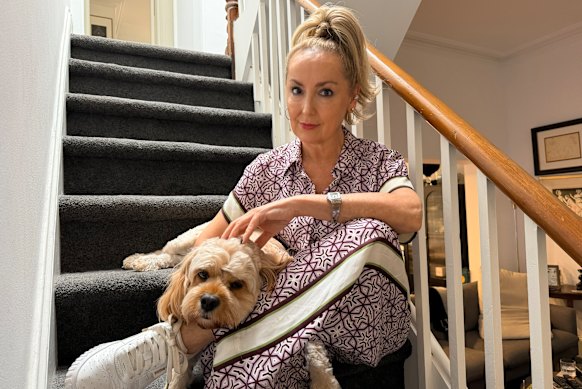
Solitude, it turns out, isn’t something to be fixed or filled. Being genuinely comfortable in my own, my family’s, my brilliant friends’ and even my dog’s company – and not just tolerating it – is a quiet kind of confidence no amount of social validation can replicate. Therapists have been saying this for years, and I’ve listened.
And yes, sometimes self-care looks exactly like what it sounds like: me, the couch, the remote, and absolutely no apologies. No small talk. No split bills. No checking my phone under the table. Just the rare, underrated pleasure of an unscheduled night on my own terms.
For decades, “busy” was a status symbol. Constantly out, constantly on, constantly visible – that was the aspiration and sure, it still happens if I feel like it.
But if it doesn’t, there are no regrets. The days or nights out I actually remember and the conversations that actually mean something rarely happen in mega big noisy venues. FOMO assumes the best version of your life is always happening somewhere else. JOMO knows better.
But peace tends to live a lot closer to home. In fact, it might be right there on my sofa or on that park walk or run, waiting patiently, just where I left it.
Melissa Hoyer is a writer and social commentator.
Get a weekly wrap of views that will challenge, champion and inform your own. Sign up for our Opinion newsletter.
From our partners
Disclaimer : This story is auto aggregated by a computer programme and has not been created or edited by DOWNTHENEWS. Publisher: www.smh.com.au