In the aftermath of the 2020 murder of George Floyd, corporate America faced a racial reckoning. Companies across industries reacted by publicly pledging to improve diversity, equity, and inclusion, launching new task forces, creating new roles, and promising to build workplaces that better reflected the countries they served.
But in recent months, as political pressure against DEI has intensified, many organizations have quietly scaled back or abandoned those commitments.
That retreat, according to Dr. Bernice A. King, CEO of The King Center and daughter of Martin Luther King Jr., reveals something fundamental: many companies were never truly committed to DEI.
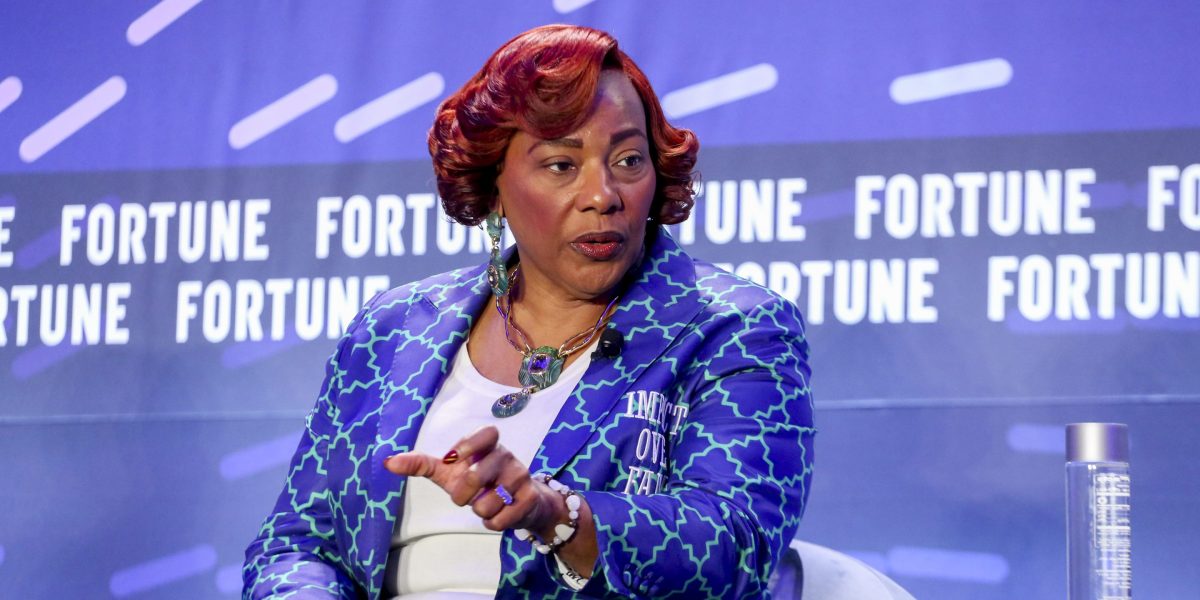
“If you retreat that quick, it suggests to me that reveals who you really are,” she said Tuesday at Fortune’s 2026 Workplace Innovation Summit in Atlanta during a panel moderated by Fortune senior writer Phil Wahba.
“When you know who you are, when you know those values, when you live by those values, when you infuse those values in the culture, when the pressure shows up, you don’t retreat.”
Still, King acknowledged that decisions around DEI are often more nuanced than a simple choice between embracing or abandoning the work. For many leaders, the stakes can be substantial.
She pointed to universities that have faced increased scrutiny from the federal government over DEI-related policies. For leaders whose institutions depend on research and public health funding, the pressure has raised difficult questions without clear answers, such as: “How do I make a decision that I can still move forward and practice what DEI represents, but not have the enormous cost of being caught up in litigation?”
Costco, Delta, Patagonia: What companies standing by DEI have in common
Even amid growing political pressure around DEI, some companies have continued to stand by their commitments—and defend them publicly.
King cited Delta Air Lines as an example of a company that remained vocal about its values despite mounting scrutiny. In its 2025 environmental, social, and governance (ESG) report, Delta said it is “actively valuing diversity,” “boldly pursuing equity,” and “consciously promoting inclusion,” including through hiring, promotions, and employee support programs.
Costco has taken a similar stance. CEO Ron Vachris has defended the retailer’s efforts to create equal opportunities for employees, even as other companies have pulled back. Last year, Costco shareholders overwhelmingly rejected a proposal calling on the company to evaluate risks tied to DEI practices, with more than 98% of shares reportedly voting against it.
For Jotaka Eaddy, the CEO of Full Circle Strategy—a thought leadership and social impact consulting firm—holding values firm is what ultimately builds trust—regardless of whether stakeholders agree with a company’s position.
“Consistency is very important,” Eaddy said on the Fortune panel. “Your consumers, your employees—they may disagree with you, but they will respect your consistency, and I think the volatility that’s happening right now is causing a lot of distrust amongst consumers, employees.”
She also echoed King’s criticism, saying that many organizations treated DEI more like a marketing exercise than a deeply embedded business principle—something she called a “very dangerous mistake.” That approach, she added, made it easy for companies to backtrack on their commitments.
That inconsistency could prove costly in the battle for talent and consumers, particularly as young workers still believe in company values. A 2025 study by Catalyst and NYU’s School of Law found that 86% of Gen Zers are more likely to stay with an employer that supports DEI, and 61% would never apply to a company that does not support it.
Theresita Richard, the chief people and culture officer at Patagonia, added that sticking to values can take different forms—but ultimately shows up in whether companies embed them into daily behavior.
She pointed to Patagonia’s efforts to encourage civic engagement, including initiatives that prompt employees and customers to support nonprofits, engage in local issues, and take action in their communities.
“That collective power does make a difference,” Richard said. “And when people see that, they see that it’s real. It’s not just about, ‘Let me put out a headline,’ but it’s about what’s actually happening in my day-to-day, because when those things don’t add up, it’s cognitive dissonance.”
And ultimately, King said the key to long-term business success lies in prioritizing compassion, vulnerability, and transparency among its workers and consumers.
“We can’t be afraid to have courage in the environment and lean in to all of our team members, regardless of what community they are part of because we’re all a part of the corporate family,” King said. “We have to be able to hear, we have to be able to listen, and we have to be able to show up in a way that shows that we care.”
Disclaimer : This story is auto aggregated by a computer programme and has not been created or edited by DOWNTHENEWS. Publisher: fortune.com