This time last year, after a narrow win over Newcastle in the final Arsenal home game of a difficult season, manager Mikel Arteta, deflated but defiant, microphone in hand on the Emirates Stadium pitch, vowed that his side would come back stronger.
“We have to start creating our own history here. There is much more to come. We have to do it all together. It’s not going to be easy, but this group of players, I’m telling you, they have the hunger, the quality, the talent, and we are going to make it happen.”
Arsenal supporters had of course heard similar before. This was their third straight season as Premier League runners-up. But they were not empty words. As predicted, it was far from straightforward. In fact most fans would agree it was excruciating at times.
A year on, though, Arsenal are champions, the wait over.
For Arteta, it is the culmination of six-and-a-half years of work.
He inherited a club in a state of drift when he took the job, his first as a head coach, in 2019. The squad was an expensively assembled mess. Supporters were disengaged. Standards had slipped.
The transformation has been exhaustive, with Arteta one of few constants. Arsenal, once soft-centred and easily bullied, are now characterised by steeliness and a fierce will to win, described by Pep Guardiola as one of the most competitive sides he has ever faced.
Arsenal needed every drop of that competitive spirit this season. Supporters watched in horror as Manchester City ate into their lead at the top of the table after the turn of the year. Was it happening again? Defeat at the Etihad Stadium felt like it could be terminal.
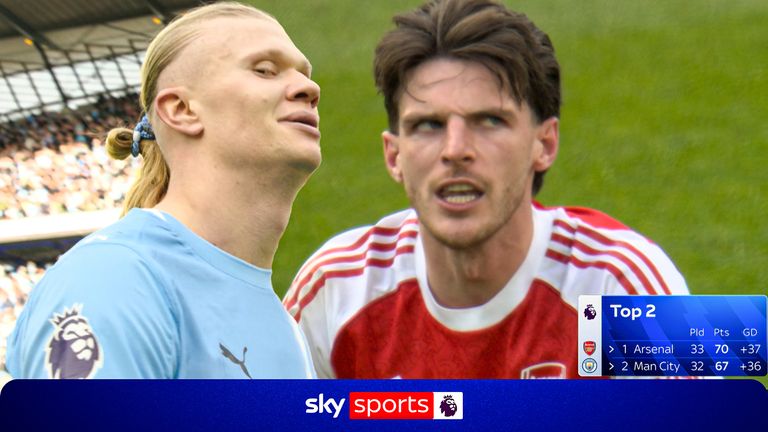
But Arsenal found a way, their refusal to bow summed up by Declan Rice, who rose from his haunches declaring “it’s not done” after the final whistle that afternoon in April, and whose inspirational performances in midfield have helped drag them over the line.
Their title triumph, the club’s first in 22 years, provides a crowning moment for Arteta’s Arsenal project, and marks the completion of a steady rise to the summit illustrated by their finishing positions across his tenure, from eighth, to fifth, to second, to first.
It has been a triumph of leadership and coaching.
Arteta has not done it on his own, of course. His players have pushed themselves to their limits, never more so than in this gruelling, 63-game season which will only reach its climax in Budapest. The support of the club’s owners has been crucial too.
The only frustration, happily forgotten in the blur of their celebrations, is that their time, this time, did not come sooner.
Following four years of incremental improvement under Arteta, Arsenal achieved the second-highest points total in their history in 2023/24, with 89, while also breaking a club record for goals scored, with 91. The underlying data showed they were the Premier League’s best-performing team that season. It was not enough.
Falling short of Manchester City for a second year running left Arsenal with psychological baggage and intensified the pressure to finally get over the line. But the bigger issue since then has been getting their best attacking players on the pitch.
Bukayo Saka, Martin Odegaard and Kai Havertz contributed a combined 63 goals and assists during the 2023/24 campaign but, due to injuries, have hardly played together since.
Remarkably, Monday’s game against Burnley, when Saka and Havertz combined for the decisive goal, was the first the trio have started together in almost a year and half, going back to a 5-1 thrashing of Crystal Palace at Selhurst Park in December 2024.
Defensive brilliance
It helps to explain why Arteta has come to lean on their defence.
Arsenal might not be as expansive as they once were on the ball but their foundations continue to grow stronger. It is fitting that they secured their crown with a run of four consecutive clean sheets.
The shut-out against Burnley was their 19th of the season in the Premier League and their 32nd in all competitions.
They have conceded seven goals fewer than Manchester City but the gulf is far wider in terms of expected goals against, which gives a truer reflection of the quality of chances allowed. Arsenal are an outlier, with a total 32 per cent lower than any other side’s.
They have put their supporters through it. Thirteen of their 25 Premier League wins have been by a one-goal margin. But their ability to keep opponents at arm’s length is their edge. At their best, it is hard to even create chances against them, never mind score.
This season, Arsenal have limited their opponents to under 0.50 expected goals in 18 out of 37 Premier League games. Manchester City, by contrast, have only managed it twice.
Their defensive prowess comes back to their manager, who, in conversation at the training ground in March 2024, described instilling what he termed a “love for defending” in his players.
“The key is that everybody goes 100 miles per hour for every ball,” Arteta told Sky Sports. “Our strikers, our wingers, our attacking midfielders, they have a love for defending.”
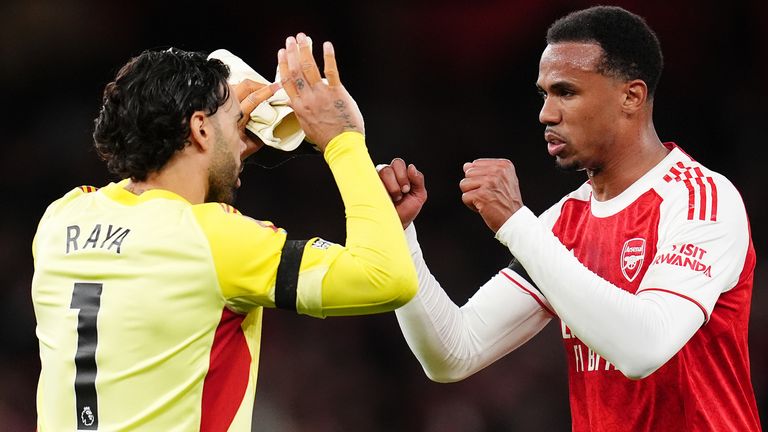
David Raya and Gabriel have been crucial in Arsenal’s title success
Since then, Arteta’s defensive unit has been bolstered by the signings of David Raya, Riccardo Calafiori, Cristhian Mosquera and Piero Hincapie. But it is that collective commitment to their task, and to the culture, nurtured by their manager, of valuing defensive actions as highly as goals, that underpins it.
They have the world’s best centre-back pairing in William Saliba and Gabriel Magalhaes. They have arguably the best goalkeeper too in Raya. But they also have wingers and midfielders who chase relentlessly, and strikers whose off-the-ball work never stops.
Their intensity has come to be mirrored by the club’s fans.
Arteta made it his mission to transform the atmosphere at the Emirates Stadium having seen first-hand how bad it had got when visiting as Manchester City assistant days before his appointment.
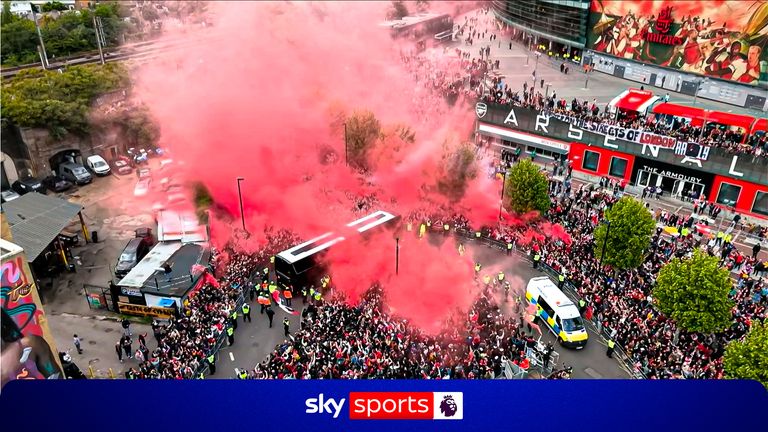
Arsenal fans welcomed the Arsenal bus ahead of their game against Burnley
The half-empty stands and disillusionment of the fanbase at that time are now distant memories, replaced by the extraordinary scenes of support that greeted Arsenal on arrival at the ground against Atletico Madrid and Burnley; by history being created.
Set-piece mastery
All the while, Arteta has undergone a transformation of his own, arriving at Arsenal as a so-called Guardiola disciple but becoming his own man, and carefully plotting a route to the top which involved getting ahead of the competition where he could.
Arsenal’s mastery of set-pieces, in particular, calls to mind another conversation with the manager at their training ground in 2022.
“You have to be ahead of the game,” he told Sky Sports. “You have to try to understand what can happen next, and how you are going to be first to make that decision and take advantage of it.”
At that point, the Gunners were already working with Nicolas Jover, the set-piece coach Arteta poached from Manchester City whose role in transforming Arsenal’s dead-ball threat ensured they were well prepared for the broader shift that came this season.
The Havertz header which settled the Burnley game was Arsenal’s 18th goal from a corner this term, a Premier League record, and took their total from set-pieces, excluding penalties, to 24, beating their total of 22 two years ago in 2023/24.
With Saka, Arsenal’s best and most impactful attacking player, inhibited by injuries for much of the season, that reliable flow of goals from set-piece situations has effectively mitigated the lack of a star forward such as Mohamed Salah or Erling Haaland.
Recruiting that player should be a focus of this summer’s transfer window. But Arteta was helped to achieve the objective this season by how his squad was strengthened during the last one.
Liverpool generated more excitement by ploughing huge sums into their attack but Arsenal’s title triumph vindicates the decision to instead add depth in all areas, and build a group capable of absorbing the injury blows that previously derailed them.
Arteta, meanwhile, has learned the lessons of previous seasons, rotating more readily, making a better effort to maximise his resources, and making bold calls when necessary, including the crucial decision to reconfigure his midfield for the run-in.
Arsenal’s league-high total of 22 goal involvements by substitutes highlights their strength in depth but also shows one of the areas in which their manager has developed. An area of weakness when he arrived as a rookie manager has become one of strength, with his changes repeatedly helping Arsenal secure results.
Those results have not always come easily. The Burnley game was just the latest this season in which fans have been put through the ringer. But none of that matters now. Arsenal are champions, just as Arteta promised, their transformation complete.
Disclaimer : This story is auto aggregated by a computer programme and has not been created or edited by DOWNTHENEWS. Publisher: skynews.com