As companies around the world rethink how HR, payroll, and employee management systems operate in an AI-driven future, human capital management platform isolved is expanding its India presence with a larger office in Hyderabad and ambitious hiring plans.
The company recently announced a new 28,000 sq ft office in Hyderabad and plans to grow its India workforce to 400 employees by the end of 2027. The Hyderabad office will support engineering, AI, product development, payroll processing, tax operations, and customer support functions as isolved continues to scale its global operations.
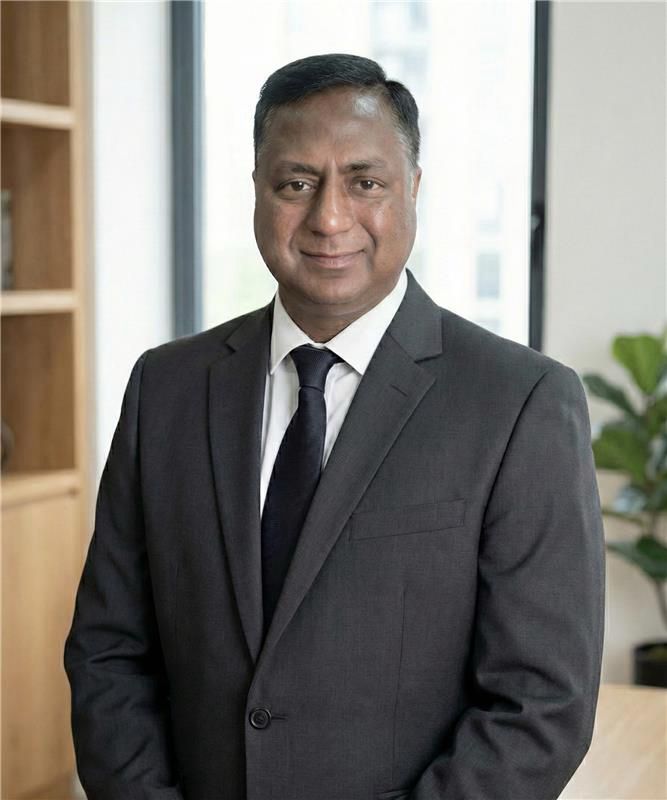
For Yogesh More, General Manager of isolved India, Hyderabad was a natural choice for the company’s long-term expansion plans.
“Hyderabad is the right place for multiple reasons,” says More. “One is the infrastructure that has been built over the years. Then there is the thriving ecosystem from a tech talent perspective, customer support talent, implementation talent, and also the presence of many HCM companies over the last two decades.”
That ecosystem gives isolved confidence that the city can support both its current operations and future innovation roadmap, he says.
“We believe Hyderabad has the right talent, the right infrastructure, and the kind of people we would want for our organisation. Many professionals here already understand this domain and can contribute quickly,” he adds.
The expansion comes at a time when AI is rapidly transforming HR operations globally. Payroll processing, tax management, customer support, and employee services are increasingly becoming automated and data-driven. But More believes AI’s role is not to replace people. Instead, he sees it as an enabler that can improve speed, accuracy, and customer service.
According to More, AI is going to accelerate delivery and the tasks we perform. “Our organisation handles a lot of client conversations every day. Those conversations can now be analysed, understood, and responded to using AI tools,” he says.
For isolved, which serves small and medium businesses across the United States, customer interaction remains deeply human and conversational. More says that balance between technology and human support is what defines the company’s approach.
“Our clients still want to talk to us, chat with us, send emails, and have conversations,” he explains. “Technology is not replacing those conversations. It is helping us respond better and faster.”
AI is also expected to significantly improve payroll and tax operations, which require high levels of domain expertise and accuracy.
He says, “These are very involved processes that need deep knowledge. AI helps us bring that knowledge faster, but there will always be humans in the loop because accuracy and timeliness are extremely important.”
As isolved scales its India operations rapidly, one of the biggest challenges is not simply hiring talent but building the right organisational culture.
“Hiring is just the beginning,” says More. “Once people join, you have to onboard them properly, align them with the company strategy, help them understand the culture, and prepare them to deliver.”
The company is particularly focused on ensuring that rapid growth does not compromise engineering quality or operational standards.
“When you ramp up so quickly, there are challenges in helping people settle into roles, understand expectations, and start delivering. My job is not only about hiring people. It is about making sure we deliver results after hiring them.”
Isolved’s technology platform itself is also undergoing continuous modernisation. According to More, the company is combining cloud infrastructure, AI tools, and observability systems to ensure reliability while scaling innovation.
“We already have a platform that has been successful for over a decade,” he says. “Now we are modernising it further with cloud provisioning, AI-based development tools, and observability systems.”
The goal is to create systems that are accurate, fault tolerant, error free, and increasingly capable of self-remediation. As AI adoption grows across industries, More believes curiosity and problem-solving will become the defining qualities for the next generation of engineering talent.
“Curiosity is where it starts. We want people who ask whether there is a better way to solve a customer problem instead of simply maintaining the status quo.”
He believes technical expertise alone is no longer enough. “You need people who understand the domain, understand customer sensitivity, and know how to use the right tools and frameworks to improve the service. Engineering skills are already expected. What matters now is how people build on top of that,” he explains.
For isolved, the India expansion is closely tied to its larger vision of creating what it calls a “platform of action,” where technology helps bridge human intent with organisational outcomes.
That vision, according to More, will depend as much on people and culture as it does on AI and engineering.
“We want to build teams here that can deliver at par with global standards. The focus is not just growth in numbers. The focus is building capabilities that can support the organisation for the long term,” he says.
Disclaimer : This story is auto aggregated by a computer programme and has not been created or edited by DOWNTHENEWS. Publisher: deccanchronicle.com