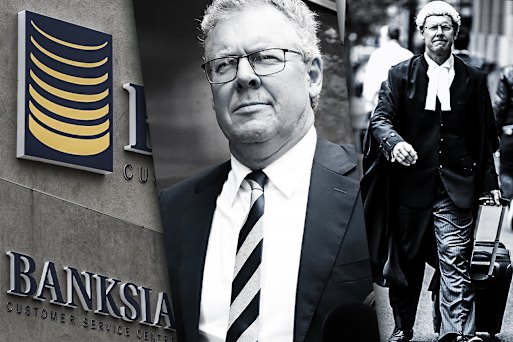
He was Melbourne legal royalty – a successful barrister and the son and grandson of Supreme Court judges. Norman O’Bryan knew the law. His fall from grace was extraordinary.
Former barrister and now convicted criminal Norman O’Bryan knows the law like few others. He knows how to study it, argue it, to break it, and now he knows how to use it to his advantage.
As a razor sharp, combative and experienced advocate, his courtroom persona was of one who had all the answers. But as a defendant, he couldn’t answer the one that mattered.
Why had he turned bad?
He was not under financial pressure, was in a stable relationship and was at the top of his professional game. He was brilliant, bombastic, charitable at times, a bully at others, and ultimately bent.
The O’Bryan name is to Melbourne law what the Kennedy name is to American politics – a dynasty.
His grandfather, Sir Norman, and his father, Norman, were legal giants who both presided on the Victorian Supreme Court bench.
Not that the youngest O’Bryan was given an easy ride because of his bloodlines. He possessed an elite mind, an admirable work ethic and an unshakeable self-belief that would lead him to the top of the legal tree, from where he would, inexplicably, jump to his professional death.
At the University of Melbourne, he won the Supreme Court Prize for top student (won by his grandfather in 1914), then a Rhodes Scholarship to Oxford.
Then, at the top of his game, he succumbed to two weaknesses – greed and hubris – attempting to steal a large slice of a settlement due to his clients in a class action.
He would have got away with it – if he hadn’t believed he was untouchable.
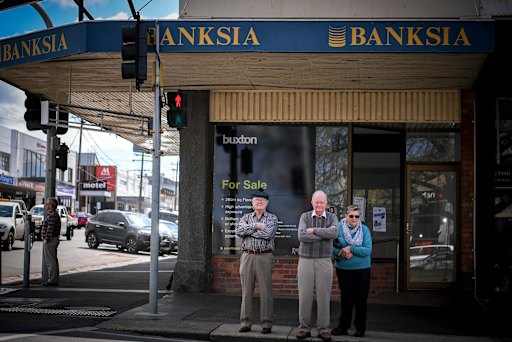
In 2012, Banksia Securities, a Kyabram property and development funder, collapsed owing $663 million from 15,622 investors, mostly country retirees.
Through costly legal action they were able to claw much of the money back (they were paid about 91¢ in the dollar).
There was a chance to receive more through a class action. This is a complex and costly process that can take years. Usually, a third-party funder pays the legal costs in exchange for a percentage of the final settlement. They buy a slice of the lottery ticket believing they might win division one.
A judge decides the final cut (usually between 20 and 30 per cent) of the final pot, considering monies spent and risks taken.
Mark Elliott was a smart, charismatic solicitor who could sniff out cash like a pig could sniff out truffles. In legal circles he had a reputation as a spiv and a chancer. He had made a fortune as an investor (lawyers who worked with him believed it came from insider trading), and became a company executive while still active as a solicitor.
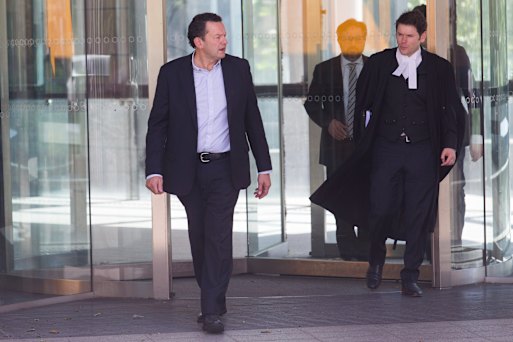
He saw class actions as a massive opportunity, describing himself as “a corporate whistleblower”. O’Bryan was his barrister of choice – as young lawyers they worked at the same firm.
Elliott bought small packages of shares in 165 publicly listed companies he saw as being at risk – and just waited.
As a shareholder, Elliot would be a plaintiff, his firm would be the lawyers and he would be the funder. This would make him entitled to three payments.
Elliott’s legal firm would be paid by Elliott the investor to compensate Elliott the client – a spectacular triple somersault not seen outside an Olympic gymnastics stadium. Such lawyers are sometimes unfairly referred to as ambulance chasers. “Elliott owned the ambulance, drove the ambulance and was the patient in the ambulance,” a class action expert said.
The incentive to charge more in legal fees created a second profit point. The higher the fees, the greater the risk to the funder, meaning they could ask for a greater slice of the settlement.
When some stick-in-the-mud judges pointed out he was in ethical quicksand, Elliott sent some of the legal work to a postbox legal mob and pushed the financing to Australian Funding Partners Limited – owned largely by his family.
None of this was known to the battling clients of Banksia when O’Bryan and Elliott turned up at a meeting in Kyabram full of hope and promises.
Investor Don McKenzie, now 83, was there. “They were touting for business.
“O’Bryan was charming, telling us, ‘We will do this, and we will do that.’ He was like a saviour.
“Elliott wouldn’t go away, and we couldn’t get rid of them. The receiver said they would use the Elliott action as their ‘barking dog’ (gathering evidence) to pursue the case.”
On January 30, 2018, the Supreme Court approved a $64 million settlement and Elliott wanted a $20 million slice in commission and legal fees fraudulently inflated to $4.75 million.
When some of the elderly clients queried the costs, O’Bryan and Elliott threatened them with life-altering legal expenses.
Eventually, the Court of Appeal appointed a contradictor to check the books – barrister Peter Jopling, SC, who, like O’Bryan, held an Order of Australia.
O’Bryan and Elliott had an exit ramp. They could have pretended to be outraged, claimed every cent of the bill was justified, but as their clients were elderly, charitably accepted, say, $3 million in legal fees, so the compensation could be dispersed.
Instead, they doubled down.
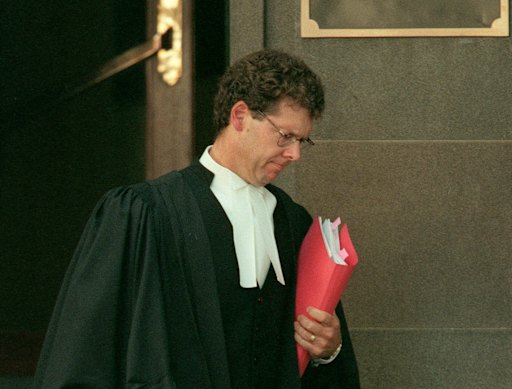
Elliott, O’Bryan and junior barrister Michael Symons threatened Jopling, claiming he could be left with massive legal costs.
Some in the contradictor’s team received calls from some legal blue-bloods suggesting they don’t go too hard on Norman. There is no reason to believe O’Bryan knew of the calls.
Initially, the contradictor’s team believed this was a straightforward fee dispute, but as they uncovered a paper trail, it became clear there was a massive conspiracy. The more they dug, the more they found.
O’Bryan made a legal career by appearing to be the smartest person in the courtroom. This time he wasn’t. It was O’Bryan who was gambling while Jopling had all the aces.
Before Justice John Dixon in the Supreme Court, Jopling said: “It was Mr Elliott’s idea. Mr O’Bryan joined him in as an equal co-venturer and Mr Symons was their willing and active recruit.
“The most striking feature of the course of conduct they pursued was that it involved each of them as lawyers acting dishonestly and without any regard to their duties, to their clients or their paramount duty to this court.
“The business model of AFPL [Australian Funding Partners Limited] and the lawyer parties was to make demands for costs that had no basis in fact and then to come up with bills to support these demands.
“Whenever anybody got in the way of the $20 million that they were trying to seize for themselves from this litigation, Elliott, O’Bryan and Symons turned to threats and intimidation.”
The jig was up – Mark Elliott had lived a lie and would die in one. He destroyed evidence but knew he was done. On February 13, 2020, he died at his Flinders property.
His family released a statement: “The Elliott family can confirm Mark Edward Elliott passed away after a tragic farm vehicle accident on his property last week.”
In fact, having been forced to hand over emails showing he was a thief, Elliott chose to kill himself.
A coroner would find that he had asked his doctor for a prescription of sleeping pills, claiming he was heading overseas, then went back, saying he needed a replacement as he had lost the first script. He took the pills with alcohol in a suicide bid, released himself from hospital, went to his country property and shot himself.
Another on Elliott’s team, cost consultant Peter Trimbos, also took his own life.
Faced with overwhelming evidence, O’Bryan’s lawyer, David Batt, QC, told the court his client would not dispute the claims against him, would accept any financial punishment and would not pursue fees for Banksia. He accepted he could no longer practise as a barrister. A few days later, he returned his Order of Australia.
Symons followed, stating he was finished as a barrister.
Initially, O’Bryan billed for 954 hours of work at nearly $1000 an hour for a total of just about $1 million.
By the end, it was $1500 an hour for 1876 hours for a total of $2.35 million.
The contradictor’s team discovered a bombshell email from Elliott to O’Bryan requesting invoices to “Total $2.65M plus GST”.
Facing multiple fraud charges, O’Bryan finally agreed to plead guilty to one count in the County Court.
In one way, O’Bryan’s dishonesty saved him. As his bills were backdated and fabricated then blended in with the legitimate work he did on the case, the prosecution could not prove the exact amount of the fraud.
Prosecutor Michael Stanton, SC, conceded as much because there were no “adequate, contemporaneous records”.
In other words, the accounts were a combination of fact and fantasy, but which was which?
His plea in the County Court before judge Fran Dalziel was as entertaining as a night at a theatre restaurant without the house shiraz and crumbed sausages.
In these hearings, defence lawyers look for reasons to explain and mitigate their client’s criminality – low IQ, violent childhoods, poverty, broken homes and substance abuse.
But in a piece of brilliant legal limbo dancing, O’Bryan’s team turned his silver spoon into the sword of justice. Norman shouldn’t go to jail because he had already lost so much from his FFG (fall from grace).
Little mention was made of the fact he was in the County Court because he had attempted to steal a large sum from pensioners already reeling after the collapse of the financial institution they trusted with their savings.
When a few of them thought it wasn’t fair, he threatened to use his colossal legal brain to financially destroy them.
The picture painted of O’Bryan by his barrister Neil Clelland, KC, was of a man who was generous, humble and charitable who because of one lousy mistake (described diplomatically as an “unhappy event”) had lost his profession, his reputation and many of his friends, and was now a shadow of his former self.
Compounding this sorry state of affairs, he no longer felt welcome at the private golf course for a quick round followed by the prawn cocktail and Sunday spit-roast luncheon.
The court heard he was not paid for his legitimate work on the case, which is a little like a car thief complaining the petrol tank was not full, forcing him to fill it up with his own money.
To be fair, O’Bryan did plenty of pro bono legal work, supported charities, mentored students and contributed to his profession and his community with energy and donations.
The argument of loss of privilege would have been stronger if his team had looked for legal precedent, but, perhaps wisely, they looked the other way.
Because the most similar fall from grace was that of high-flying solicitor Andrew Fraser, who pleaded guilty to cocaine trafficking.
Fraser’s lawyers ran the same arguments as O’Bryan’s (private school, high-flying lawyer, made a mistake, fall from grace, eminent legal figures to give character evidence) and it was ruthlessly dismissed. Far from being a mitigation factor leading to a smaller sentence, it was a reason for a longer one.
In 2004, as he sentenced Fraser to a minimum five years’ jail, County Court judge Leo Hart said: “He, of all people, is allowed no leeway or slack. A legal practitioner must not cross that line. There’s nothing else to say.”
The decision was backed by the Court of Appeal in 2004. It found Hart’s conclusion that a lawyer who acts “in the illegal, dishonourable and disgraceful way” should receive greater punishment was right. “The correctness of the proposition that that status (as a lawyer) is an aggravating factor cannot be doubted.”
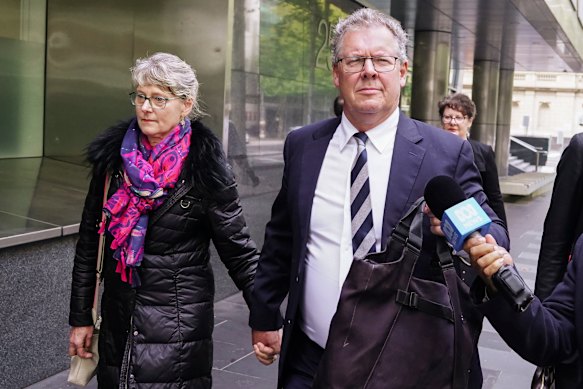
On May 14, outside the County Court on his day of sentencing, O’Bryan looked tense. Inside, before proceedings, he was more relaxed, discussing golf with one of his legal team.
He was passing the time knowing he wasn’t going to do time as at an earlier sentence indication hearing (not made public at the time) the deal was discussed of pleading to one charge for a non-jail sentence.
Legal sources say O’Bryan reluctantly pleaded guilty and was, until the sentence indication, prepared to go to trial. Dalziel, the judge, later told him he would have gone to jail for at least a year if found guilty by a jury. If it had gone to the Supreme Court, he could have expected double that.
Dalziel said O’Bryan had “failed to act with integrity”.
“His conduct is to be condemned, and he must be punished,” she said.
But not with jail. He was sentenced to 600 hours of community service over four years. That is three hours a week, the same time it takes to play a round of golf on a private course of competition Saturdays.
In her sentencing remarks, Dalziel said: “Mr O’Bryan was previously involved in the Peninsula Golf Club. Following these matters, he withdrew from that club, fearing being shunned or being asked to leave. He lives primarily away from Melbourne, and has lost contact with friends and colleagues, even those who did wish to maintain their friendship with him. He has also withdrawn from family celebrations.”
Two quick points here:
- Living away from Melbourne in a luxury home on the peninsula is hardly the equivalent to solitary in Alcatraz.
- A man looking remarkably similar to Norman O’Bryan was spotted at a Melbourne social event maintaining a brave face considering his troubles.
‘O’Bryan and Symons engaged in conduct that must reasonably be regarded as disgraceful or dishonourable by professional colleagues …’Supreme Court Justice John Dixon
Another point of mitigation was the delay from offending to his day in court – “During that time the proceedings have been hanging over his head.”
This is in part because O’Bryan, while maintaining his innocence, used every legitimate legal tactic to delay court hearings examining the legitimacy of his fees.
The court was provided with letters from his psychologist that he was a suicide risk. In Dalziel’s sentencing remarks, she said: “The letters speak to Mr O’Bryan’s sense of shame about the impact of his public disgrace on his family members who are still part of the legal system as lawyers and judicial officers, and on his family’s legacy of contribution to the justice system.”
It did not mention the Banksia victims – many of whom died before seeing resolution.
Much was made that in the face of overwhelming evidence in Justice Dixon’s court, O’Bryan, did not contest, handed in his practising ticket, withdrew any claims to fees and then returned his Order of Australia.
But he was stung by Dixon’s judgment that filleted him like a slimy mackerel.
“O’Bryan and Symons engaged in conduct that must reasonably be regarded as disgraceful or dishonourable by professional colleagues … I have found that they corrupted the administration of justice and have been dishonest for reasons of personal greed,” Dixon found.
It was so savage that Dalziel did not read it so she couldn’t be negatively influenced.
While no longer a barrister, O’Bryan still tried to use the law to rewrite history. He went to the Court of Appeal – wanting seven paragraphs of the Dixon judgment expunged.
In the very court that houses the ghosts of his father and grandfather, three judges delivered the ultimate legal insult.
No, he would not be given leave to appeal as his argument was “without merit”.
Norman O’Bryan’s legal career began as the dux of the class. It ended with him flunking out.
Crisis support is available from Lifeline 13 11 14.
Start the day with a summary of the day’s most important and interesting stories, analysis and insights. Sign up for our Morning Edition newsletter.
Disclaimer : This story is auto aggregated by a computer programme and has not been created or edited by DOWNTHENEWS. Publisher: www.smh.com.au