Amid all the angst, anger, outrage and awkwardness that swirls around the AFL over its tortured attempts to deal with homophobic slurs, plus the accusations it just cannot get LGBTQI+ issues right, it’s important to remind the league of one thing: being gay is actually a heck of a lot of fun.
And I say this not just from my role as a jobbing journalist, but from that time I became a worldwide poster boy for marriage equality.
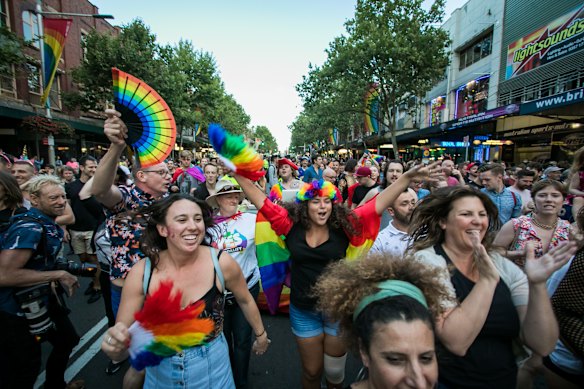
Shedding the pervading climate of queer gloom, I take you back to one of Australia’s happiest days: Wednesday, November 15, 2017, the day we learnt the result of the same-sex marriage postal survey.
I had skived off work from the Sydney bureau of The Australian newspaper (which had about half a dozen gay men on staff, more than the number of out gay male AFL players, which stands at zero).
I had gathered in the park near Central Station in Sydney with two gay-list marriage-equality campaigners. After an eternity of speeches came the magic words: 61.6 per cent of Australians said yes to same-sex marriage, and we erupted in joy.
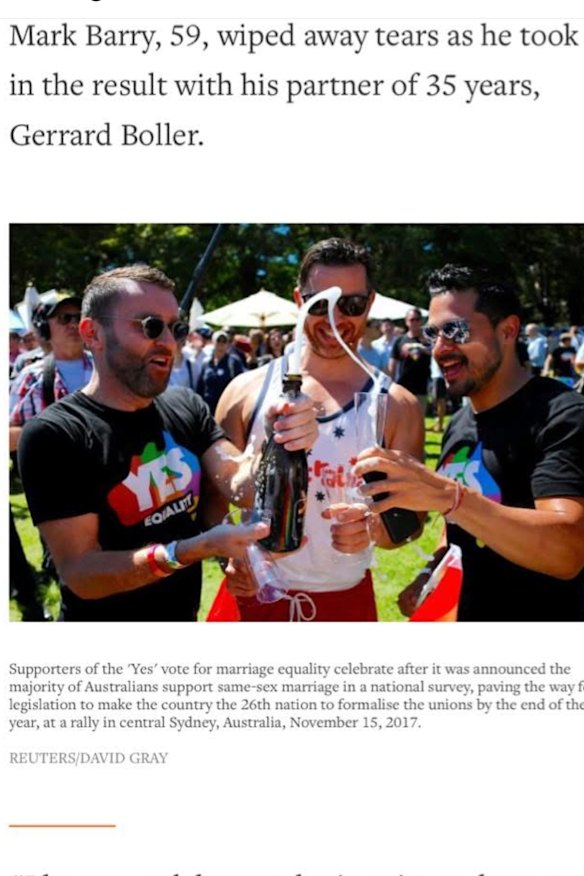
I spied an old acquaintance in the crowd, Reuters photographer David Gray, and politely badgered him for a celebratory happy snap of us with our champagne.
He was clearly reluctant, but owed the Brook family. My dad had been his high school principal and had set up a photographic dark room that set him on his path to photojournalism. We popped the cork and splashed some bubbles into some flutes, David quickly took a few sympathy snaps, and we went to a celebratory lunch and promptly forgot all about it.
But a couple of hours later a friend was pinging his congratulations all the way from Germany.
Our photo was leading the Reuters homepage. The Billecart-Salmon, defying all sense of logic and physics, had looped from the bottle in a long arc that landed directly into a waiting flute and David had captured it in freeze-frame, a burst of alcoholic joy framed by our statement T-shirts screamed both Australiana and Yes! to marriage equality (while making my shoulders look really good).
What a day! History, progress, alcohol, plus global recognition. But typing this now makes me sad. How is it that we could educate an entire nation in 2017 to enthusiastically endorse an important social change for gays and lesbians, but in 2026 we can’t stop young men from yelling f—– on the football field?
The incidents are well known. In 2024 during pre-season match, AFL North Melbourne coach Alastair Clarkson called some St Kilda players “c—suckers”. He was fined $20,000 but not suspended.
That season Port Adelaide forward Jeremy Finlayson called an Essendon player a f—–. He admitted it, apologised, received a three-match ban and paid to complete a Pride In Sport education course.
One month later, Gold Coast defender Wil Powell copped a five-match ban for a slur that was not publicly disclosed. He self-reported and apologised, but received an increased penalty because of the tribunal’s “deep concern” the incident had reoccurred so soon and it wanted to “further deter such conduct”.
But just before last year’s finals, Adelaide star Izak Rankine was suspended for four matches for calling a Collingwood player a “f—–“. He apologised and was suspended for five matches, reduced to four matches due to a mental health concern. He missed the finals series and was so devastated he considered quitting football.
The damage from such slurs is real. They are abuse, designed to attack and diminish opponents and bring out feelings of shame, depression and anxiety and can lead to increased likelihood of self harm. And homophobic language, because it is so shaming, is a huge risk factor for underreporting sexual abuse.
The AFL is clearly worried about the issue, but critics point to inconsistencies.
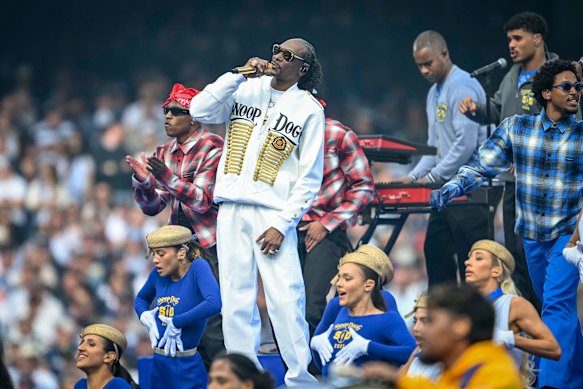
Apart from sponsorships from national airlines of countries which outlaw homosexuality, Qatar Airways, Emirates and Etihad (some of which have ended), reformed homophobic rapper Snoop Dogg performed at the grand final last year.
And then there were star Geelong players Patrick Dangerfield and Bailey Smith’s infamous Mad Monday Brokeback Mountain gay pose, which Smith captioned “this is what losing a granny does to ya”. What, losing turns you gay?
Personally, I thought the dress up was fun, but the caption stupid. The AFL issued no penalties but handballed it to Geelong Football Club, which apologised and scrapped its Mad Monday celebrations.
A few years ago, a rugby player let loose a homophobic slur in the middle of a match. This was while he was actually wearing a rainbow uniform, playing in a pride game organised by his local team.
He later told Monash University researchers he was shocked he had done it, saying it felt like swearing in front of his grandma. And he would never do it twice.
The lesson for researchers was plain. Properly organised pride rounds, highlighting the queer community, with the support and education for local clubs, can shift player attitudes. Studies show players’ use of homophobic slurs – often so ingrained in culture they are used unthinkingly – plunge after participation in pride rounds.
But the AFL still has just one pride match, traditionally between the Sydney Swans and St Kilda.
The research paper Reviewing evidence of LGBTQ+ discrimination and exclusion in sport by Erik Denison, a researcher at Monash University and others found: “Homophobic language is also commonly used in sport by athletes, regardless of whether they also claim to have positive attitudes toward LGBTQ+ people.”
Hold on. Will Houghton, KC, chair of the AFL appeal tribunal in the infamous Lance Collard case, was sacked for saying similar.
His appeals board reduced Collard’s seven-match ban for saying “f—ing f—-t” to four matches. It had been Collard’s second offence and he had denied it, forcing a lengthy contested tribunal hearing and appeals hearing.
“It is highly competitive, particularly at its higher levels. It is commonplace that players can employ language from time to time which is racist, sexist or homophobic whilst on the field.”
The outrage was instant. Most of it ignored his follow-up comment. “We observe that it’s to the credit of the AFL and the Tribunal that its efforts to eliminate these comments appear to be succeeding.”
My colleague Peter Ryan has written of the massive flaw and the absurdities involved in the AFL’s Collard investigations process, during which a young player felt an AFL investigator was asking him if he was gay, a shocking invasion of privacy.
AFL Players Association chief executive officer James Gallagher acknowledged that every step of this process had caused harm to the players involved, and the First Nations and queer communities, that the industry had to deeply reflect on.
And the massive focus on this tortured and flawed process has wrongly made the tribunal process the litmus test for the AFL’s stance on queer issues, much more so than education and policy efforts. As one AFL executive lamented: “We don’t get stories written about the good work that we do.”
Still, the AFL has twice garnered the coveted “gold status” from Pride in Sport, a division of ACON. One wonders what status would be awarded a gay male player who actually thought the AFL environment was safe enough for him to come out publicly. It hasn’t ever happened.
Ian Roberts, a hero to all Australian gay men after he came out as a rugby league player in 1995, interrupts when I ask him about the AFL and its troubles. “It’s every major sporting body, particularly in men’s sport,” he says, adding he feels redundant when talking to women’s sports about queer matters – the problems just aren’t there.
“Same-sex attraction is regarded as an element of weakness,” he says about men’s sport. “I don’t think the guys are homophobic. But a lot of them are very uneducated.”
Basketball player Isaac Humphries came out in 2022 and now admits he underestimated how readily his Melbourne United teammates would accept him.
“We don’t have all the answers, but we can help provide a platform,” says Melbourne United chief executive Nick Truelson.
United has teamed with the Melbourne Spectres in a LGBTQI+ partnership, also with queer radio station Joy FM, and is a member of Pride in Sport. Oh, and Dannii Minogue is a team ambassador.
“For all sports we wouldn’t need to have themed rounds if there weren’t challenges around the country.”
The AFL likes to list its LGBTQI+ achievements, always careful to state it is on a journey and committed to doing better. It endorsed an anti-homophobia framework in 2014. In 2016, the annual pride game between Sydney Swans and St Kilda started. The inaugural AFLW pride match in 2018 has morphed into a pride round, something the boys won’t commit to.
The sole AFL pride match between the Swans and St Kilda match won’t be happening this year. The Swans called it off after the Collard case “to ensure the game has the positive impact”. Thereby losing the chance for a teachable moment. In effect St Kilda is being punished.
Monash University researcher Denison thinks the AFL is not tackling the real problems properly. “These are social problems. Players know they should not use the language – that has nothing to do with it. There’s no thought process going on here, they are just using language that everyone uses to fit in.
“Boys use this language because they want to belong. It is about power, hierarchy and belonging.
“I have personally given up on the AFL doing the right thing.”
The problem is actually beyond the AFL and sport. The problem is us.
“This isn’t about sport, it is much bigger than that. It just plays out in sport,” Roberts says.
His solution? “Education, education, education – it is about talking about this stuff when people are kids. You are not less because you have fallen in love with someone of the same sex,” Roberts says, adding this is still an uncomfortable conversation to have with sport officials.
“Particular men’s contact sports – where men have got to be men.”
I haven’t met any of the AFL’s convicted homophobic slur utterers. But unlike the Swans and St Kilda, I would happily invite them out for a drink. Maybe Ian and Isaac and Thorpey could come too. Aperol spritzes? OK, beers if we must. Either way, I’m sure we’d have a gay old time.
Disclaimer : This story is auto aggregated by a computer programme and has not been created or edited by DOWNTHENEWS. Publisher: www.smh.com.au