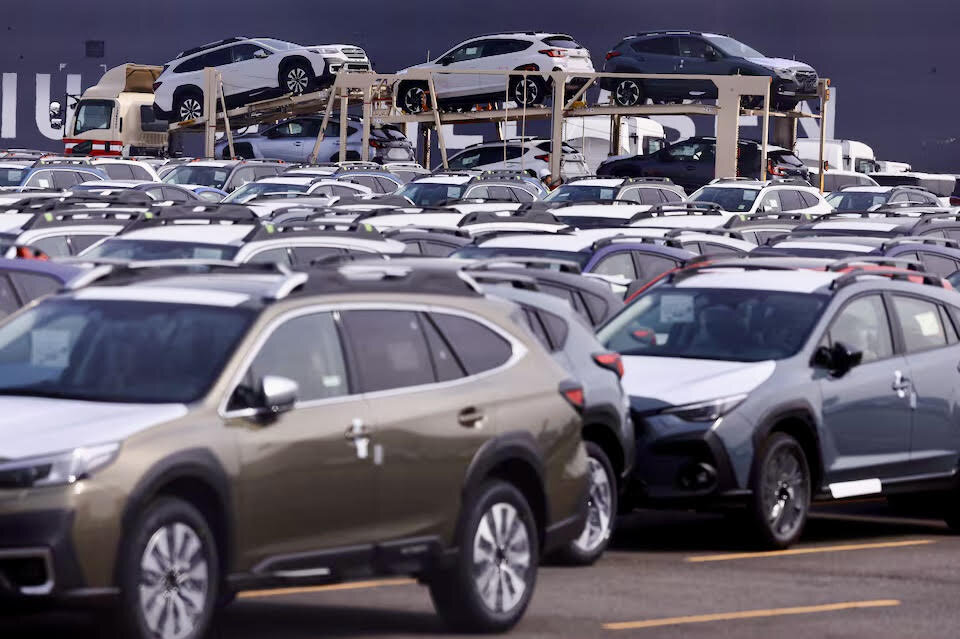
TEHRAN – Official data released Thursday reveals that Japanese vehicle exports to West Asia collapsed by more than 90 percent in April, both in value and volume, as the ongoing U.S.-Israeli war against Iran crippled maritime shipping to a region that major automakers such as Toyota and Nissan have long relied upon.
The dramatic drop has effectively halted the flow of passenger cars, trucks and buses to West Asia – also a critical market for secondhand Japanese vehicles – following the de facto closure of the Strait of Hormuz, according to finance ministry figures.
Government statistics show that West Asia accounted for approximately 14 percent of Japan’s total motor vehicle exports in 2025.
Toshihiro Mibe, vice chairman of the Japan Automobile Manufacturers Association, told reporters Thursday that the industry is absorbing the war’s impact primarily through transport disruptions. “The biggest impact we’re seeing is from the closure of the Strait of Hormuz, which has led some manufacturers to reduce production of vehicles bound for West Asia,” Mibe said.
He added that the association expects the disruption to remain largely confined to shipping, while authorities have confirmed sufficient supplies of chemical products excluding naphtha and lubricants. The group will continue to monitor the situation.
———-Longer-term supply chain shifts expected
Analysts say the war may compel automakers to restructure their supply chains over the longer term as they seek to mitigate risks stemming from both the conflict and the strait’s closure.
“This is not something that will end in the short term,” said Sanshiro Fukao, an executive fellow at the Itochu Research Institute. “In the broader trend, as companies take West Asia risk into account, the flow of goods could change.”
———–Why West Asia matters for Japanese automakers
According to analysts, West Asia remains especially lucrative for Japanese car manufacturers because it offers strong demand for high-margin models such as Toyota’s Land Cruiser sport-utility vehicle.
“In terms of absolute sales, Toyota is the most exposed, as it is the most successful automaker in the region,” said Julie Boote, an auto analyst at Pelham Smithers Associates. “However, since Toyota is regionally well diversified, with West Asia accounting for about 6 percent of its total sales, it can absorb this hit better than others.”
While automakers may attempt to redirect some vehicles originally intended for West Asia toward alternative markets, analysts caution they are unlikely to fully compensate for the lost volumes.
Toyota, Nissan and other manufacturers are scheduled to release their April production and sales figures next week.
Disclaimer : This story is auto aggregated by a computer programme and has not been created or edited by DOWNTHENEWS. Publisher: tehrantimes.com