Race teams in Formula 1, NASCAR, and IndyCar will all be looking for an edge this weekend as they compete across North America but the secret elements that make them go faster are likely hiding deep underneath the bodywork. Modern motorsport can be very restrictive on the parts and pieces that teams are allowed to use so organizations like Team Penske and Scuderia Ferrari are looking underneath the surface in order to extract additional performance from the fuel and lubricants in the engines and gearboxes.
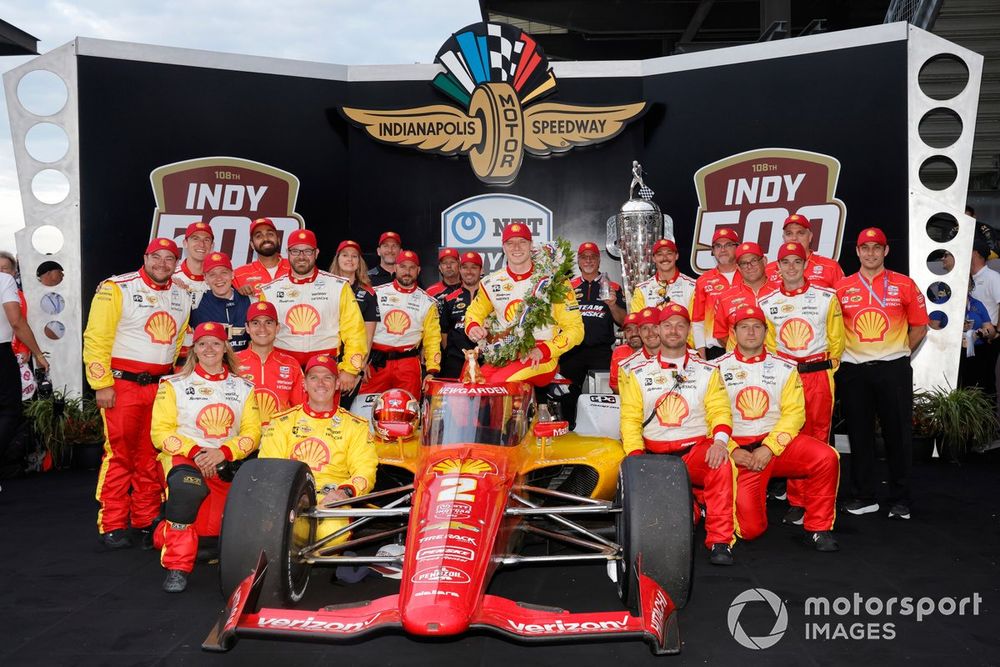
Shell’s role in Penske’s quest for a 21st Indy 500 win
Winner Josef Newgarden, Team Penske Chevrolet with the team
Photo by: Michael L. Levitt/Lumen via Getty Images
We spoke with Team Penske technical director David Faustino and Shell chief technology officer Dr. Selda Gunsel in order to learn how teams in all three series that are racing this weekend are trying to find an edge. Shell is working with Team Penske on custom gear oil formulas for use in their gearboxes for the Indianapolis 500 along with engine and gear oils that are being used by the Team Penske cars in the Coca-Cola 600. In addition to that, Shell engineers are embedded with Ferrari engineers in Montreal in a custom trackside lab that allows them to monitor fuel and lubricant mixtures and adjust power unit parameters.
According to Faustino, Team Penske works in conjunction with Shell to develop a variety of custom lubricants for their IndyCar program and for the Indianapolis 500, they go as far as developing separate lubricant recipes for qualifying and the race. Faustino explained how they build different formulations based on the goals for each type of track.
“IMS, obviously we’re chasing the most efficient package, and the loads are very constant, so when the car goes out there on the racetrack, it’s just running at a high speed, but in a very small RPM range, and it’s not going on and off power, so actually the torque is low, but the speed is high, and like on a road course or street course, you have like short first gear, low speed, super high acceleration, super high load, but lower constant speed. So, like, the application is different enough to where they can help us make a difference just with the use case of the car and that specific type of track.”
David Malukas is starting on the front row for the Indy 500 and that’s no accident. It requires a total team effort which not only includes the skill of the driver but all of the choices made by the mechanics and engineers working on the car and that goes all the way to the lubricant in the gearbox. Faustino shared that temperature and run time play a big part in choosing to customize a gear oil mixture just for qualifying.
“It doesn’t have to last as long, and the difference there is when you start qualifying, everything’s cold, in only four laps it stays relatively cold, where in the race it’ll stay at the elevated temperature the whole time.”
Dr. Gunsel shared that they’ve been able to work with Team Penske to make significant gains just by freeing up the gearbox based on the oils they have developed.“
“When it comes to transmissions or gearbox fluids, we actually work directly with Team Penske engineers to again improve the efficiency of the gearbox. It’s the same principle as engine oil. We want to reduce friction and improve efficiency, but at the same time make sure that the gearbox operates efficiently under high load conditions, in the extreme conditions found in races, and we want to make sure that our oils sustain under different conditions, super speedways, or short tracks, and it is amazing. We can measure significant horsepower increases due to improved efficiency in the gearbox, and Team Penske does test on our fluids, and, and they have reported again significant numbers, horsepower increases. I’m not sure if I’m allowed to talk about it. Maybe I can, it’s definitely measurable horsepower gains to improve efficiency of the gearbox.”
Shell’s behind-the-scenes work as Penske chases Coke 600 glory
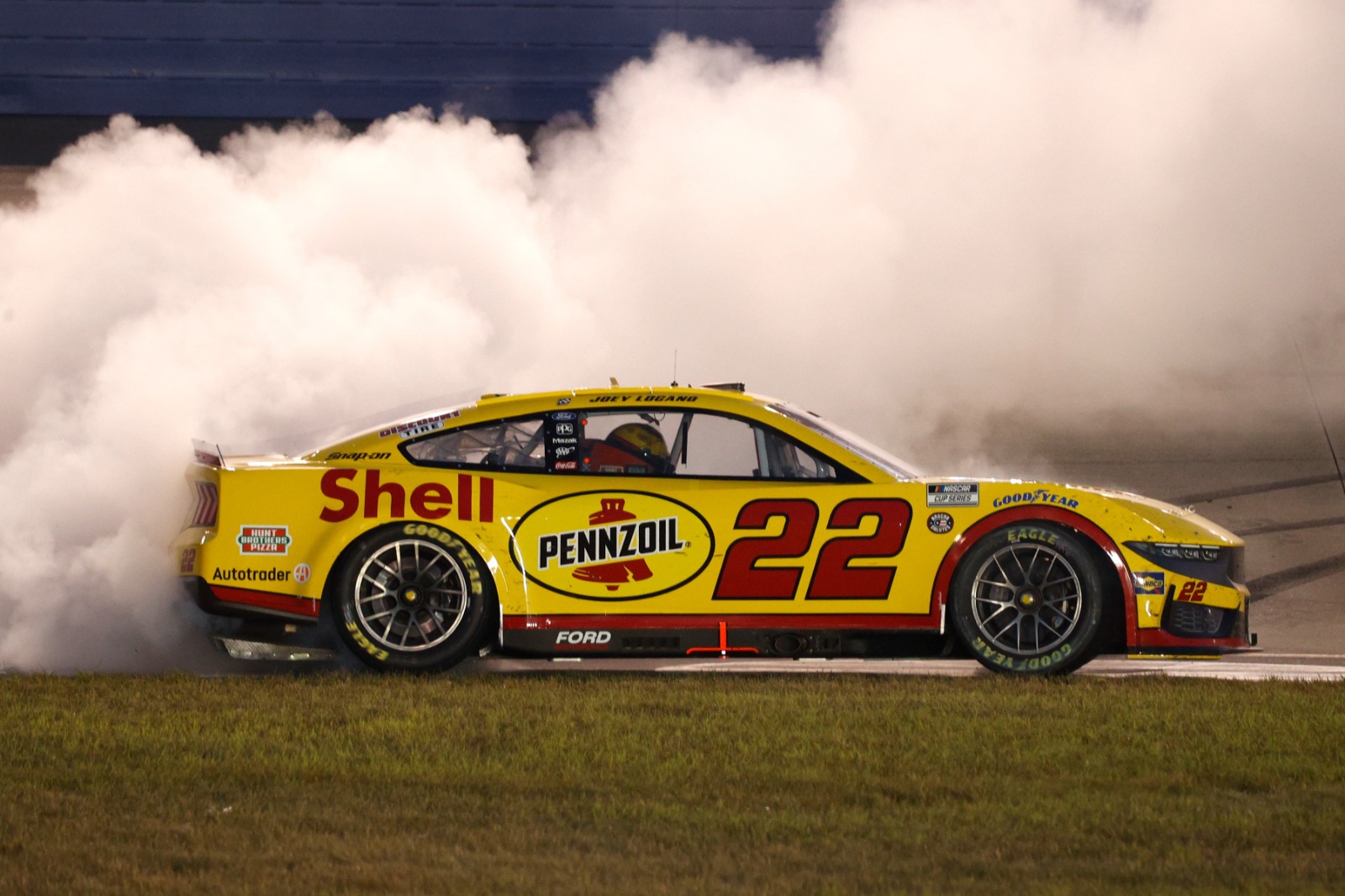
Joey Logano wins
Photo by: Jeff Robinson/Icon Sportswire via Getty Images
Shell contributes even more to the Team Penske efforts on the NASCAR side as they work with them to maximize the transaxle efficiency in their Cup cars along with working with Roush Yates Engines to extract the most horsepower and maximize durability for their engines. Dr. Gunsel shared that one of their projects leading up to this season was testing lubricant formulas in order to allow their teams to successfully adopt the new 750 horsepower package that is in use at select tracks. They had to modify their lubricant formula in order to remain durable while maximizing performance.
When it comes to the Coca-Cola 600, their big focus for the lubricant side is durability because it is such a long race. Performance is also a huge factor and they will often develop custom oil formulas just to extract a bit more power. These formulas will get dyno tested by Roush Yates Engines and Team Penske and Shell work in collaboration in order to make the choice for each race weekend. Each type of NASCAR will often have a unique engine oil recipe and that will often come down to engine loads and race lengths and how far they can push the envelope for more power and according to Dr. Gunsel that often comes down to friction improvements.
“The engine oil, as well as the gearbox oil are customized based on the needs of the specific race team, so we work very closely to reduce friction and improve horsepower. We go to very, very low viscosities. If you are familiar with engine oil viscosities, we go to 0W water-like fluids to ensure that we minimize friction loss.”
Shell’s assist to Ferrari as they understand new F1 regulations
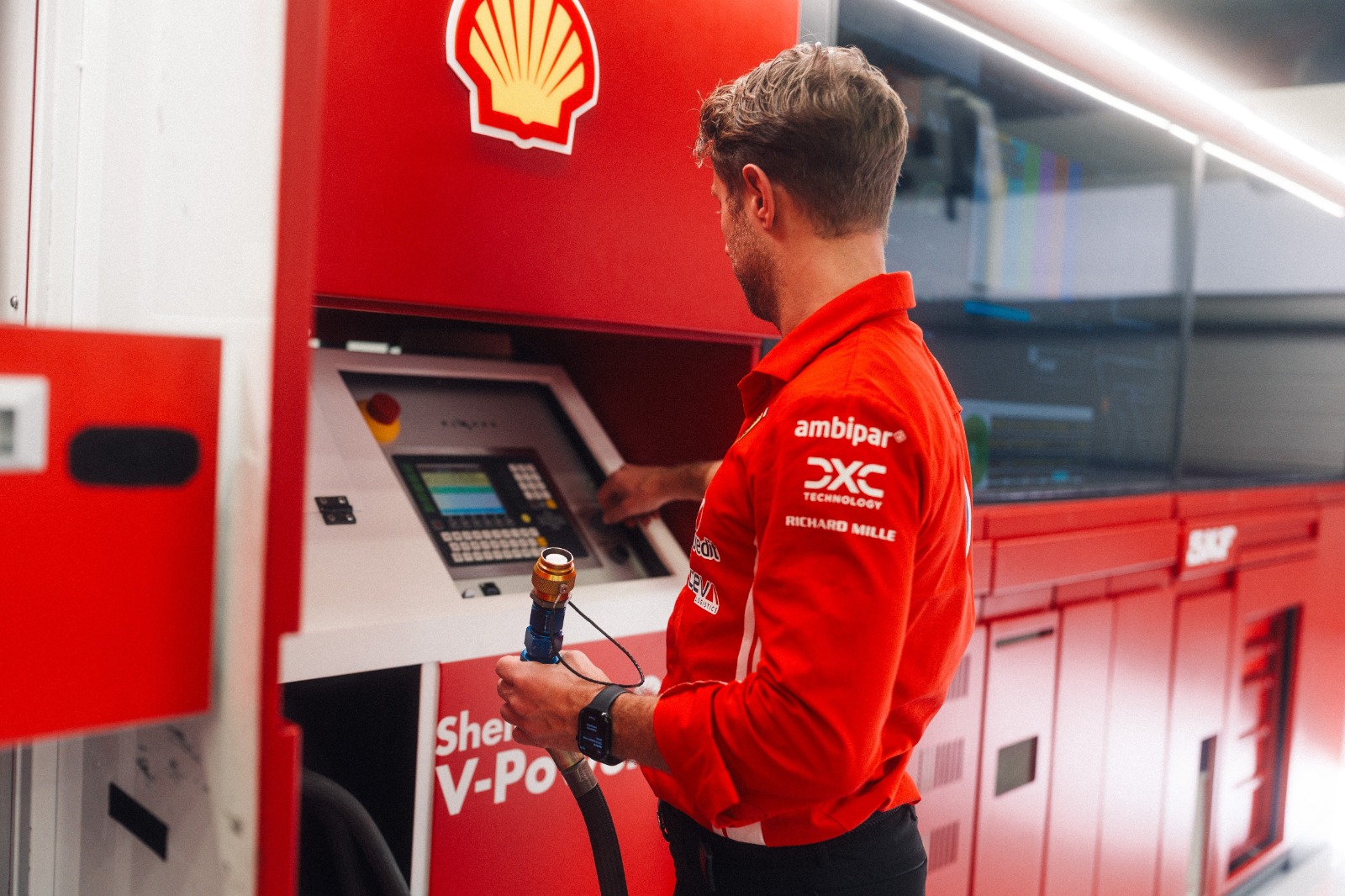
Shell trackside lab
Shell ramps things up another level when it comes to their Formula 1 efforts as they deploy a trackside lab and embed their engineers alongside the Scuderia Ferrari engineers. This weekend in Montreal they will have engineers constantly testing fuel and oil at the trackside lab in order to monitor a variety of factors that allow them to make recommendations to the Ferrari engineers on how they can change power unit parameters in order to maximize performance.
Dr. Gunsel shared that their development of the sustainable fuel that debuted this year with the latest set of Formula 1 regulations was a four year process and something that they continue to develop. Shell has continued to study and iterate on the fuel and they plan to release an updated version of the fuel to Ferrari for the Barcelona-Catalunya Grand Prix next month. The initial development of the fuel was a huge challenge for Shell.
“This year the fuel had to be 100% advanced sustainable components, and you know previously the bio component requirement was only 10% so if you’re talking about going from 10% bio 90% fossil based gasoline to 100% sustainable feedstocks, one of the challenges is that these components don’t exist in the marketplace. There’s very limited quantities coming from startups, and we have some JVs that we leverage, but we really had to, like, invent new supply chains, new process technologies, new molecules to be able to develop this fuel.”
“Some of these components have very low energy densities as compared to fossil fuels, so you really have to make up for that loss to the formulation, and the other thing we did, which was really helpful, was we used advanced digital technologies, machine learning-based digital workflows to screen. I think we screened over 2 million different formulations to be able to select a few to do the actual engine tests in Maranello in Ferrari.”
Some of that technology allowed Shell to be able to set up the trackside lab that now travels to Formula 1 races in order to give Ferrari almost instant feedback on the performance of the fuel and lubricants in order to allow them to make adjustments between sessions on track. That lab will be back in action this weekend as Charles Leclerc and Ferrari try to defend their third place spot in the standings at the Canadian Grand Prix. We’ll also see drivers like David Malukas at Indianapolis Motor Speedway and Ryan Blaney at Charlotte Motor Speedway trying to make use of some of the same research and technology as they all chase wins in the latest version of the greatest day in motorsport.
We want your opinion!
What would you like to see on Motorsport.com?
– The Motorsport.com Team
Disclaimer : This story is auto aggregated by a computer programme and has not been created or edited by DOWNTHENEWS. Publisher: motorsport.com