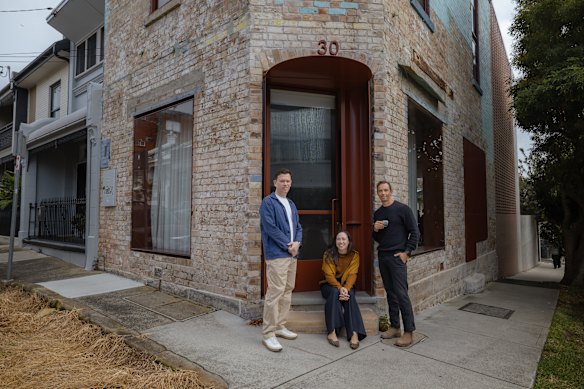
When architect Catherine Downie first visited an 1888 Camperdown corner store, Chupa Chups and deodorants vied with empty displays for Anticol and Soothers in the derelict space.
Neil Mackenzie faced a similar scene when he bought a squalid Marrickville corner shop. “It was almost unliveable,” said Mackenzie, architect and cofounder of Mackenzie Pronk with Heidi Pronk.
Dating back to 1890, it had been home to 17 businesses before them. The names and types of businesses tracked the areas’ changing demographics with a succession of greengrocers with very English names; Greek corner shops, including Con and Maria Prodromakis who also sold hot food; auto repairs; and the musician Phil Stack.
Add architect to that now. And in the case of Downie’s site in Camperdown, builder can be added to the list. The two corner store transformations both feature housing as well as commercial space, and both are on the shortlist for NSW architecture awards.
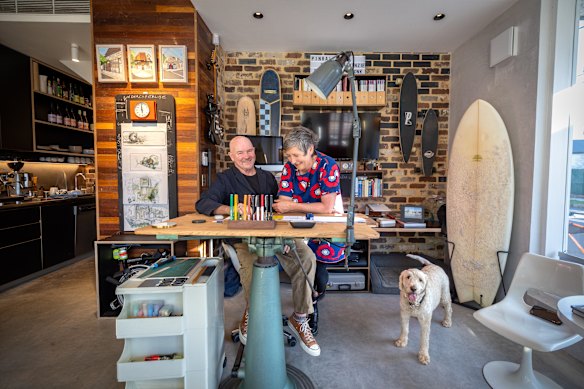
Mackenzie says the growth of shopping centres killed the shops on nearly every corner in the city’s inner west. Many were boarded up: “People put newspaper up in the front room and that was it.”
As density has increased, and local community life has increased in value, these sites are becoming more valuable.
Corner sites such as his had become a “bit like the town square” where people stopped to chat or look in the windows.
Both sites have been updated to provide much-needed housing as well as commercial space. Yet they are shortlisted for different awards in the 2026 NSW chapter of the Australian Institute of Architects’ awards.
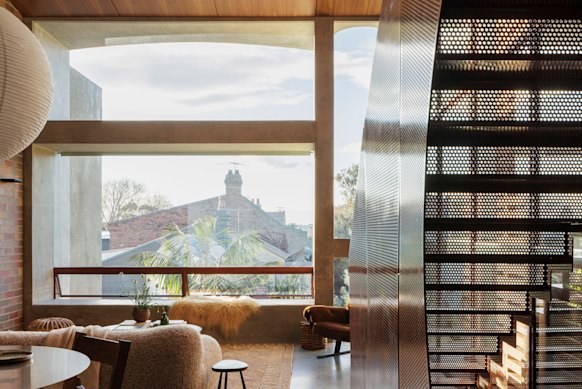
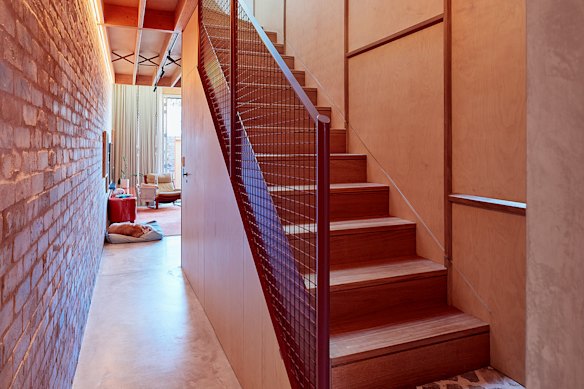
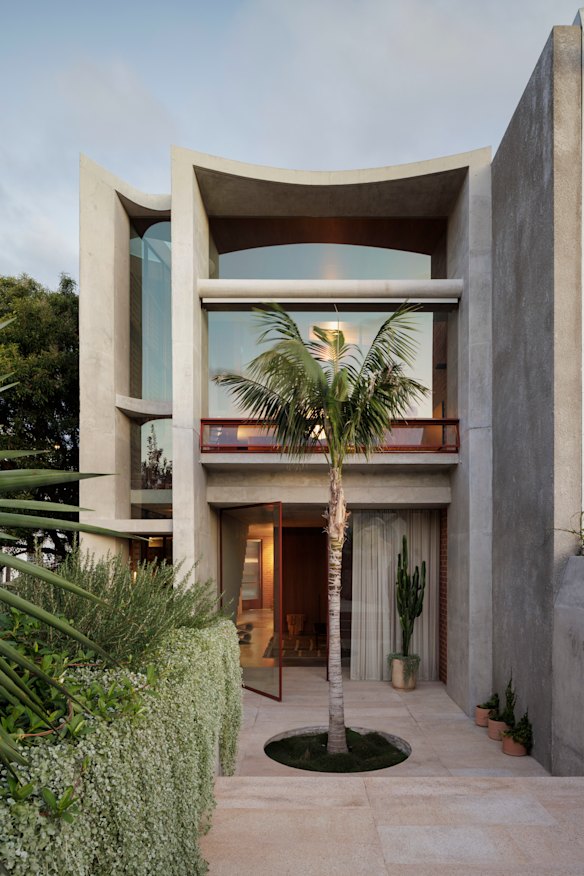
Downie North’s The Corner Shop in Camperdown has been shortlisted in the interiors and residential alterations and additions categories. Mackenzie Pronk with Make Projects – which owns the Crossroads site – have been shortlisted in the sustainable and the multi-residential categories.
Downie, a cofounder of Downie North, said such corner sites were a “gift for an architect”.
“They have access to air and sunlight, and three facades instead of two very narrow ones,” she said.
This allowed them to design a new interior around the “movement of the sun”.
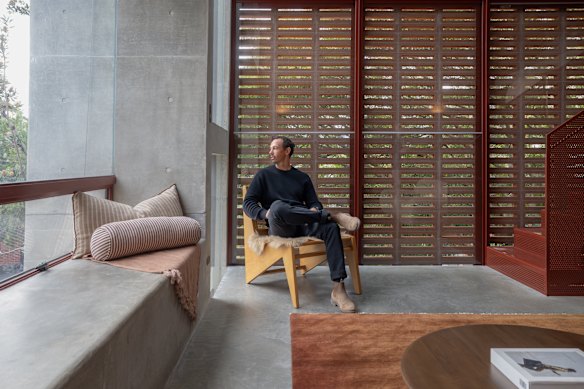
The owner of the Camperdown site, Will Blackwell, who also owns building company BWM, said it was love at first sight. Having worked on many terrace renovations, he knew it would not be as dark as a traditional terrace. It would also provide a “bigger canvas to do something a little more architectural”.
While Mackenzie Pronk’s project retained most of the old building’s structure, Downie North kept the Camperdown shop’s brick facade but gutted the middle.
Downie North designed a new 100 square metre three-bedroom home, which went up behind the old parapet, and built an office for Blackwell’s business on the ground floor that opens to the street.
Blackwell insisted on some of the exterior’s blue paint and old tiles being kept as a reminder of the site’s history.
In Marrickville, Mackenzie said their project turned one thing into three. It added a one-bedroom unit above the corner shop, a three-bedroom home next door for co-owners – Make Projects’ Tom Hume, a builder, and Jos Tarr, a designer – above two rooms where shopkeepers once lived.
Mackenzie and Pronk love a corner shop. The practice used to operate in another nearby called Three Things. It sold coffee, cakes and architecture.
At the new Crossroads site, they have put gallery boxes with art in the windows, and with the doors often open, locals stop to chat. “I love it when people stop to look in the gallery,” he said.
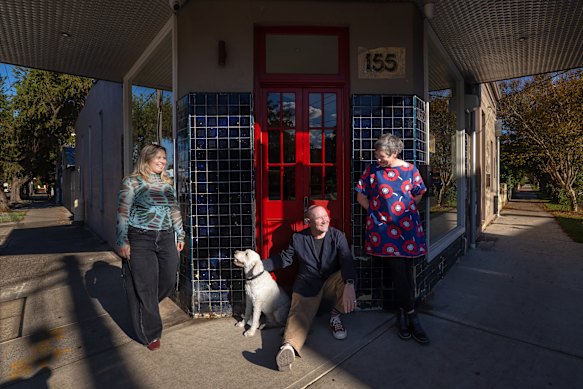
These talks turn into questions about architecture projects that have fuelled a long list of local projects, evidenced by the piles of plans filed under M for Marrickville in the studio.
Mackenzie said they planned the site so it could be easily adapted by future owners. The two garages have built-in lofts, and they added extra plumbing and electrics to provide for a future conversion of the site to a café, for example, or the garages into granny flats.
“Our time here is a small blip,” he said.
During construction, they hung a sign that asked locals to guess what was coming: “A new bar? A goat cheese emporium? A surf shop brewery? Band rehearsal barber shop? Op shop? Miniatures gallery? Zombie apocalypse supplies? Dog gym? Onion distillery? Architect’s office? Well, it could be all of the above and probably will be over the next 130 years.”
Start the day with a summary of the day’s most important and interesting stories, analysis and insights. Sign up for our Morning Edition newsletter.
Disclaimer : This story is auto aggregated by a computer programme and has not been created or edited by DOWNTHENEWS. Publisher: www.smh.com.au