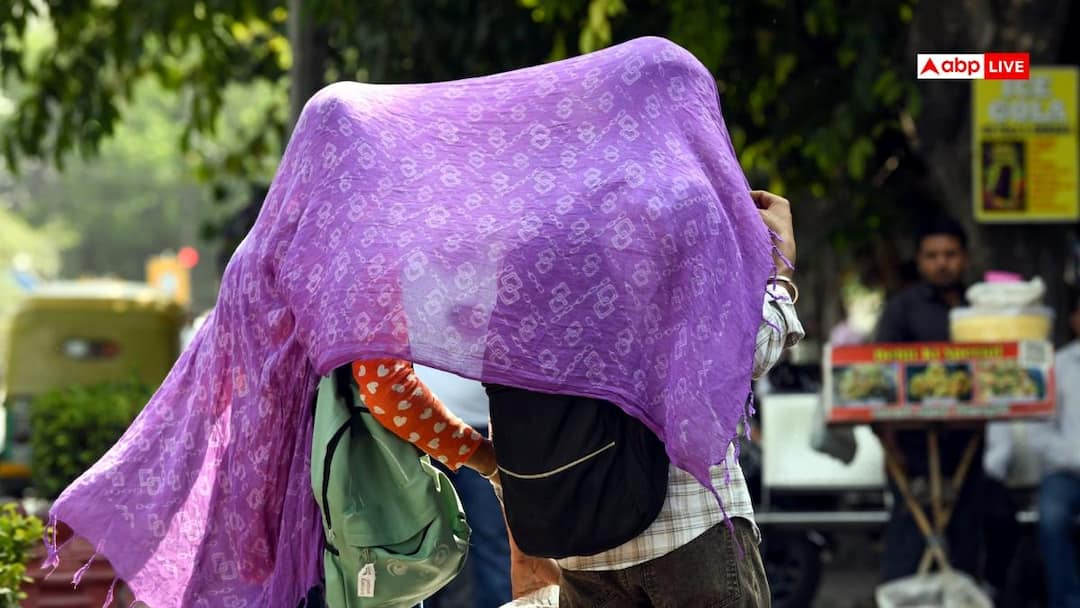
- Delhi faces severe heatwave, with 75% of city under stress.
- Densely populated and industrial zones suffer most from heat.
- Green cover and water bodies have declined, increasing stress.
- Lutyens’ Delhi and Cantonment areas remain relatively cooler.
Delhi is currently reeling under intense heatwave conditions, with scorching sunlight and hot winds making life difficult for residents. A new report based on land surface temperature data has claimed that nearly 75 per cent of the national capital is under severe heat stress. Only a few areas such as Lutyens’ Delhi, Delhi Cantonment, and Civil Lines remain comparatively cooler.
As per a recent report by the Centre for Science and Environment (CSE), densely populated residential zones, unplanned colonies, and industrial areas in Delhi are the most vulnerable to extreme heat. These localities reportedly have very little greenery and almost no water bodies.
Areas Worst Affected By Heat Stress
The report states that concrete buildings and roads in these areas absorb heat throughout the day, turning entire neighbourhoods into furnace-like zones. As a result, temperatures remain significantly higher in such localities.
Several municipal wards where more than 90 per cent of the area falls under heat stress have also been identified in the report. These include Budh Vihar, Kirari, Suleman Nagar, Prem Nagar, Said-ul-Ajaib, Karawal Nagar West, Mahavir Enclave, Nilothi, Shiv Vihar, Pratap Vihar, and Mustafabad, among others.
According to the report, which was prepared using land surface temperature data, nearly 98 per cent of Delhi has recorded temperatures above 45 degrees Celsius at some point. It further stated that around 75.78 per cent of the city has been continuously experiencing heat stress over the past six years, with temperatures repeatedly crossing the 45-degree mark.
Based on satellite image analysis, the report also noted a decline in Delhi’s green cover and water bodies compared to previous years.
Which Areas Are Relatively Cooler?
Areas with better greenery and planned infrastructure, including Lutyens’ Delhi, the Cantonment zone, and Civil Lines, were found to experience lower heat stress. Experts say dense tree cover and planned urban development help keep temperatures relatively lower in these parts of the city.
Localities such as Model Town, Rohini, Vasant Vihar, Hauz Khas, and Mayur Vihar were also found to have comparatively lower levels of heat stress.
Before You Go
Breaking News: Big Relief For Delhi Student As CBSE Corrects Answer Sheet Error
Disclaimer : This story is auto aggregated by a computer programme and has not been created or edited by DOWNTHENEWS. Publisher: abplive.com