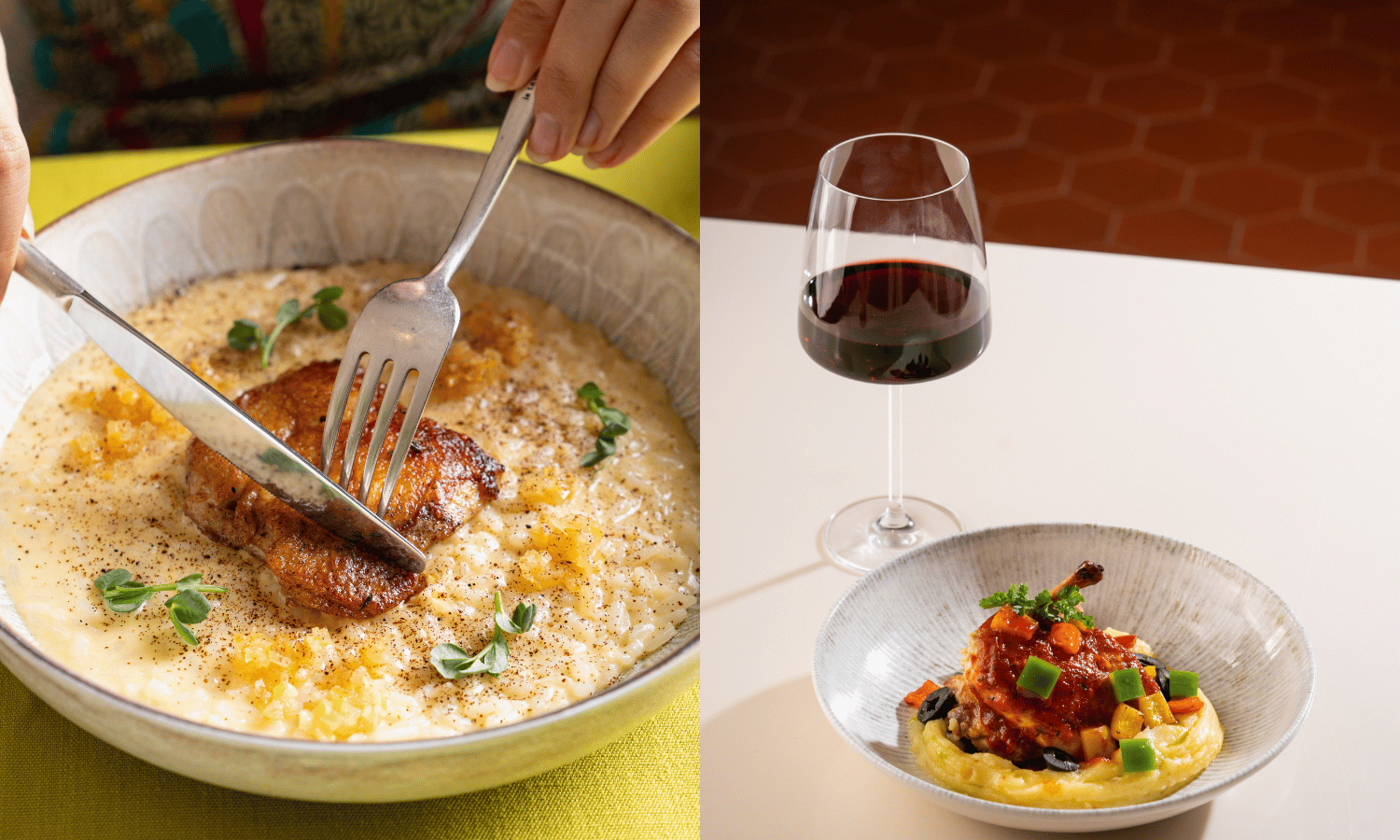
The first thing you notice about Tuscany at Trident Hyderabad is the absence of noise. Not silence, but the kind of calm that allows conversations to linger over wine glasses and warm bread baskets. The restaurant does not try too hard to impress. Its understated interiors, soft lighting and rustic detailing mirror the philosophy of the kitchen itself–elegant, grounded and quietly assured.
Junior Sous Chef Anubhav Mathur, speaks about food the way craftsmen speak about tools… with precision, curiosity and respect for technique. Trends matter, he says, but only when they make sense within the larger story of the dish.
“We keep the techniques authentic and then understand how much of the local flavour profile can naturally fit into the dish,” he explains.
That approach reveals itself almost immediately in Tuscany’s garlic bread. Instead of the expected butter-heavy version, the kitchen ferments black garlic overnight, turns it into a purée, spreads it over sourdough and finishes it with parmesan and crispy chilli. The chilli, Chef Anubhav admits, came later.
“The original version was more authentic, but over time we realised guests here wanted a little more contrast and heat,” he says.
Chef Anubhav Mathur
The evolution reflects a larger shift in how Tuscany approaches its menu. The restaurant now introduces smaller changes through the year rather than waiting for a complete overhaul. New dishes are added periodically to keep regular diners engaged while allowing the kitchen to experiment with ingredients, textures and techniques.
What remains constant, however, is the emphasis on craftsmanship. Every pasta served here is handmade. Executive Chef Gurmeet Bhamra points out that Tuscany avoids packaged pastas entirely. Ravioli, spaghetti and other varieties are rolled, shaped and prepared in-house.
“Fresh produce changes everything,” he says.
There is equal attention to sourcing. Burrata is procured from a small artisan producer in Bengaluru rather than larger commercial brands. Even seemingly simple dishes are layered with technical detail. Chef Anubhav speaks passionately about consommé, describing how roasting bones for even a few minutes too long can cloud the broth and alter its texture entirely.
“It is a very clean soup, but technically very demanding,” he says.
The risottos carry the same philosophy. The porcini risotto, instead of relying excessively on truffle oil, is balanced with balsamic to cut through the earthiness of mushrooms. The lemon chicken risotto is finished with preserved lemons for brightness rather than overwhelming acidity.
Elsewhere, the menu allows room for playfulness. A chlorophyll pizza topped with edamame emerged from conversations around bringing “greener” flavours into familiar formats. A forthcoming menu will introduce a Bolognese pizza where the traditional tomato base is replaced entirely with the meat sauce.
Chef Anubhav admits he gravitates naturally toward dishes that require precision. Duck breast cooked medium rare, lobster ravioli or a well-balanced consommé excite him because they leave little room for error. For him, Italian food is not about excess. It is about balance.
That same restraint extends into the dining experience itself. Tuscany was designed as a space where people disconnect from distractions and settle into slower conversations. The seating feels intimate without being cramped, while the decor borrows from rustic Italian villages rather than glossy contemporary trends.
By the end of the meal, it is apparent that Tuscany focuses on technique, thoughtful sourcing and small details that reveal themselves over the course of a meal. And perhaps that is what makes the restaurant memorable. Not reinvention for the sake of novelty, but an understanding that authenticity and evolution can comfortably exist on the same plate.
Disclaimer : This story is auto aggregated by a computer programme and has not been created or edited by DOWNTHENEWS. Publisher: deccanchronicle.com