Updated ,first published
Home borrowers may escape an interest rate rise this year after an unexpected softening in inflation, despite signs the surge in oil prices caused by the war against Iran is seeping into the economy and already causing a slowdown in growth.
The Australian Bureau of Statistics reported on Wednesday that inflation fell to 4.2 per cent in April, after spiking to 4.6 per cent in March. Last month alone, prices fell by 0.1 per cent after jumping by 1.1 per cent in March.
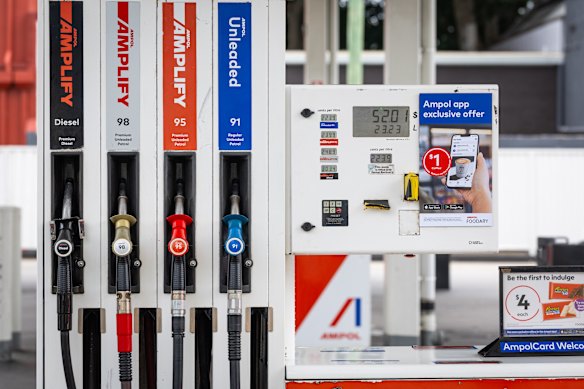
After soaring by almost a third in March, petrol and diesel prices eased 7 per cent in April due largely to the federal government’s cut to excise. Despite the drop last month, liquid fuel prices are still 23.5 per cent up on February, before the United States and Israel launched their attack on Iran.
Despite the decline in fuel prices, the figures suggest businesses are passing on their higher transport costs to consumers.
AMP economist My Bui noted that postal service prices jumped by 6 per cent in the month to be 12.4 per cent up over the year. Dwelling construction costs lifted by 7 per cent in April as builders passed on fuel surcharges and more expensive materials.
The cost of holiday travel, both domestic and international, also lifted strongly in April. Part of that was due to seasonal demand through the school holiday period, but some was caused by airlines passing on the cost of higher-priced jet fuel.
And in a sign that price pressures remain embedded in the economy, the closely watched measure of underlying inflation rose slightly to 3.4 per cent, up from 3.3 per cent in March.
Treasurer Jim Chalmers said the government’s halving of the fuel excise helped ease price pressures last month, but that the cost-of-living relief was unlikely to be extended beyond its scheduled end on June 30.
“Treasury analysis shows that our cut to the fuel excise reduced headline inflation by around half of a percentage point,” he said.
Chalmers welcomed a moderation in food and rent prices in the latest data, but warned the fallout from the Iran war would continue to linger in the broader economy.
But shadow treasurer Tim Wilson said inflation was still too high, and rising prices meant the $250 income tax offset promised in the budget would be “wiped out by Christmas”.
“The Albanese government’s active inflation agenda started before Iran, has been compounded by Iran, and now they’re using it to kneecap their own budget ‘tax cuts’,” he said.
Financial markets, which had expected a headline inflation rate of 4.4 per cent, immediately marked down the chances of an interest rate increase.
As recently as last week, markets had expected a rate increase by August, with the chance of a further pre-Christmas hit to borrowers put at 50-50.
After the figures, markets put the chance of a rate hike in August at one-in-three. The chance of a rate rise this year his now at 76 per cent with investors expecting the RBA to be lowering rates by Christmas next year.
HSBC Australia chief economist Paul Bloxham said he believed the Reserve Bank, which he expects to hold interest rates in coming months, would take some comfort from the figures.
He said there were only limited signs that fuel prices were starting to pass through to a broader range of goods and services. Of more concern was the state of the overall economy.
“Our broader view is that the economy is weakening quite quickly. That the sharp declines in sentiment of late are signalling that an economic downturn is already underway,” he said.
“Last week’s employment figures, which also weakened, is another indicator of that trend. We expect that GDP is already likely to be falling.”
Wednesday’s Westpac-Melbourne Institute leading index, which attempts to track the likely pace of economic growth up to nine months into the future, fell deeper into negative territory in April.
Westpac’s head of macro-forecasting, Matthew Hassan, said the April result on top of a negative March report was the first back-to-back below trend measures since late 2004.
“The Australian economy is showing clearer signs of a loss of momentum,” he said.
The fallout from the war against Iran, and long-term impacts of higher oil prices, is a key issue facing the RBA.
A member of the Reserve’s interest rate setting committee, Carolyn Hewson, on Wednesday night said while oil’s importance to the economy had fallen since the 1970s oil shocks, price spikes could pose an inflation risk if people came to expect higher prices.
“Over time there is also the risk of second-round effects if elevated fuel prices begin to influence inflation expectations or wage bargaining, particularly if price increases are large or sustained,” she said.
Cut through the noise of federal politics with news, views and expert analysis. Subscribers can sign up to our weekly Inside Politics newsletter.
 Shane Wright is a senior economics correspondent for The Sydney Morning Herald and The Age.Connect via X or email.
 Brittany Busch is a federal politics reporter for The Age and Sydney Morning Herald.Connect via email.
From our partners
Disclaimer : This story is auto aggregated by a computer programme and has not been created or edited by DOWNTHENEWS. Publisher: www.smh.com.au