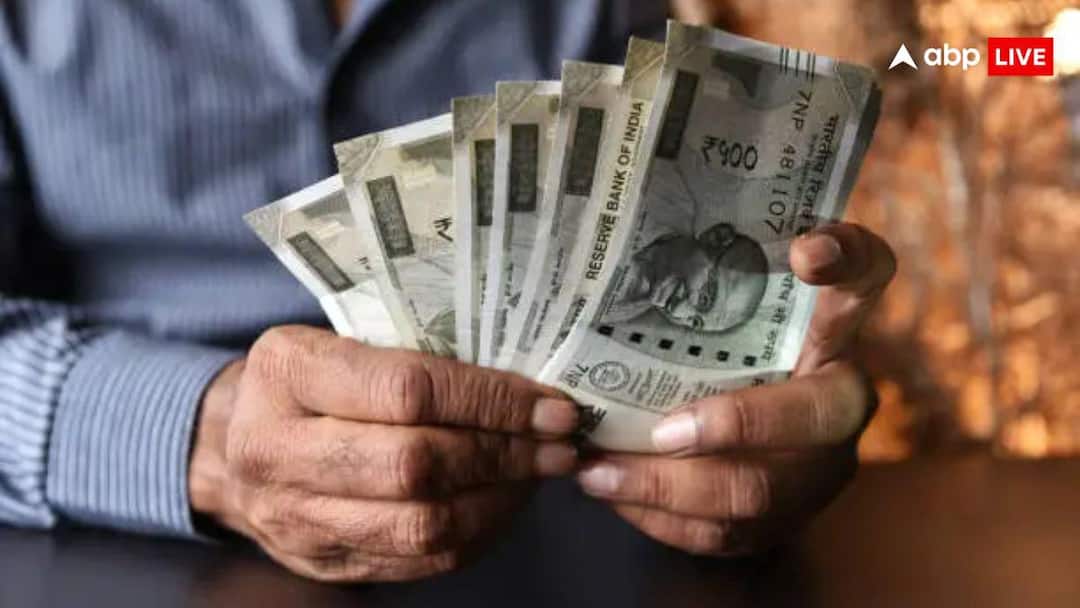
- Railway staff propose tiered fitment factor for salary hikes.
- Demands include higher increments, DA merger, and technical pay structure.
- Government balances employee demands with fiscal constraints and inflation.
The 8th Pay Commission has moved far beyond a routine salary revision exercise, evolving into a wider debate over the government’s fiscal capacity and employee expectations.
What began as consultations on pay hikes and pensions is now centred on how much the government can realistically afford to allocate to its workforce. At the heart of this discussion is a proposal that could, in some cases, push salary revisions beyond 400 per cent for senior employees.
Railway Staff Body Proposes Tiered Fitment Structure
The proposal has been submitted by the Indian Railway Technical Supervisors’ Association (IRTSA), one of the key stakeholders in the ongoing consultation process with the 8th Pay Commission.
Instead of a uniform fitment factor, the association has recommended a graded structure across pay levels:
- Levels 1 to 5: 2.92
- Levels 6 to 8: 3.50
- Levels 9 to 12: 3.80
- Levels 13 to 16: 4.09
- Levels 17 to 18: 4.38
If implemented, the changes would result in substantial salary increases. An employee with a basic pay of ₹2.5 lakh under Levels 17–18 could see it rise to nearly ₹10.95 lakh under the proposed 4.38 factor.
Similarly, a mid-level employee drawing ₹45,000 under Levels 6–8 could see their basic pay increase to ₹1.57 lakh.
Association Flags “Salary Compression” Issue
The IRTSA has argued that the current structure compresses salary differentials between junior and senior staff, particularly technical employees engaged in safety-critical roles in Indian Railways.
It has also sought a separate pay structure for technical staff, faster promotions, 5 per cent annual increments, and merger of 50 per cent Dearness Allowance into basic pay before recalculation of salaries.
Fitment Factor At The Centre Of Negotiations
The fitment factor, the multiplier used to revise salaries, has become the central point of discussion.
New salary calculation is defined as:
{New Basic Pay = Current Basic Pay X Fitment Factor}
Under the 7th Pay Commission, the fitment factor was fixed at 2.57. Employee unions are now pushing for significantly higher multipliers, with some demands going up to 3.83 and beyond 4.0.
The National Council-Joint Consultative Machinery has demanded a minimum basic pay of ₹69,000, while the Bharatiya Pratiraksha Mazdoor Sangh has reportedly proposed ₹72,000 minimum pay along with a 4.0 fitment factor.
Fiscal Pressure And Policy Balancing Act
However, the scale of demands has raised concerns over fiscal sustainability.
A higher fitment factor would not only increase salaries but also significantly raise pensions, allowances, arrears, and long-term retirement liabilities across departments. The impact would also extend to state governments, which have historically followed Central Pay Commission recommendations.
Employee representatives acknowledge privately that not all demands are likely to be accepted, with the government expected to balance welfare considerations against inflationary pressure and fiscal constraints.
Family Unit Formula Revision Gains Traction
One of the proposals gaining support is a revision of the “family unit” assumption from 3 to 5.
Unions argue that modern households now bear higher financial burdens, including support for children, spouses, and ageing parents, alongside rising healthcare, education, and housing costs.
Old Pension Scheme Debate Resurfaces
The Old Pension Scheme (OPS) issue has also returned to discussion. While several unions continue to demand its restoration, others acknowledge that dismantling the National Pension System (NPS) may no longer be feasible after years of implementation.
As a result, many are now pushing for OPS-like protections, including guaranteed pension mechanisms, DA-linked pension security, and minimum assured pension structures.
Commission Enters Nationwide Consultation Phase
The 8th Pay Commission, chaired by Justice (Retd) Ranjana Prakash Desai, has entered an intensive consultation phase, holding meetings in Delhi and other regions.
It has scheduled visits to Bhubaneswar on July 6 and 7, and will also hold consultations in Lucknow, Hyderabad, Srinagar, Ladakh, and Jammu & Kashmir.
Impact Across 1.1 Crore Beneficiaries
The Commission’s recommendations will affect more than 1.1 crore beneficiaries, including central government employees, pensioners, and their families.
ALSO READ: Rupee, Oil And Yuan: The New Global Forces Every Indian Investor Must Track
The 8th Pay Commission was formally constituted on November 3, 2025, continuing a process that began in 1946, with India having seen seven previous commissions, typically once every decade.
This round of deliberations is taking place against a more complex economic backdrop, marked by inflation concerns, rising pension liabilities, tighter fiscal conditions, and growing employee expectations.
ALSO READ: From SIPs To Asset Allocation: Top Investing Lessons From FY26 Market Volatility
Before You Go
BREAKING NOW: Indore fire tragedy as EV short circuit triggers deadly explosions
Disclaimer : This story is auto aggregated by a computer programme and has not been created or edited by DOWNTHENEWS. Publisher: abplive.com