
Almost half of all Australians have been forced to change the way they commute and travel each day due to the ongoing fuel crisis, according to a new study.
A national report from Monash University found that 45 per cent of Australians had changed their travel behaviour since the onset of the international crisis in March, when petrol prices spiked dramatically following the start of the war in the Middle East and the blockade of the Strait of Hormuz in late February.
Lead author Dr Lauren Pearson, a research fellow at the university’s school of public health and preventative medicine, said she was stunned by the quick and large-scale shift in people’s daily travel behaviour.
“That’s a substantial rapid population level shift and … we don’t really see them outside of things like the COVID-19 pandemic and these major oil crises,” Pearson said.
The report shows a clear difference between behavioural changes in metropolitan and regional areas.
For inner-city residents, the fuel crisis has allowed for a further reduction in car dependency and switching to walking or cycling more often, as well as increasing public transport use and opting to travel less. In Victoria, the spike in public transport use was particularly evident after services became free across the network from March 31, and led to 12 per cent of respondents who had not used public transport before the crisis starting to.
Pearson said that the shift towards more active and sustainable options was a good outcome. “That is something that years of policy and campaigning has been trying to make happen, and we’ve seen that happen … within less than a month,” she said.
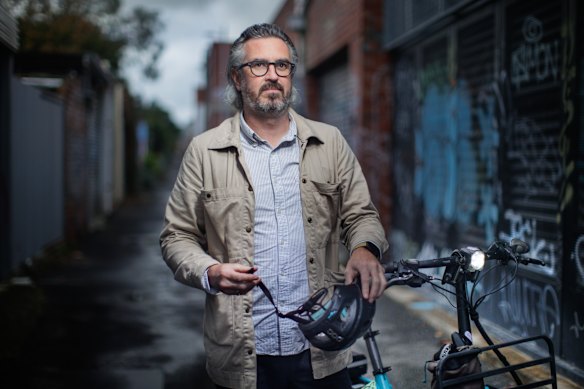
Bob Barrett from Melbourne’s inner-west was already a regular e-bike rider before the spike in petrol prices, but said that the increased cost had pushed him to cycle even more frequently.
“If I’m feeling lazy, or if it’s raining, or a longer trip … now I will put on a rain jacket, or suck it up and pedal a bit further,” he said.
Barrett regularly completes his nine-kilometre commute to work by e-bike, which takes about half an hour. He and his girlfriend share a car, which Barrett said she tends to use more often due to a lack of safe cycling infrastructure in their community.
“Where we live, it’s not safe to ride at night, and she works very early mornings and late nights,” he said, adding that better cycling facilities should be a priority.
Pearson said the need for safe infrastructure in urban areas – including well-lit paths and bike lanes – was a key finding from Monash’s report.
For regional communities, where car ownership rates continue to increase, and vehicle dependency remains high, improving access to public transport was more of a priority.
The study also found that people facing financial hardship and younger Australians were disproportionately forced to change the way they travel.
Of those with financial concerns, 85 per cent said that they had shifted their travel behaviour, compared with 56 per cent of those who said they were financially stable.
“The fuel crisis has opened a genuine window for healthier, more sustainable travel, but it has also exposed how unevenly that opportunity is distributed,” Pearson said.
With the federal government’s fuel excise due to be removed at the end of June, experts are predicting that petrol prices could soar again if the war in Iran continues.
Although the research supports large-scale improvements to infrastructure, Pearson said small-scale changes would have a more immediate impact on Australian communities. This included reducing the cost of public transport, increasing public transport frequency and providing adequate bike storage facilities.
These adjustments would support those who have temporarily shifted their behaviour due to the crisis, but are unsure about whether they will continue with their new transport choices, Pearson said.
“This group of people … need to be supported with things like policies to enable them to be able to use these transport modes going forward,” she said. “Now it’s about giving them access to the resources.”
Start the day with a summary of the day’s most important and interesting stories, analysis and insights. Sign up for our Morning Edition newsletter.
From our partners
Disclaimer : This story is auto aggregated by a computer programme and has not been created or edited by DOWNTHENEWS. Publisher: www.smh.com.au