TOKYO –
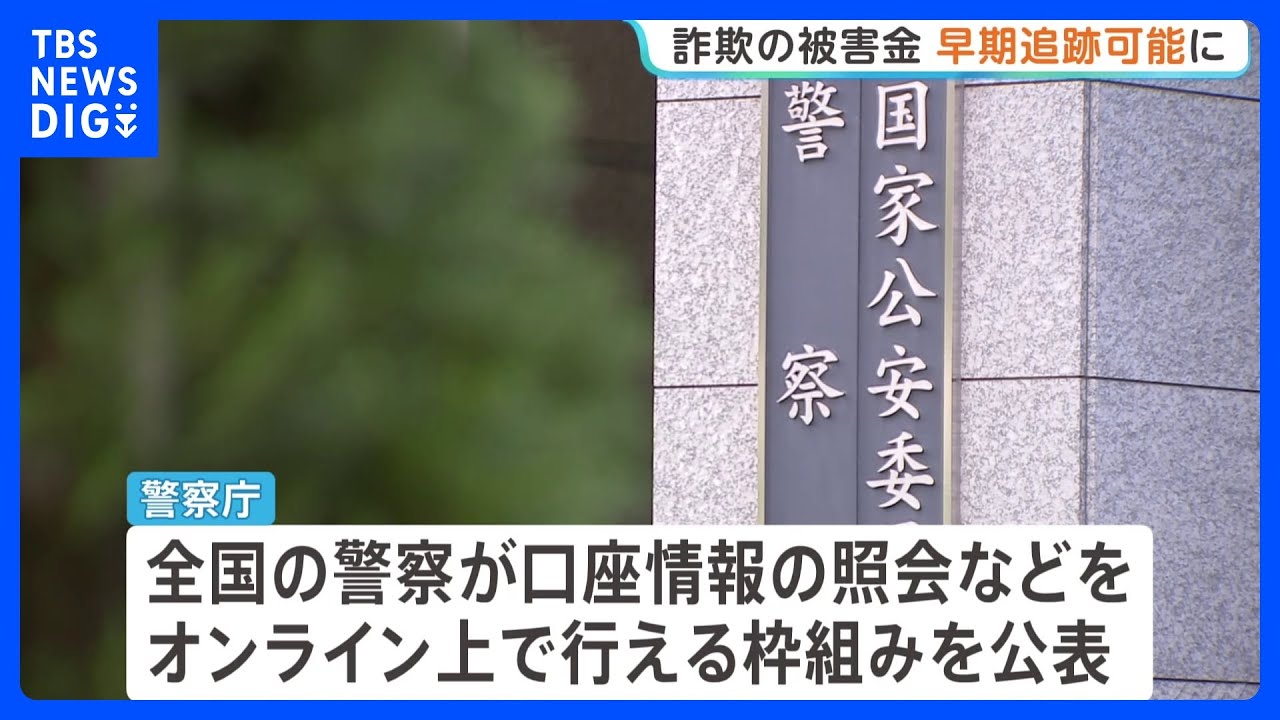
The National Police Agency announced on May 28th that it will launch a new framework in cooperation with nine financial institutions aimed at rapidly tracing money stolen through special fraud schemes and other scams, as damages from such crimes reached a record high last year.
According to the agency, total losses from special fraud cases and SNS-based investment and romance scams exceeded 320 billion yen in 2025, marking the worst annual figure on record, with the situation remaining severe.
Authorities said stolen funds are often quickly moved through multiple bank accounts by criminal organizations in a form of money laundering, making it difficult to track the money and return it to victims.
Currently, when fraud cases occur, police departments across Japan request financial institutions to freeze the recipient accounts while also inquiring whether the funds have been transferred to other accounts.
These inquiries are conducted by mail, with police sending written documents to financial institutions. Responses can take several days at the earliest, and in some cases several weeks.
As a result, investigators are often unable to keep pace with the speed at which criminal groups move stolen funds. By the time police receive information on destination accounts from financial institutions, the money has frequently already been transferred again, making recovery difficult.
To address the problem, the National Police Agency announced a new cooperative framework with nine financial institutions: Mizuho Bank, Mitsubishi UFJ Bank, Sumitomo Mitsui Banking Corporation, Resona Bank, Seven Bank, Rakuten Bank, AEON Bank, SBI Shinsei Bank, and Japan Post Bank.
Under the new system, when police receive reports of special fraud or similar crimes, police departments nationwide will submit inquiries online through the National Police Agency to participating financial institutions.
Authorities said some responses from banks could be received on the same day, allowing investigators to track the movement of stolen funds before criminal groups transfer the money elsewhere, with the goal of increasing the likelihood of returning funds to victims.
Police also said that identifying the financial institutions receiving transferred funds would help accelerate investigations into so-called “dashiko” operatives, who withdraw stolen money from ATMs on behalf of fraud groups.
The National Police Agency said it hopes to expand the framework to additional financial institutions in order to create an environment where money laundering becomes more difficult for criminals. The framework will begin operation on June 1st.
Source: TBS
Disclaimer : This story is auto aggregated by a computer programme and has not been created or edited by DOWNTHENEWS. Publisher: newsonjapan.com