If you could buy a humanoid robot for less than a smartphone, would you? Would you buy several robots to handle cooking, cleaning, babysitting, and even your job?
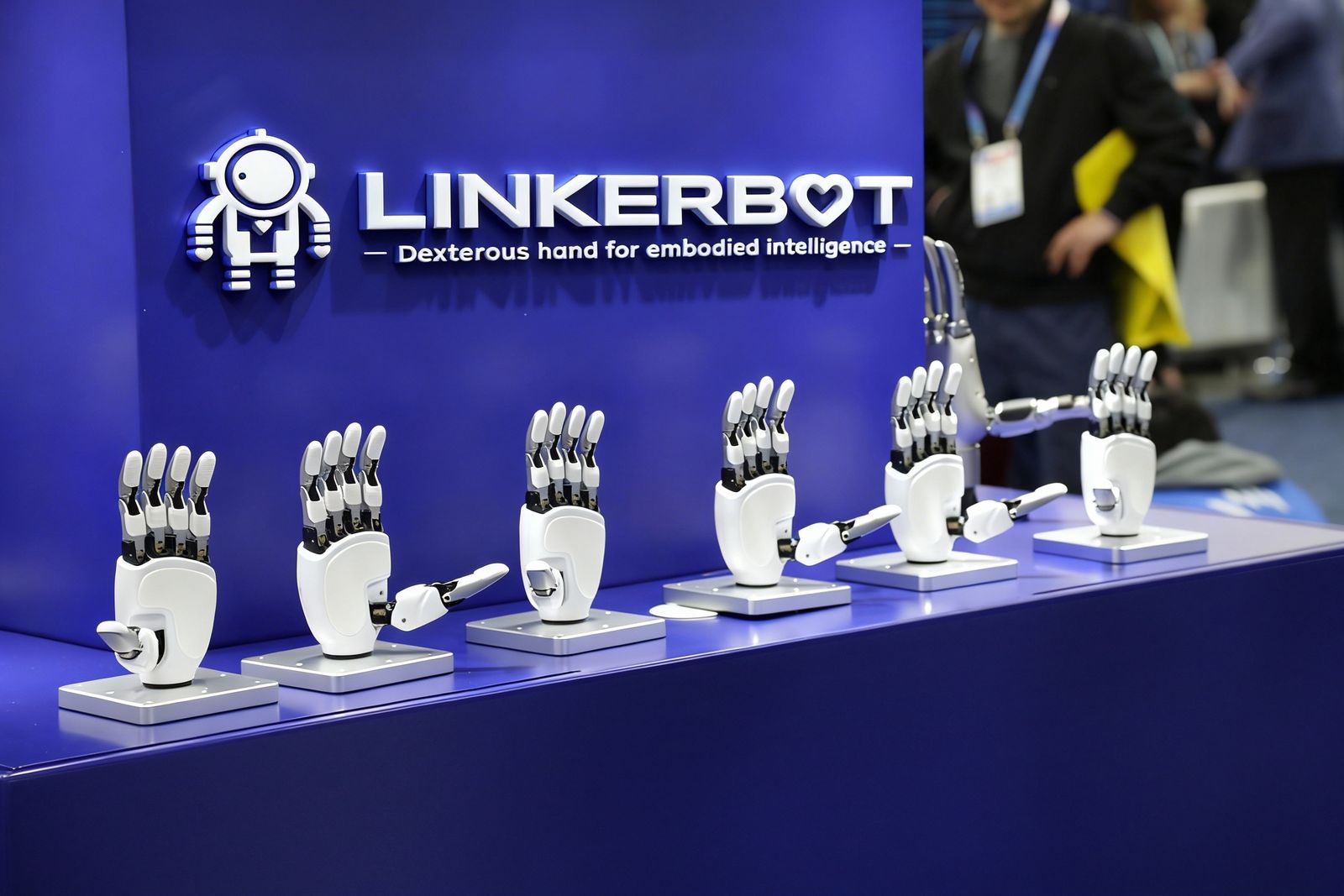
This is the pitch being made by Zhou Yong, the 40-year-old founder and chief technology officer of LinkerBot, one of China’s leading manufacturers of dexterous humanoid hands. The startup’s hardware comes complete with five fingers and at least 11 joints and is sold for as little as $600 in China. LinkerBot’s hands can play piano, thread needles, tighten screws, and assemble electronics. In three to five years, Zhou predicts, the price for one will fall to just $200. Eventually, “everyone will own ten robots on average,” Zhou said in an exclusive interview with WIRED.
Marketing spectacles like the humanoid robot marathon in Beijing have drawn attention to robots’ legs, but the real frontier in humanoids is hands. “The hands are the majority of the engineering difficulty of the entire robot,” Elon Musk said at an event last fall. Founded in 2023, LinkerBot has quickly emerged as a market leader in the space. The company says it shipped 10,000 robotic hands last year, representing 80 percent of worldwide demand. Its clients include research labs, manufacturers, and other humanoid robot makers.
The startup is also a venture capital darling: It completed six rounds of fundraising in just 13 months from investors including the Chinese government, Alibaba’s Ant Group, and HongShan Capital, Sequoia Capital’s Chinese spinoff. LinkerBot is now seeking another round of financing at a $6 billion valuation, double what the company said it was worth only a few months ago. And it’s reportedly exploring going public in Hong Kong, according to Bloomberg. (Zhou declined to comment on the rumored plans.)
In 2019, after selling a previous startup focused on autonomous driving, Zhou turned his attention to robotics. He says he predicted the industry would begin booming around 2025, but was still taken aback by how quickly it grew. While OpenAI was once at the forefront of developing robotic hands, in recent years Chinese startups have taken the lead as many of their American counterparts shifted their focus toward large language models and other AI software.
For robotics companies, “the valuation gap between the Chinese and US primary markets has been basically erased,” Zhou says.
Zhou says his lifelong goal is to make a real-life version of Doraemon, the Japanese anime character that has an infinite supply of magical gadgets in its pocket. (His WeChat avatar is a picture of Doraemon.) He sees building a capable, dexterous hand as an instrumental step toward achieving that dream.
Selling Shovels to Miners
Successful companies, Zhou argues, focus on doing one thing well. That’s why LinkerBot zeroed in on hands, rather than trying to build the entire body of a humanoid. That also allows it to avoid directly competing with leading humanoid companies like Unitree or Tesla.
“When the humanoid robot industry size is so massive, specializing in making hands is like selling water or shovels [during the gold rush],” says Hong Shangguan, a veteran investor in China’s tech industry and a former partner at the Beijing-based fund Legend Capital.
LinkerBot already has a significant price advantage in the market. Its Linker Hand products range from $600 to $15,000, depending on the number of joints and level of dexterity required. “A lot of companies can show impressive demos. Fewer can ship hands that factories can actually afford to install,” says Rui Ma, founder of the independent research firm Tech Buzz China, which recently published an article concluding that LinkerBot was the startup best positioned to become the industry standard in the short term.
Zhou has a lot of confidence in the strength of China’s manufacturing industry. In every product category, “as long as China and other countries started around the same time, China always ends up leading it—whether it’s solar panels or electric vehicles,” he says. But the challenge is figuring out how to position that less as a threat and more as an opportunity. “We are helping global robotics manufacturers lower their costs and accelerate wider adoption,” Zhou argues. To overcome long-standing skepticism about the quality of Chinese-made products, the company is offering international buyers up to a year to exchange them.
Robots Will Replace Us
Zhou says the rollout of humanoid robots will happen in three stages. First, robots will dance, greet guests, and fulfill emotional or entertainment roles, capabilities Chinese companies have already showcased extensively over the past year. Next, they’ll take on narrowly defined jobs like making drinks, cooking, and sorting packages. The final stage, he says, will be deploying them in complex environments such as the home. A robot may need to operate in hundreds of different homes, and “each one could have a completely different layout and different objects,” he says. Such varied scenarios will require robots to combine many different skillsets to finish even one small job.
One of LinkerBot’s current strategies is to tailor its hands for use in sophisticated manufacturing facilities, especially as the Chinese economy looks to upgrade its factories. The company is even using its robotic hands in its own assembly lines to make more robotic hands, demonstrating their industrial usefulness.
China has long been known for having cheap labor, but domestic manufacturers have a large appetite for automation, Shangguan says. “When I visited EV factories in China and talked to the production managers, they said even China is facing a labor shortage problem because the younger generation is less willing to work in factories,” she says. “For jobs where we can’t find workers, we also have to get robots.”
In Zhou’s vision for the future, robots will become “100 times” greater than any human and eventually, completely replace them. It’s hard to imagine what such a world would look like, but Zhou says he’s not worried about the downsides. “People don’t really care whether they are unemployed; what they care about is whether they receive relief payments or welfare benefits,” he says.
Zhou predicts that by that time, AI and robots will have made goods and services so abundant that people will no longer need to work. But even in that world, he acknowledges that inequality will persist: “Someone might see online that rich people are traveling to the moon, while they themselves can only travel to Italy.”
Disclaimer : This story is auto aggregated by a computer programme and has not been created or edited by DOWNTHENEWS. Publisher: wired.com