More foreigners are leaving Germany than at any point in the last 15 years. We spoke to recent emigrants about why they’ve decided to pack up and move out.
For years, Germany was seen as one of the EU’s most attractive destinations for work, study and family life. And that reputation remains: A global study by US News & World Report recently placed the country fourth in its ‘2026 Best Countries’ ranking.
But on the ground, something has shifted. A confluence of tight housing markets, staggering bureaucracy and a changing political landscape is prompting foreign residents in almost every demographic to question whether their future still lies in the Bundesrepublik.
A reversal of migration trends
According to a government-commissioned study published earlier this year, around a third of people who have immigrated to Germany are considering leaving, with this number rising to 37 percent for second or third-generation migrants.
Recent figures reveal that the number of EU workers emigrating from Germany has exceeded immigration since 2024, a first in 15 years.
The capital is feeling the brunt of this shift: Berlin is experiencing a record exodus, with official figures showing that roughly 161,000 people left the city in 2025, or around four percent of the population.
READ MORE: Germany’s housing crunch is driving away skilled foreign workers
While Berlin’s departures consist predominantly of families unable to find appropriate housing for their growing households, the issue seems to span much further than the capital or one specific issue. Tight housing markets across the country are just one of many reasons making it difficult not only to recruit international talent but also to retain those already residing in Germany.
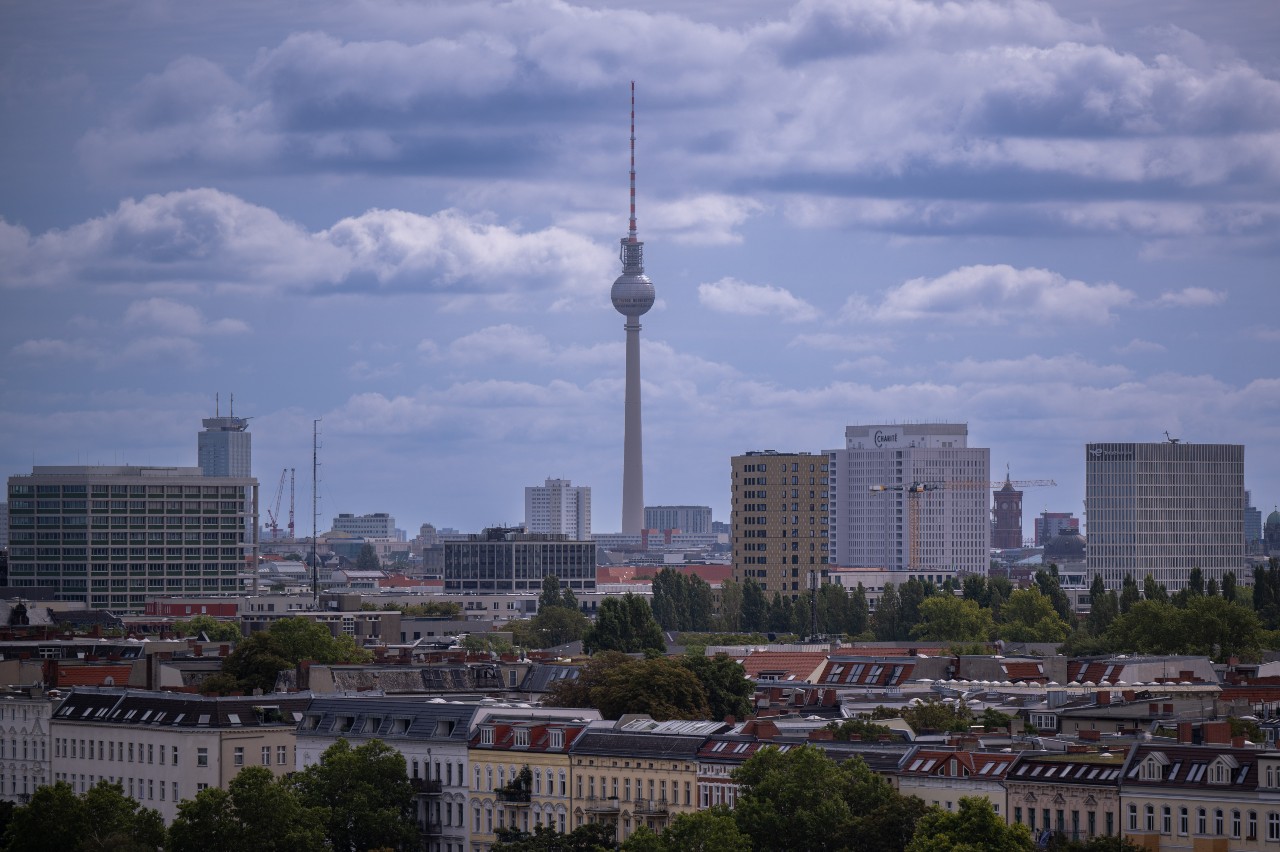
The Berlin skyline. Foreigners face increasing difficulty securing a place to live in Berlin and other big German cities. Photo: picture alliance/dpa | Monika Skolimowska
Shifting political tides
It is not just families who are re-evaluating their options. The ninth “Youth in Germany” trend study—based on a representative survey of 2,012 people aged 14 to 29—paints a picture of a generation that remains motivated and willing to contribute, but increasingly doubts whether Germany can still offer the stability, fairness and long-term security promised to generations before.
Young people in particular are losing faith in the political centre, which has failed to protect them from what researchers call “permanent crisis mode”. Years of overlapping crises, uncertain prospects and increasing unaffordability has resulted in mounting mental strain.
Some are responding by imagining a life abroad, while others are drifting towards political extremes.
According to the study, The Left Party (Die Linke) is currently the most popular party among young people, polling at 25 percent overall, with particularly strong support among young women.
On the other end of the political spectrum, the far-right Alternative for Germany (AfD) is polling at around 20 percent among 14 to 29-year-olds, drawing significantly above-average support from young men.
But political dissatisfaction is felt not just by the young. Of the people The Local spoke to for this story, many cited unease with Germany’s current political climate as a push factor in deciding to leave.
‘Fed up with the government’
Shane Horan, owner of the business Rocky Road Travel, is taking the plunge and moving back to his home country of Ireland after nearly eight years in Germany. For Horan, the choice is both financial and ethical.
“I got absolutely fed up with the German government, its policing, and its support for a genocidal regime,” he told The Local.
“[My move is] politically motivated, but also financially motivated, as a business owner, I can pay less tax in Ireland—I probably save 30 percent in tax just by moving to Ireland. And Ireland also supports Palestinian rights.
“I feel more comfortable paying into a system that supports human rights in a way that seems obvious to most but not to the German government.”
READ MORE: Why Germany is holding back from recognising Palestine as a state
Mariana Sosa Codero is also a business owner.
Originally from San Francisco, California, she suggests that systemic friction became too much to bear after more than a decade in the capital.
“I’ve been living in Berlin for the last 13 years. It’s very much my home,” Sosa Codero said.
“The main reason I’m leaving is because four years ago I started a small business here in Germany. It has been successful and I have a strong client base, but dealing with the bureaucracy, the taxes, the health insurance, the regulations and a system that seems to punish success for small businesses like mine is why I’m leaving in the next seven months. It’s simply impossible to do business here as a solopreneur or freelancer.”
The naturalisation paradox
Interestingly, this wave of departures coincides with a massive spike in foreigners gaining citizenship. The trend reveals a paradox.
Germany is experiencing a historic boom in naturalisations, and yet more and more foreigners are also opting to leaving the country.
Crucially, a passport does not automatically guarantee a sense of belonging or professional fulfilment.
Hsin-Lu, 33, received her German citizenship in 2025. Just one year later, she is considering leaving the country.
“After five and a half years in Berlin, I’m considering leaving,” Hsin-Lu said. “I’ve learned the language, paid my taxes, and made efforts to integrate — yet Germany’s political shift rightward has made it increasingly difficult to fully integrate for immigrants regardless of their contributions.”
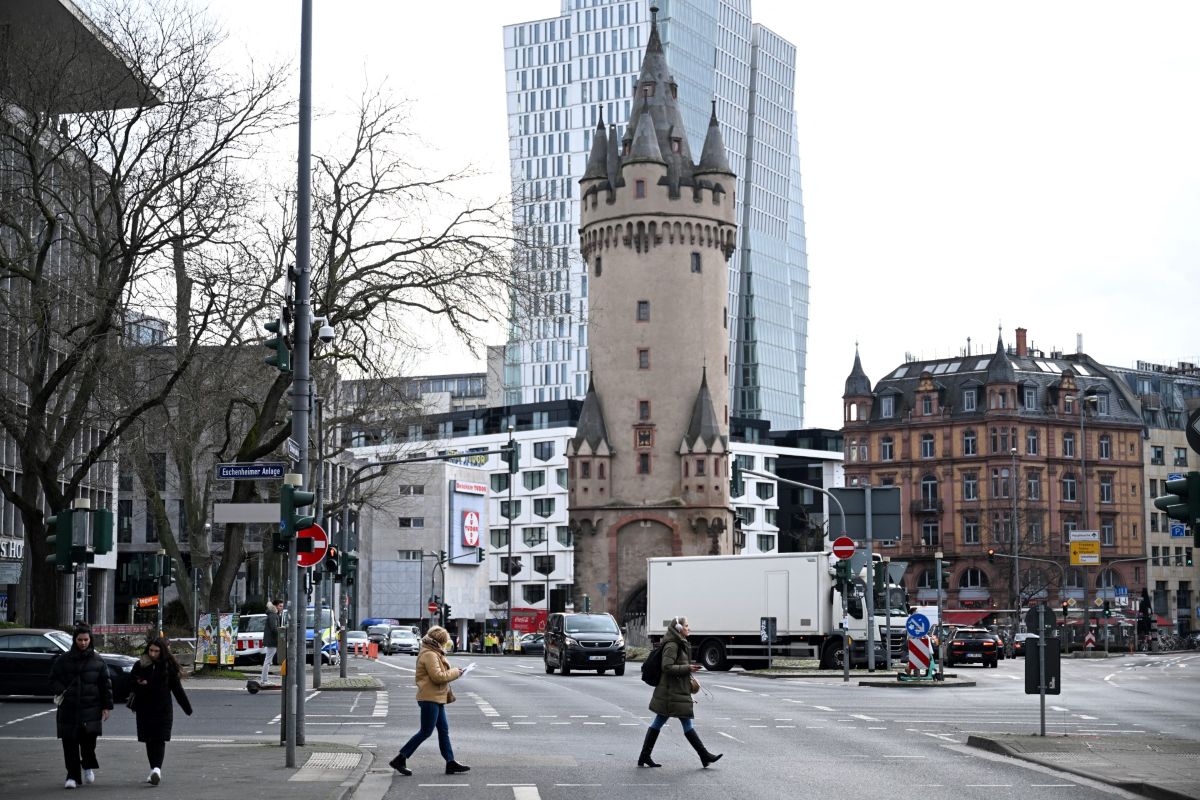
The historical 15th century Eschenheimer Tower is pictured in front of the business centre in Frankfurt am Main. (Photo by Kirill KUDRYAVTSEV / AFP)
“While visa reforms have lowered barriers to entry, the job market remains closed to many internationals. Language requirements being the primary reason; excluding qualified candidates from many roles,” she added. “I find career progression for non-native speakers genuinely limited here in Germany.”
READ MORE: ‘Severely discriminated against’ – Why do skilled immigrants leave Germany?
For foreign residents, the path to building a life in Germany remains fraught with practical hurdles.
A 2025 survey by the Friedrich Ebert Foundation found that the most commonly cited challenge was building a circle of friends with German-speaking people (41 percent). This was followed by finding accommodation and integrating children into schools and daycare.
Of course there are also cultural factors.
As Sosa Codera put it: “I’m generally tired of…how rough and depressed so many people here seem. In particular Germans, so many unnecessary negative interactions and it just gets me down. Whenever I go home to California, I’m always struck by how nice people are to one another.”
“I’m tired of being an immigrant here,” she added. “It’s exhausting.”
Disclaimer : This story is auto aggregated by a computer programme and has not been created or edited by DOWNTHENEWS. Publisher: thelocal.de