
HOKKAIDO, May 30, 2026 (News On Japan) –
World-renowned musician YOSHIKI is betting on Hokkaido wine as Japan’s next global export success story, joining a growing list of international figures and industry leaders who see the island as one of the world’s most promising emerging wine regions.
Last year, YOSHIKI visited vineyards in Yoichi, west of Otaru, where he spoke passionately about the future of Hokkaido-produced wine.
“I hope Hokkaido wine will become not only a great product but also one of Japan’s future export industries,” YOSHIKI said.
The X JAPAN leader is now involved in projects aimed at promoting Hokkaido wines to international markets, reflecting growing confidence that the region can compete on the world stage.
That confidence is being shared by some of the wine industry’s most respected names. Across Hokkaido, wineries have been opening at a rapid pace, while prestigious European producers are investing in the region and experts point to climate change as a key factor behind its rising fortunes.
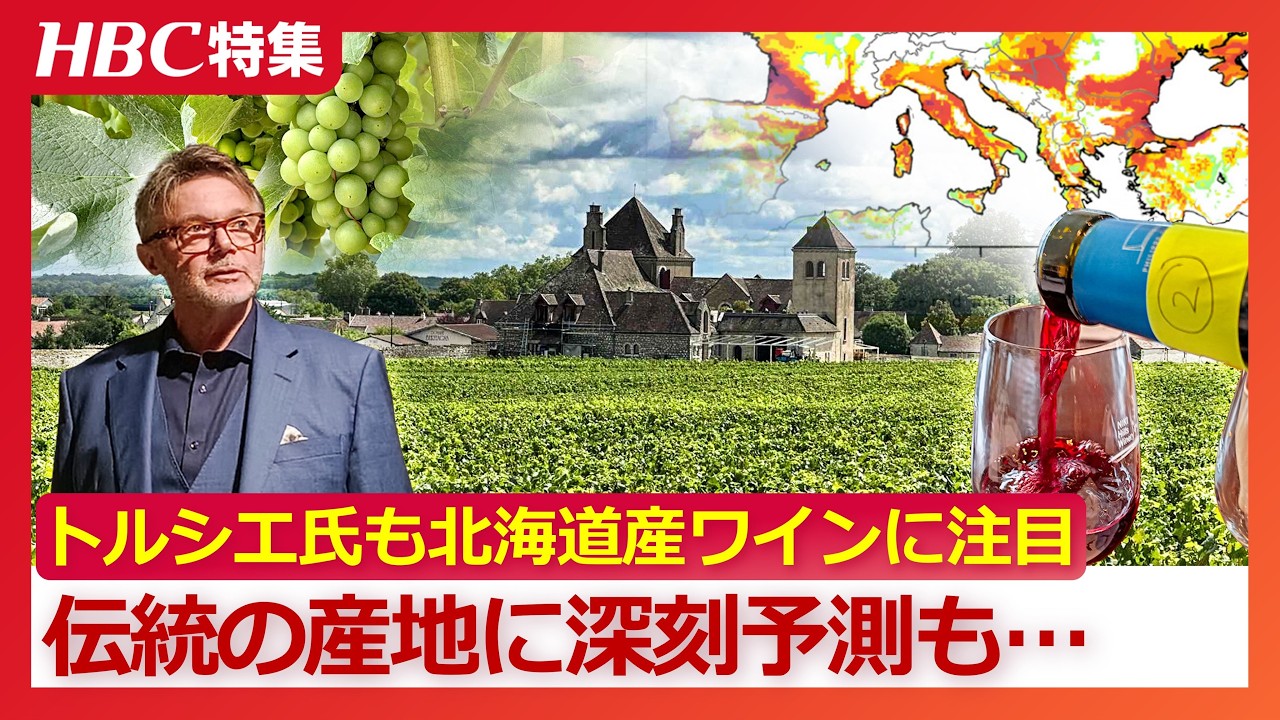
Among those impressed by Hokkaido’s potential is Philippe Troussier, the former coach of Japan’s national soccer team, who now works as a winemaker in Bordeaux, France.
Visiting the vineyards of NIKI Hills Winery in Niki Town, Troussier compared winemaking to soccer tactics.
“In winemaking, I apply a 3-4-3 system,” he said.
After tasting local wines, Troussier noted that Hokkaido’s climate produces a distinctive style.
“Even with the same Merlot variety, Hokkaido wines felt lighter, with more moderate alcohol levels and structure,” he said.
He believes the region possesses qualities comparable to some of the world’s leading wine-producing areas.
International investment has already followed. In Hakodate, Burgundy’s historic De Montille winery has established vineyards, marking one of the most prominent foreign entries into Japan’s wine industry.
The French winery, which traces its history back more than 300 years, began planting vines in Hokkaido in 2019.
“The site benefits from winds flowing in from various directions and excellent sunlight throughout the day,” said Akira Yano, general manager of De Montille & Hokkaido.
The goal, he said, is to produce wines that fully express the character of the local environment.
The growth of Hokkaido’s wine sector has been striking. The number of wineries across the island has increased from 42 six years ago to 76 this year, while the range of locally produced wines continues to expand.
Behind the boom is a dramatic shift occurring across the global wine industry.
A research team composed of European universities warned in a 2023 study that approximately 55 percent of Europe’s traditional wine-producing regions could disappear by the end of the century if global warming continues unchecked.
Historic wine regions in countries such as Portugal, Italy and Greece could become unsuitable for grape cultivation. Under the most severe climate scenarios, researchers predict that ideal wine-growing zones could shift roughly 900 kilometers northward.
Hokkaido sits close to the latitude where many of those future wine regions are expected to emerge.
“The increase in wineries across Hokkaido has been rapid, and more people than expected are trying to grow wine grapes here,” said Manabu Nemoto, head of the Climate Change Adaptation Group at Japan’s National Agriculture and Food Research Organization.
For decades, Hokkaido’s cool summers limited the varieties that could be grown successfully. Today, rising temperatures are changing that equation.
“In the past, varieties such as Pinot Noir could not be cultivated because Hokkaido’s summers were too cool,” Nemoto said. “Now, with noticeable temperature increases, famous European grape varieties can be grown and vinified successfully.”
Some projections suggest that by 2050, nearly all of Hokkaido could become suitable for wine grape cultivation.
Yet the opportunity comes with risks. Winemakers are already observing changes in harvest schedules.
Ryousuke Kondo of KONDO Vineyard in Kuriyama said harvest dates have shifted significantly in recent years.
“Things started changing dramatically around 2019, and harvests have been moving earlier,” Kondo said. “We are entering an era of warming that no one has experienced before.”
Researchers also warn that rising temperatures could bring new pests and diseases.
“When weather conditions change, new diseases and insects arrive,” said Teruo Sone, director of the Wine Education and Research Center at Hokkaido University. “The challenge will be determining how to continue producing high-quality grapes under those changing conditions.”
As the global map of wine production is redrawn, Hokkaido is emerging as one of the biggest beneficiaries. The region’s growing reputation is attracting international investment, celebrity support, and increasing attention from wine experts around the world.
For supporters such as YOSHIKI, the hope is that Hokkaido wine can become more than a regional specialty—transforming into a globally recognized Japanese export. Whether that future can be sustained, however, may depend on how successfully the world responds to the climate changes that helped create the opportunity in the first place.
Source: HBCニュース 北海道放送
Disclaimer : This story is auto aggregated by a computer programme and has not been created or edited by DOWNTHENEWS. Publisher: newsonjapan.com







