New smoking restrictions have come into force in Baden-Württemberg, extending bans to many outdoor spaces and adding the use of e-cigarettes. Here’s how the state’s smoking rules have changed.
From June 1st, Baden-Württemberg has expanded its smoking laws, introducing stricter rules in public spaces – especially where children and teenagers are likely to be present.
Put simply, Germany south-western state is increasing the places where smoking is banned, and widening the definition of ‘smoking’ to include vapes and hookahs.
From Monday, residents in the state can also expect to see more “no smoking” signs and designated smoking areas. The principal aim is to reduce exposure to second-hand smoke, especially for children.
A nationwide smoking law that prohibits smoking in federal government buildings and on public transportation has been in place in Germany since 2007. But any further restrictions on smoking, including the rules around smoking in restaurants, bars and at public events are based on state regulations.
Where smoking is now banned in Ba-Wü
The biggest change to the rule in Baden-Württemberg is the expansion of smoke-free areas – particularly outdoors.
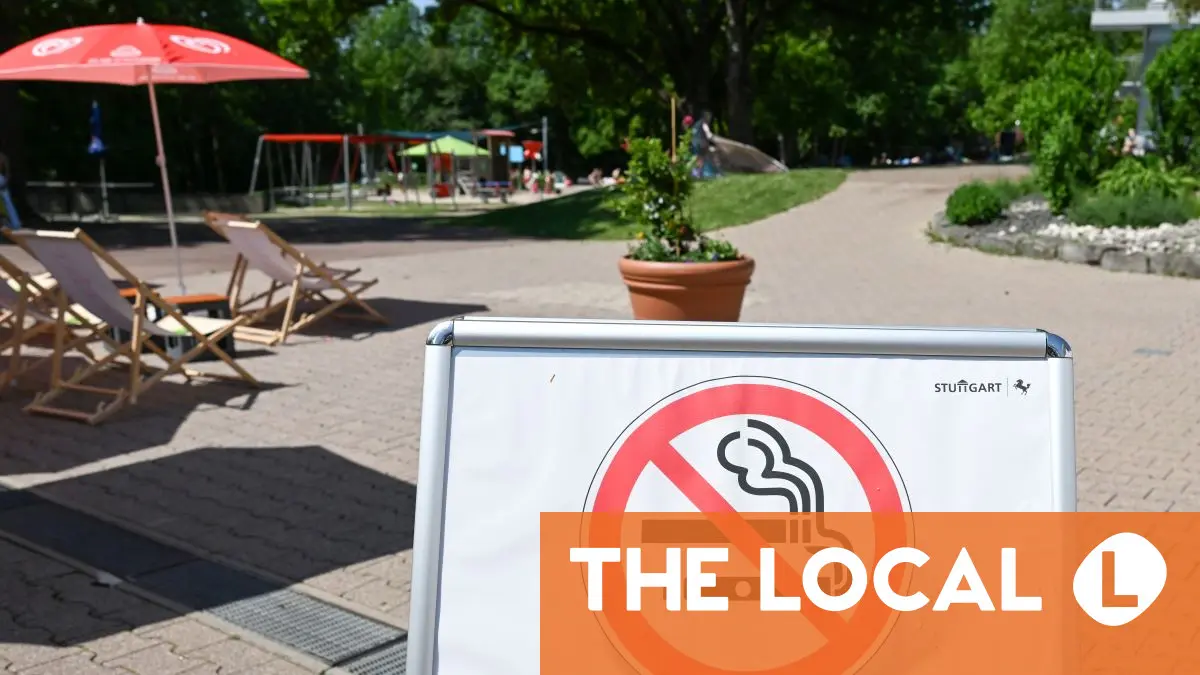
Smoking is no longer allowed in children’s playgrounds, at tram and bus stops, in outdoor swimming pools, or at zoos and amusement parks.
But the new rules do still allow for some wiggle room. Pools, zoos and amusement parks can create designated smoking zones – provided they are clearly separated and don’t disturb others.
By contrast, schoolyards are now completely smoke-free, with no designated areas permitted. Smoking rooms have also been removed from government buildings.
Vapes and e-cigarettes included
One key update is that the law no longer distinguishes between different smoking devices.
From Monday, the use of vapes, e-cigarettes or hookahs are to be outlawed where smoking bans are in place, even if the product does not contain nicotine.
The reasoning being that heating or vaporising substances releases potentially harmful aerosols.
Where smokers can still light up
Despite stricter rules overall, some familiar exceptions remain – especially in hospitality settings.
Smoking is still permitted in outdoor areas of restaurants. Small, single-room bars can also allow smoking as long as they don’t serve hot food.
READ ALSO: Why does Germany still have such lax rules on smoking?
In larger venues, such as restaurants and nightclubs, smoking is only allowed in clearly marked, separate smoking rooms restricted to adults.
Festival tents, such as those at beer festivals, are also exempt. The rationale here is reportedly that these are short-term events and so unlikely to lead to prolonged exposure.
Fines and enforcement
Breaking the rules can be costly. A first offence can lead to a fine of up to €200, rising to €500 if repeated within a year.
Businesses that fail to enforce the rules could face much steeper penalties – up to €3,330, or €6,500 for repeat violations.
Responsibility for enforcement largely falls on operators of venues and facilities.
In Stuttgart, for example, transport authorities are rolling out signage and relying on staff and security personnel to ensure compliance.
READ ALSO: What is Germany’s proposed sugar tax and how would it work?
Disclaimer : This story is auto aggregated by a computer programme and has not been created or edited by DOWNTHENEWS. Publisher: thelocal.de