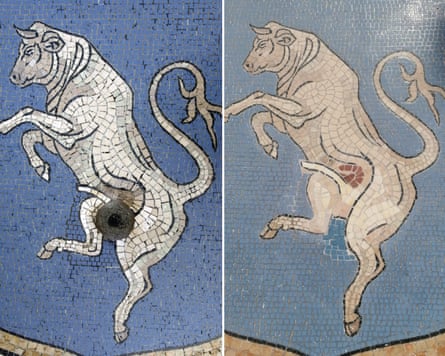
The restoration of a floor mosaic in Milan called the Rampant Bull has been mocked after the works appear to have erased a crucial anatomical detail – its testicles.
The 19th-century mosaic in the Galleria Vittorio Emanuele II shopping arcade needed a makeover because a small crater had formed in the tiny pink tiles featuring the bull’s testicles, due to the constant stream of tourists performing a heel-spinning gesture.
Legend has it that planting your right heel on the bull’s testicles and spinning around three times brings prosperity – or at least a guaranteed return visit to Milan. George and Amal Clooney were reportedly among those who participated in the ritual in the months before the mosaic was repaired.
The restored bull, which represents the symbol of Turin, the Italian capital at the time it was made, was made available to the public again on Monday. However, visitors might struggle to find its testicles.
When Marco Granelli, a Milan councillor, shared a photo of the refurbished mosaic on Facebook, complimenting the works, the post was hit by a deluge of mockery and criticism.
“Something’s missing,” noted one commenter, while another asked: “What happened to the testicles?”
Others wrote that the bull now appeared to resemble a male ox – oxen are commonly castrated to inhibit testosterone – while some questioned whether the bull had been “castrated” to deter tourists from performing the ritual.
Milan’s city council was accused of “censorship” and of wasting public money – the restoration reportedly cost €30,000 (£26,000).
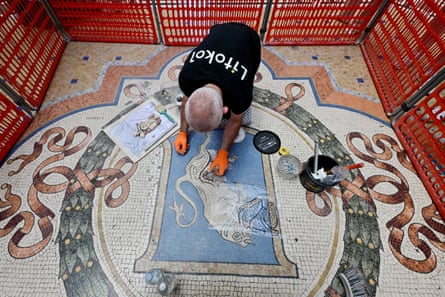
One person pointed out other alleged blemishes: “There are tiles of different colours and they are messy.”
The Galleria Vittorio Emanuele II, built between 1865 and 1877 and located close to the Duomo, is one of the oldest shopping arcades in the world. Granelli told AFP last week the arcade was “a living heritage site which can wear out easily precisely because it is loved and frequented”.
Other cherished attractions in Italy have become worn due to tourists performing rituals.
A bronze statue of William Shakespeare’s heroine, Juliet, in Verona has been restored twice after becoming disfigured. Tourists have been constantly touching it as part of a ritual believed to bring luck in love.
The statue sits beneath the balcony in a tiny courtyard where Romeo is said to have wooed Juliet. The courtyard is next to Casa di Giulietta, a renovated 13th-century building that once belonged to a noble family, the del Cappellos, who are believed by local people to have inspired the fictional family of Juliet Capulet in the Shakespeare classic.
Disclaimer : This story is auto aggregated by a computer programme and has not been created or edited by DOWNTHENEWS. Publisher: theguardian.com