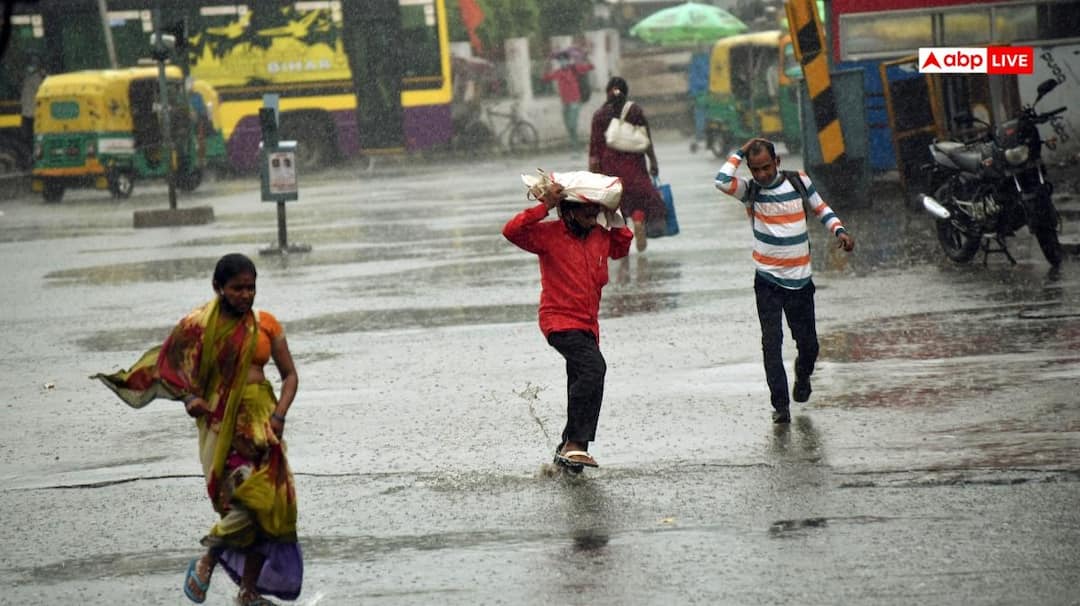
- Southwest monsoon forecast revised, now expected June 4.
- Overall monsoon season rainfall predicted at 90 percent.
- Rain-fed agricultural areas may experience below-normal rain.
- El Niño conditions and heatwave risk remain elevated.
The India Meteorological Department (IMD) has revised its forecast for the onset of the southwest monsoon, stating that the seasonal rains are now expected to reach Kerala on June 4. The updated projection comes after meteorologists indicated last week that the monsoon was unlikely to arrive within the previously anticipated timeframe.
The onset of the monsoon over Kerala is one of the most closely watched weather events in the country, as it marks the beginning of India’s crucial four-month rainy season and offers an early indication of rainfall patterns across the subcontinent.
IMD Revises Kerala Monsoon Arrival Date
In its latest update, the IMD said atmospheric and oceanic conditions are becoming increasingly favorable for the monsoon’s northward progression.
According to the weather agency’s Kerala office, “Conditions are favourable for further advance of southwest monsoon into some more parts of Southwest and Southeast Arabian Sea, Lakshadweep Islands, some parts of Kerala and Tamil Nadu, some more parts of the Southwest, Westcentral, Eastcentral, and Northeast Bay of Bengal, and remaining parts of southeast Bay of Bengal around 4th June.”
The revised timeline places the monsoon’s arrival in Kerala three days later than its traditional onset date of June 1.
Rainfall Forecast Cut For 2026 Season
Alongside the updated onset forecast, the IMD has also lowered its outlook for the June-to-September monsoon season.
The department now expects rainfall to reach around 90 percent of the long-period average (LPA), with a margin of error of 4 percent. This represents a slight reduction from the 92 percent forecast issued earlier in April.
India’s long-period average rainfall, calculated using data from 1971 to 2020, stands at 87 centimeters. While northeastern parts of the country are expected to receive normal rainfall, many other regions could experience below-normal precipitation during the season.
ALSO READ: Telangana Teen’s Suicide Sparks Bandh Amid ‘Love Jihad’ Claims; 18-Year-Old Arrested Under POCSO
Agriculture Areas May See Reduced Rainfall
Meteorologists have expressed particular concern about rainfall prospects in India’s rain-fed agricultural belt.
IMD Director General of Meteorology Mrutyunjay Mohapatra said, “The southwest monsoon seasonal rainfall over the monsoon core zone consisting of most of the rainfed agriculture areas in the country is most likely to be below normal (less than 94 percent of LPA).”
He further noted that rainfall during June is expected to remain below average, likely falling under 92 percent of the long-period average.
Under IMD classifications, seasonal rainfall below 90 percent of the LPA is categorized as deficient, a development that could have implications for agriculture, reservoir levels, and water management.
ALSO READ: Annamalai Meets BJP Top Brass In Delhi Amid Buzz Over New Political Party
El Niño Conditions Raise Concern
Weather experts have linked the subdued rainfall outlook to evolving conditions in the Pacific Ocean.
The IMD reported that neutral El Niño-Southern Oscillation (ENSO) conditions are gradually transitioning toward El Niño. While the phenomenon is expected to remain weak during June, forecasters anticipate it could strengthen to moderate or even strong levels later in the season.
Historically, El Niño events have been associated with weaker monsoon rainfall over India, often affecting crop production and water availability in several regions.
Heatwave Risk Remains Elevated
In addition to rainfall concerns, the weather department has warned that much of the country could experience above-normal temperatures during June.
Higher maximum temperatures and an increased number of heatwave days are expected across large parts of India, adding to concerns over water demand and stress on agricultural activities before the monsoon becomes fully active.
Why Kerala’s Monsoon Onset Matters
The arrival of the southwest monsoon in Kerala serves as the benchmark for tracking its progress across the country. The seasonal rains are critical for farming, groundwater recharge, hydropower generation, and overall economic activity.
With forecasts now pointing toward below-normal rainfall and a possible strengthening of El Niño conditions, this year’s monsoon will be closely monitored by farmers, policymakers, businesses, and weather experts alike as they assess its impact on food production, inflation, and water resources.
Before You Go
CBSE MARKING ROW REACHES COURT: NSUI Moves Delhi HC Seeking Probe Into OSM Evaluation System
Disclaimer : This story is auto aggregated by a computer programme and has not been created or edited by DOWNTHENEWS. Publisher: abplive.com