TOKYO –
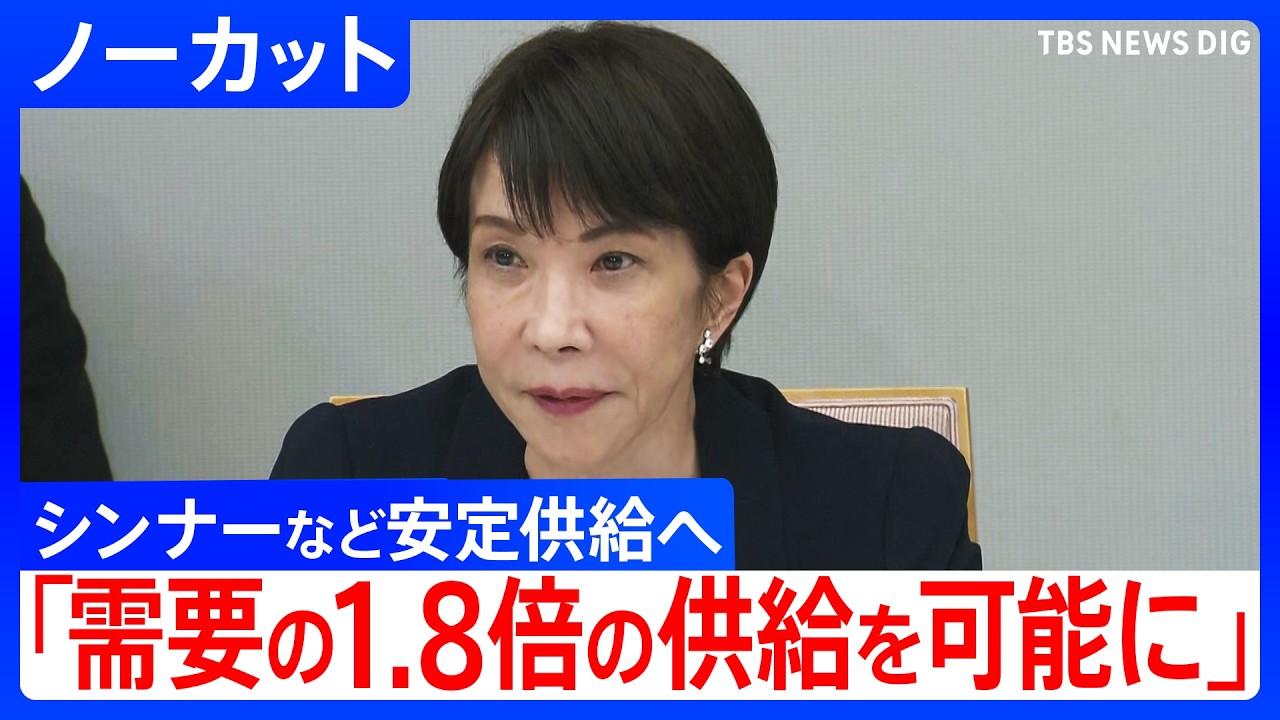
Prime Minister Sanae Takaichi announced on June 2nd that the government will significantly strengthen supplies of paint thinner and other chemical products by allowing raw materials to be supplied directly from petroleum refiners, a measure expected to support supply capacity equivalent to 1.8 times normal annual demand as Japan continues to monitor the impact of tensions in the Middle East on domestic supply chains.
Speaking at a ministerial meeting on the Middle East situation, Takaichi said efforts by government ministries and industry had helped stabilize supplies of petroleum-related products despite earlier concerns over disruptions.
According to government data presented at the meeting, production of NAF-related materials has recovered to approximately 85% of normal levels, while imports of intermediate products have increased substantially. As a result, the use of inventories during April remained limited, allowing petroleum-derived products, including chemical materials, to be supplied continuously beyond the current fiscal year.
Manufacturers of products such as polyurethane materials, paints, adhesives, vinyl chloride products and insulation materials reported that supply volumes through April were at or above year-earlier levels and are expected to remain stable in the coming months.
However, Takaichi noted that inventories within supply chains linked to products such as paints and adhesives remain lower than those of other sectors. To address this issue, the government will expand the supply of toluene and other key raw materials by allowing petroleum refiners, in addition to petrochemical manufacturers, to provide supplies directly to paint and adhesive manufacturers.
The measure is expected to increase available supply to approximately 1.8 times normal demand levels, helping ensure that paints, adhesives and related materials reach local construction contractors and small businesses throughout the country.
The government also confirmed that sufficient inventories exist for most other NAF-related products. Nevertheless, officials acknowledged that concerns remain regarding products such as vinyl chloride materials and insulation products. Ministries were instructed to strengthen information-sharing efforts, improve visibility of supply conditions and eliminate bottlenecks caused by inaccurate ordering practices or insufficient market information.
Particular attention is being directed toward smaller downstream businesses, including independent construction contractors, automobile repair shops, bakeries and retail distributors, which often possess less negotiating power within supply chains.
Takaichi said targeted support measures have already produced results. In the construction sector, where many businesses had reported being unable to obtain delivery dates despite placing orders, some contractors are now securing supplies, albeit under quantity restrictions and with longer lead times.
The government is also working with the Japan Federation of Construction Workers’ Unions, which represents approximately 590,000 members nationwide, and coordinating efforts with prefectural organizations to monitor conditions on the ground.
Similar support is being extended to automobile repair businesses as well as bus and truck operators. Officials reported receiving feedback from businesses indicating that procurement prospects for engine oil have improved.
For bakery and food-related suppliers, authorities have gathered information from industry organizations in every prefecture and conducted direct interviews with individual retailers. In several cases, supply bottlenecks were resolved simply by providing businesses with confirmed delivery dates for packaging and film materials.
Takaichi instructed ministers to continue identifying bottlenecks throughout supply chains and to intensify support for sectors heavily dependent on petrochemical products. These include plastics-processing manufacturers, taxi operators that rely on engine oil supplies to maintain regional transportation services, and horticultural producers that require plastic-based agricultural materials.
The prime minister also addressed conditions in the medical sector. While containers, pharmaceutical packaging materials and related products are generally being supplied at levels comparable to last year, rising order volumes have created localized pressures. The government has asked pharmacies to refrain from ordering quantities exceeding immediate requirements while monitoring conditions at individual locations.
In addition, Japan’s emergency stockpile of medical gloves is being distributed to healthcare institutions. The government plans to provide up to 19.9 million gloves to 507 medical organizations and has already completed shipping procedures for 4.26 million gloves to 1,178 healthcare facilities and related institutions.
Takaichi emphasized that the government is working to resolve supply-chain problems one case at a time in areas critical to protecting lives and maintaining daily life.
On the employment front, she noted that labor market conditions remain stable. Japan’s effective jobs-to-applicants ratio stood at 1.18 in April, while the unemployment rate was 2.5%.
Applications related to employment adjustment subsidies linked to the Middle East situation totaled 175 cases during the roughly two-month period since the end of March. Although the figure remains limited compared with 3,932 cases recorded during the same two-month period a year earlier, the government plans to continue providing information and assistance to ensure affected businesses can access support programs smoothly.
Concluding the meeting, Takaichi instructed ministers to continue detailed efforts to eliminate supply-chain bottlenecks, prevent market disruption, support financing for small and medium-sized businesses affected by developments in the Middle East, promote the use of employment adjustment subsidies, and encourage appropriate price pass-through measures throughout the economy.
Source: TBS
Disclaimer : This story is auto aggregated by a computer programme and has not been created or edited by DOWNTHENEWS. Publisher: newsonjapan.com