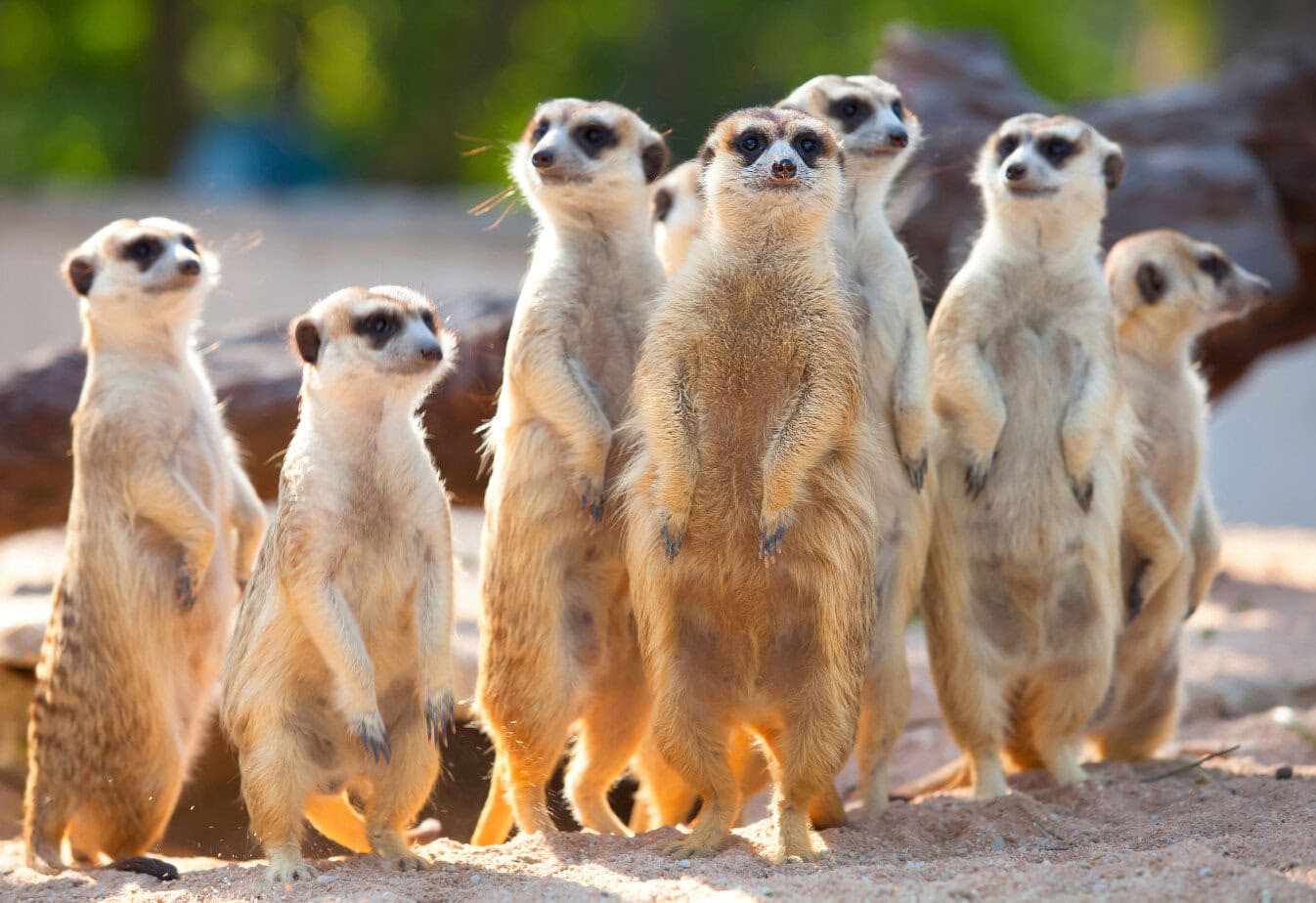
A zoo in the Netherlands has euthanized several healthy meerkats after ongoing conflict between males in the group could not be resolved.
Diergaarde Blijdorp, a major zoo in Rotterdam, said it made the decision after months of tensions among male meerkats. According to the zoo, the animals were fighting for dominance within the group.
In the wild, male meerkats involved in conflicts can leave the group and find new territory. In a zoo environment, this is often not possible.
The zoo said it first tried other solutions. Several meerkats were removed from the group, and staff searched for other zoos in Europe that could take the animals. However, no suitable places were found.
As a result, the zoo decided to euthanize some of the animals.
A spokesperson told Dutch media that fewer than ten meerkats were put down. Reports suggest that around seven animals were euthanized.
Part of European breeding programme
The meerkats were part of a breeding programme used by European zoos to maintain healthy captive populations.
According to Blijdorp, the programme resulted in a group with too many males. Under breeding programme guidelines, zoos may intervene when there are more animals than available space.
The practice remains controversial. Animal welfare groups and critics argue that healthy animals should not be killed because of population management decisions.
Supporters of breeding programmes say they help maintain genetically healthy populations and contribute to conservation efforts.
In December 2024, a majority of the Dutch parliament voted in favour of ending the practice of euthanizing healthy animals in zoos. Lawmakers asked the government to develop a plan to phase out the policy.
Dominant male and female meerkats
Meerkats are small social mammals native to southern Africa. They live in groups called clans. A clan is usually led by a dominant male and a dominant female.
Male meerkats are known for strongly defending their territory, and conflicts can occur when several males compete for leadership.
In the wild, less dominant males often leave the group and move to a different area. In zoos, where animals live in captivity, this is not possible.
Support The Animal Reader
Most animal suffering never makes the news. When there is a flood, an earthquake, or a wildfire, we read about the people who were hurt. We almost never hear about the animals. How many were injured or lost their home. How many died. It is as if they do not exist.
The danger of leaving animals out of our daily news is that we slowly create a world where people forget we share this planet with them. And when people forget, they stop caring.
We already see this happening in the way animals are treated in our food systems, how they are used in scientific testing, and how they are kept in cages for human entertainment. More recently, we see it in the growing number of people sharing videos on social media while hurting animals, as if their lives mean nothing.
Animals need people to keep them in the news. That is why I started The Animal Reader. If you believe animals deserve a place in our daily news, please consider supporting this work.
Thank you,
Prya Bisambhar
Disclaimer : This story is auto aggregated by a computer programme and has not been created or edited by DOWNTHENEWS. Publisher: theanimalreader.com